
Blogs
Learning Toys for Speech & Language Development: Best Picks for Kids in Pakistan
Mar
Learning Toys for Speech & Language Development in Pakistan (Age-Wise Guide)
Speech and language skills grow quickly in the early years, and the right kind of play can support that growth in a very practical way. Learning toys for speech & language development help children build vocabulary, copy sounds, ask for what they want, and enjoy more back-and-forth interaction during everyday play.
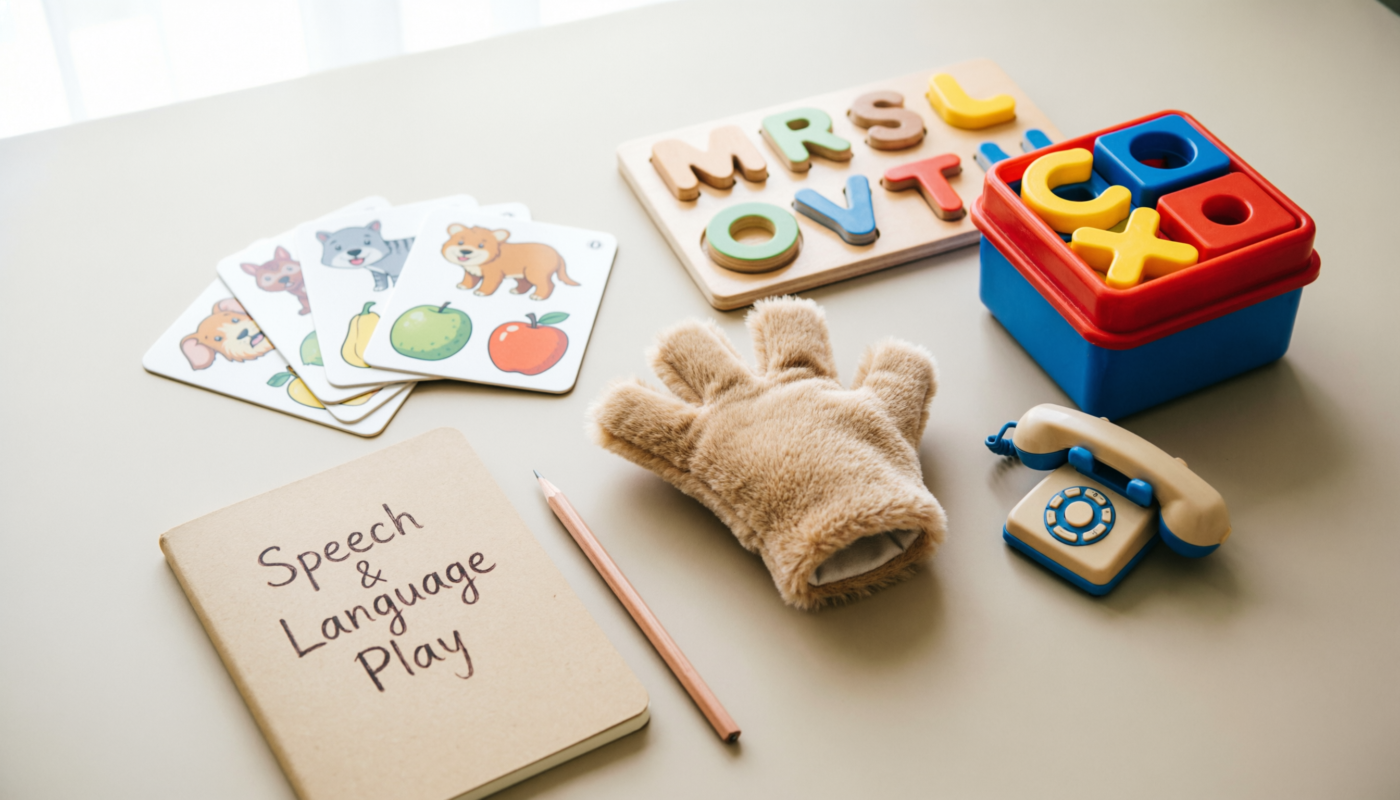
For many families in Pakistan, the goal is simple: find toys that are useful, easy to use at home, and worth buying. The best options are usually picture cards, puppets, pretend-play toys, simple puzzles, stacking toys, and cause-and-effect toys that encourage children to communicate instead of just pressing buttons. Used for just 10–15 minutes a day, these toys can turn normal playtime into a steady language-building routine.
Parents often notice early concerns like, “My child understands me but says very little,” or “They only use a few words.” That can feel stressful, especially when everyone around you has different advice. In practice, small daily play routines often help more than overcomplicated setups or expensive gadgets.
In Pakistani homes, practical details matter too. Many parents prefer Cash on Delivery (COD), and flexible payment options like Easy paisa and Jazz Cash make online shopping easier. Whether you are in Karachi, Lahore, Islamabad, or another major city, choosing toys that invite interaction can make home practice feel much more natural.
The best learning toys for speech & language development are toys that give a child a reason to listen, respond, request, point, copy, and name. Strong options include picture cards, puppets, pretend-play sets, puzzles, stacking toys, and cause-and-effect toys.
What matters most is not the toy alone, but how you use it. When a parent or caregiver joins the play, uses short phrases, repeats key words, and pauses for the child to respond, language practice becomes much more effective.
Why These Toys Help
Speech is not only about saying words clearly. It also includes understanding, attention, imitation, and social connection. Good toys support several areas at once.
Receptive language: understanding instructions, pointing, matching, following simple cues
Expressive language: naming, asking, choosing, using words and short phrases
Speech clarity: copying sounds, practicing rhythm, trying new word shapes
Social communication: turn-taking, eye contact, shared attention, waiting, responding
The most useful toys create a small communication gap. For example, if a pop-up toy stops and the child wants it again, that moment encourages “more,” “again,” “open,” or even a gesture and eye contact. Those moments are where language starts to build.
A simple tip for busy households: keep 2–3 toys in a separate “talking time” bag and rotate them. That keeps interest high without buying too much.
Best Learning Toys for Speech & Language Development
Picture Cards and Talking Flashcards
Picture cards are one of the easiest starting points for vocabulary building. They work well for animals, foods, colors, vehicles, body parts, and daily objects.
You can use them to practice.
“What is this?”
“Show me the cat”
“Where is the apple?”
“What sound does it make?”
Keep it light and playful. Show only 2–3 cards at a time, repeat them often, and praise any attempt, even if it is only part of the word.

Puppets and Soft Toys
Puppets are especially helpful for children who feel shy or resistant during direct teaching. A puppet can greet, ask questions, make silly mistakes, and encourage imitation without pressure.
They are useful for.
Greetings like “Assalam-o-Alaikum”
Simple choices like “ball or car?”
Emotions like “happy,” “sad,” and “sleepy”
Turn-taking and short conversations

Pretend-Play Sets
Pretend play is one of the strongest categories for sentence building. Kitchen sets, doctor kits, grocery sets, and tea sets give children a reason to use real-life language.
Common phrases include.
“Tea please”
“Doctor check”
“Give spoon”
“Cut apple”
“More juice”
From a small family routine point of view, this works very well because the language is already familiar. A parent in Karachi might use a grocery set after dinner and naturally model words like “banana,” “doodh,” and “aur do” during play.
Puzzles
Simple puzzles support both language and thinking skills. They naturally create useful prompts such as:
“Where does it go?”
“Try again”
“My turn”
“Your turn”
“In”
“Out”
Start with chunky puzzles featuring animals, shapes, or vehicles. If the child is still learning first words, keep the visuals clear and familiar.

Cause-and-Effect Toys
These are excellent for teaching requesting. When a toy moves, pops up, spins, or drops a ball and then stops, the child needs another person to continue the fun.
That creates chances to practice.
“More”
“Again”
“Open”
“Go”
“Stop”
This category is often one of the best for children who are not yet using many words, because even gestures, sounds, and eye contact can be shaped into communication.
Stacking and Sorting Toys
Stacking rings, shape sorters, and sorting games are great for early concepts and simple instructions. They help children learn:
Colors
Shapes
Sizes
“Big” and “small”
“Up” and “down”
“Put in” and “take out”
These toys are easy to repeat daily and work well for toddlers who need lots of practice with simple language.
Internal link idea: shape sorter for “in/out” practice → /product/shape-sorter-box/
Age-Wise Buying Guide for Pakistan-Based Parents
12–24 Months
At this stage, focus on imitation, pointing, shared attention, and first words.
Best picks.
Cause-and-effect toys
Stacking rings
Simple animal or object cards
Use very short phrases like “go,” “ball,” “open,” and “again.”
2–3 Years
This is usually the stage where vocabulary grows quickly and 2-word phrases begin to appear.
Best picks.
Pretend kitchen or doctor set
Basic puzzles
Puppets
Picture cards
Useful phrase models include “mama help,” “open box,” and “more juice.”
3–5 Years
At this age, many children are ready for more questions, storytelling, pretend routines, and clearer speech practice.
Best picks.
Story cards
Roleplay sets
Matching games
Category-based flashcards
You can ask slightly bigger questions like “Who is this?” “What happened?” or “Why is he sad?”
A Simple 10-Minute Routine That Works
You do not need a long session to make progress. A short daily routine is often enough.
Pick one toy
Sit face-to-face
Follow your child’s interest
Use short phrases of 2–4 words
Repeat important words naturally
Pause and give time to respond
Reward any attempt by continuing the game
For example, if you are using a pop-up toy, you can say “open,” “more,” and “again” again and again during play. If the child gestures, looks at you, or makes a sound, respond positively and continue. That teaches them their communication works.
Many families in Lahore, Karachi, and other busy cities do better with this kind of short routine because it feels manageable. Consistency matters more than intensity.
Common Mistakes to Avoid
Some toys look educational but do not actually support much interaction. A few common mistakes make home practice less effective.
Buying toys that are too advanced
Offering too many toys at once
Expecting the toy to do all the teaching
Correcting every word attempt too quickly
Choosing noisy toys that leave little space for real interaction
The goal is not perfect speech during play. The goal is more attempts, more back-and-forth, and more confidence.
When to Consider Professional Help
Toys can support speech and language at home, but they do not replace professional advice when there is a genuine concern. If a child has no words by around 18 months, no 2-word phrases by around 2.5 years, or shows a loss of skills, it is a good idea to speak with a qualified speech-language professional.
A toy can create opportunities. A specialist can help you understand what kind of support your child needs and how to use those opportunities more effectively.

Concluding Remarks
The best learning toys for speech & language development are the ones that help your child connect, request, imitate, and enjoy communication during play. Picture cards build vocabulary, puppets reduce pressure, pretend-play sets encourage phrases, and cause-and-effect toys create natural chances to ask for more.
Start small. Choose 1–2 toys that match your child’s age and interest. Play for 10–15 minutes a day, keep your language simple, and celebrate progress in all forms. For families in Pakistan, it also helps to choose practical options with COD, Easy paisa, or Jazz Cash support so getting started feels easy, not stressful.
FAQs
Q : Which learning toys work best for late talkers?
A : The best choices are usually cause-and-effect toys, picture cards, puppets, and simple pretend-play toys. These give children a reason to request, imitate, point, and name. Toys that do everything automatically are usually less useful.
Q : How can I use flashcards without making it feel like studying?
A : Keep the session short and playful. Show only a few cards, make sounds, use “find it” games, and repeat the same words naturally. The goal is interaction, not testing.
Q : How many minutes a day should we play?
A : Around 10–15 minutes a day is enough when the play is interactive and consistent. Short daily practice usually works better than one long session once a week.
Q : Are talking toys always good for speech development?
A : Not always. Some talking flashcards can help with naming and repetition, but toys that keep talking on their own can reduce the child’s need to communicate with you.
Q : What if my child understands but does not speak much?
A : That often means understanding is stronger than expressive language right now. Focus on toys that encourage requesting, naming, and short phrase use during back-and-forth play.
Q : Which toys help with pronunciation and clarity?
A : Puppets, picture cards, and pretend-play toys can all help because they create repeated chances to hear and say the same sounds and words. The key is repetition in a natural setting.
Q : How do I know if a toy is too advanced?
A : If your child cannot use it with a little support and becomes frustrated quickly, it is probably too advanced. Simple toys with clear goals usually work better.
Q : When should I consult a speech therapist in Pakistan?
A : If you are concerned about very limited speech, delayed phrases, or regression in language skills, it is worth consulting a qualified professional. Home practice helps, but expert guidance can make the next steps clearer.