

Blogs
Toys That Improve Motor Skills in Kids: A Pakistan Parent’s Buying Guide
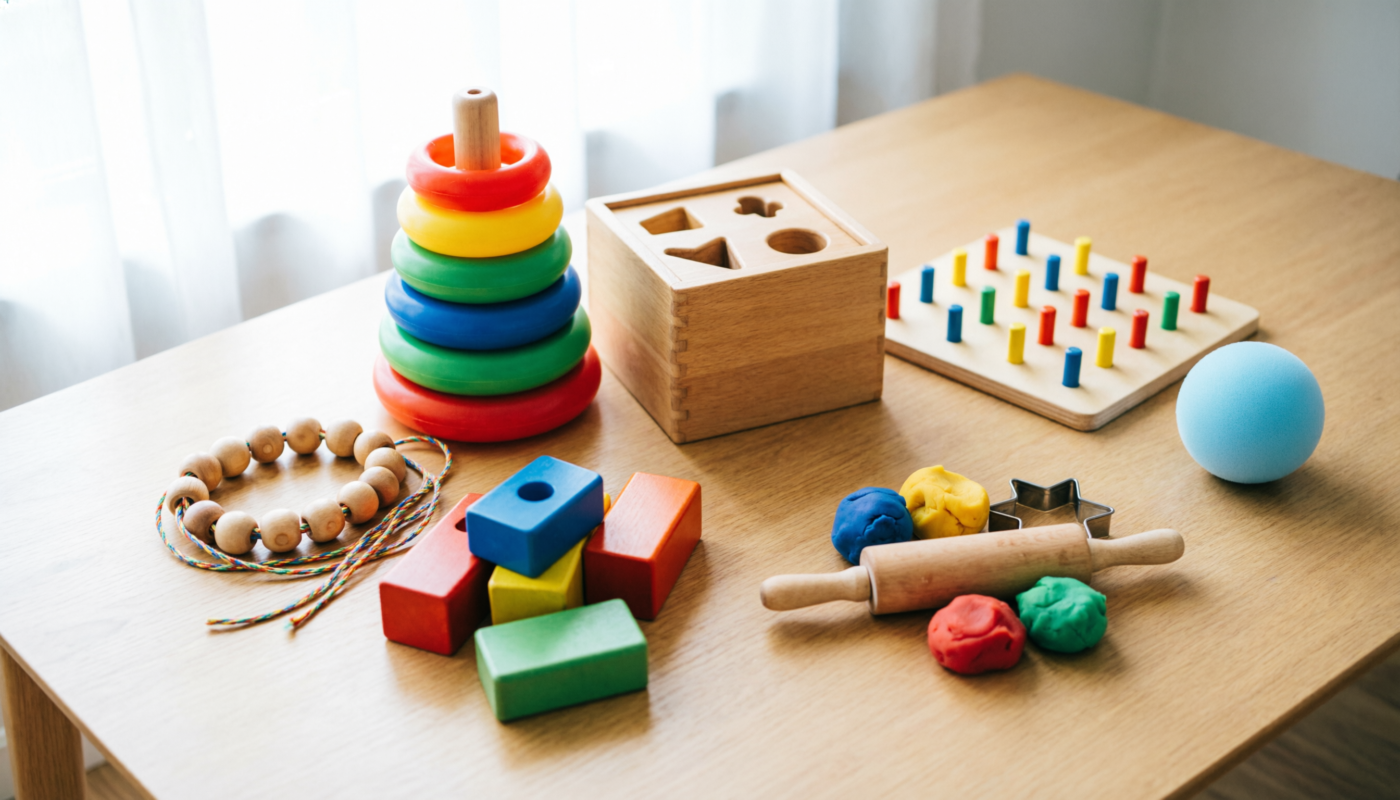
Mar
Toys That Improve Motor Skills in Kids: Fine vs Gross Skills Explained
Parents today want more from playtime. They want toys that keep kids engaged, build confidence, and support real development at home. That is why toys that improve motor skills in kids are worth choosing carefully.
The best toys that improve motor skills in kids help children strengthen hand control, balance, coordination, and everyday independence. Fine motor toys support small movements like gripping, pinching, and holding crayons, while gross motor toys support bigger movements like climbing, jumping, throwing, and balancing. For most families in Pakistan, the smartest approach is to choose age-appropriate toys, keep play simple, and stay consistent.
In Pakistan, this matters even more because parents often shop with value in mind. Whether you order through Cash on Delivery (COD) in Karachi, pay with Easy paisa or Jazz Cash in Lahore or Multan, or buy in-store for a family home in Islamabad, you want toys that last, get reused, and actually help your child learn.
Fine Motor vs Gross Motor Skills
Before buying, it helps to know what each type of skill includes.
Fine motor skills
Fine motor skills use the small muscles of the hands and fingers. These are the skills children need for tasks like:
Holding a spoon
Turning pages
Buttoning clothes
Picking up small objects
Coloring and writing
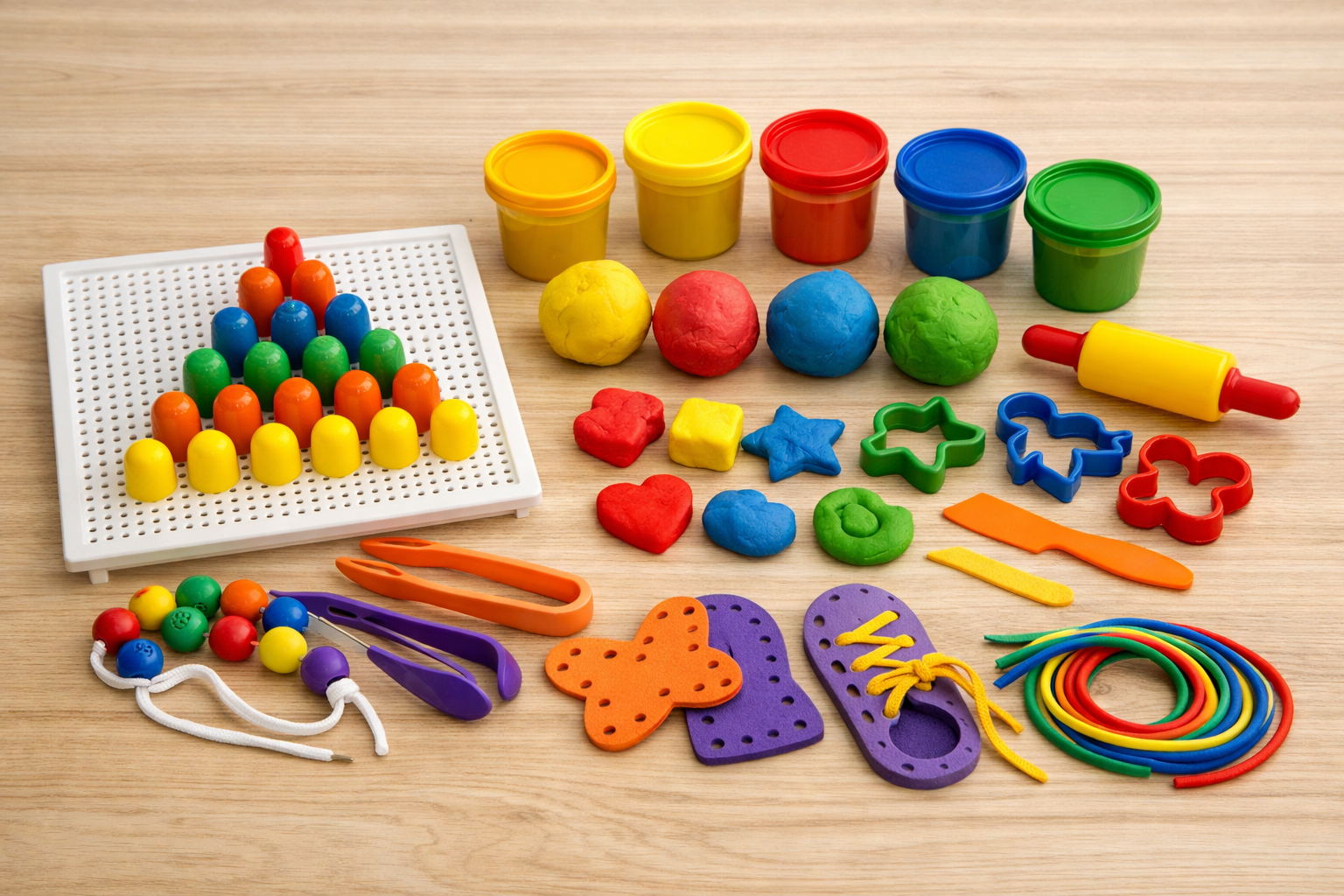
Good fine motor toys include
Stacking rings
Shape sorters
Peg boards
Lacing beads
Simple puzzles
Play dough tools
Small building blocks
Gross motor skills
Gross motor skills involve larger body movements. These help with:
Crawling
Walking
Running
Jumping
Balancing
Throwing and catching
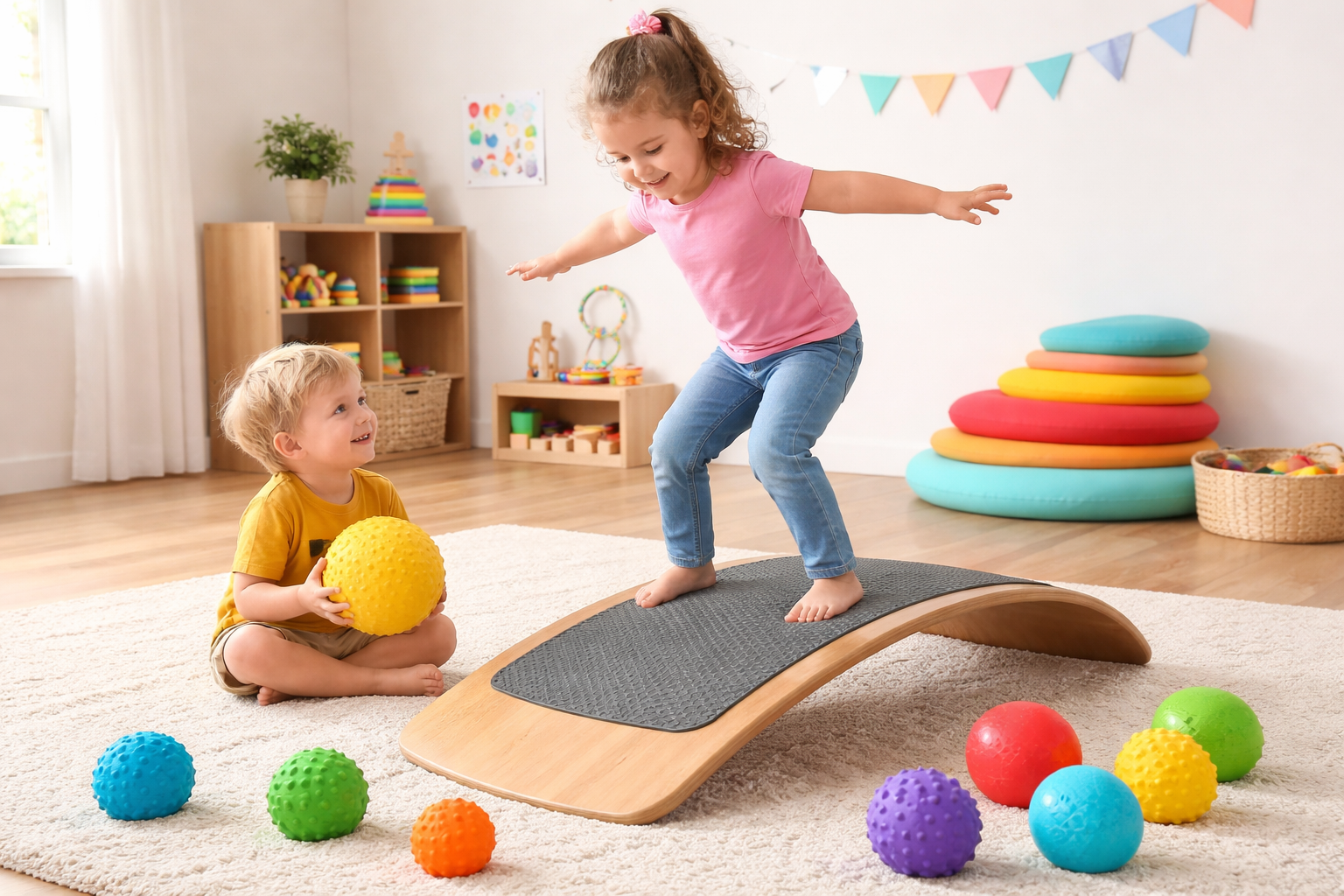
Good gross motor toys include.
Push-and-pull toys
Ride-on toys
Soft balls
Mini hoops
Balance boards
Stepping stones
Indoor slides with safe height
A balanced toy setup usually includes both. That is why the most useful toys that improve motor skills in kids are not always the flashiest ones. They are the ones that keep little hands and bodies active.
Age-Wise Toys That Improve Motor Skills in Kids
Ages 1–2: Start with simple movement
At this stage, repetition is everything. Toddlers learn by gripping, dropping, stacking, and trying again.
Best choices for this age.
Stacking rings for grasp strength and hand-eye coordination
Large soft or chunky blocks for easy building
Shape sorters for matching and control
Push-and-pull toys for walking confidence and coordination
For Pakistani homes, durability matters. Toys for this age should be easy to wipe clean and strong enough for everyday use, especially in homes where siblings or cousins share playtime.
Ages 3–4: Build finger strength and control
This is a strong age for fine motor growth. Many children begin improving pencil grip, crayon control, and basic self-care tasks during this stage.
Good options include.
Peg boards for finger strength
Simple puzzles with 6–12 pieces
Play dough with tools for rolling, pressing, and cutting
Lacing beads for coordination and focus
In practice, many parents notice that short daily play with peg boards and play dough makes coloring and early writing feel easier over time. It is a simple, low-pressure way to support school readiness without forcing worksheets too early.
Ages 5–7: Support school readiness
Now children need stronger hands, better control, and more patience for step-by-step activities. This is where toys that improve motor skills in kids can support writing comfort, cutting practice, and small project work.
Strong picks for this age.
LEGO-style blocks for precise hand movements
Scissor skills kits with child-safe scissors
Construction sets with simple nuts, bolts, or connectors
Art and craft kits for folding, beading, sticking, and creating
Choose toys that make kids plan, build, and finish something. That extra layer of focus helps strengthen both motor control and confidence.
Ages 8–10: Add challenge and coordination
Older kids usually do better with more complex, skill-based play. They often enjoy toys that feel less like “baby toys” and more like projects, games, or sports.
Useful choices include.
STEM kits
Origami or craft kits
Jump ropes
Mini hoops
Soft cricket or ball sets
Balance and coordination games
For families in cities like Karachi or Lahore where outdoor space may be limited, indoor-friendly gross motor toys can still work well. A soft ball, hallway toss game, or mini hoop can encourage movement without needing a large play area.
How to Choose the Right Toys
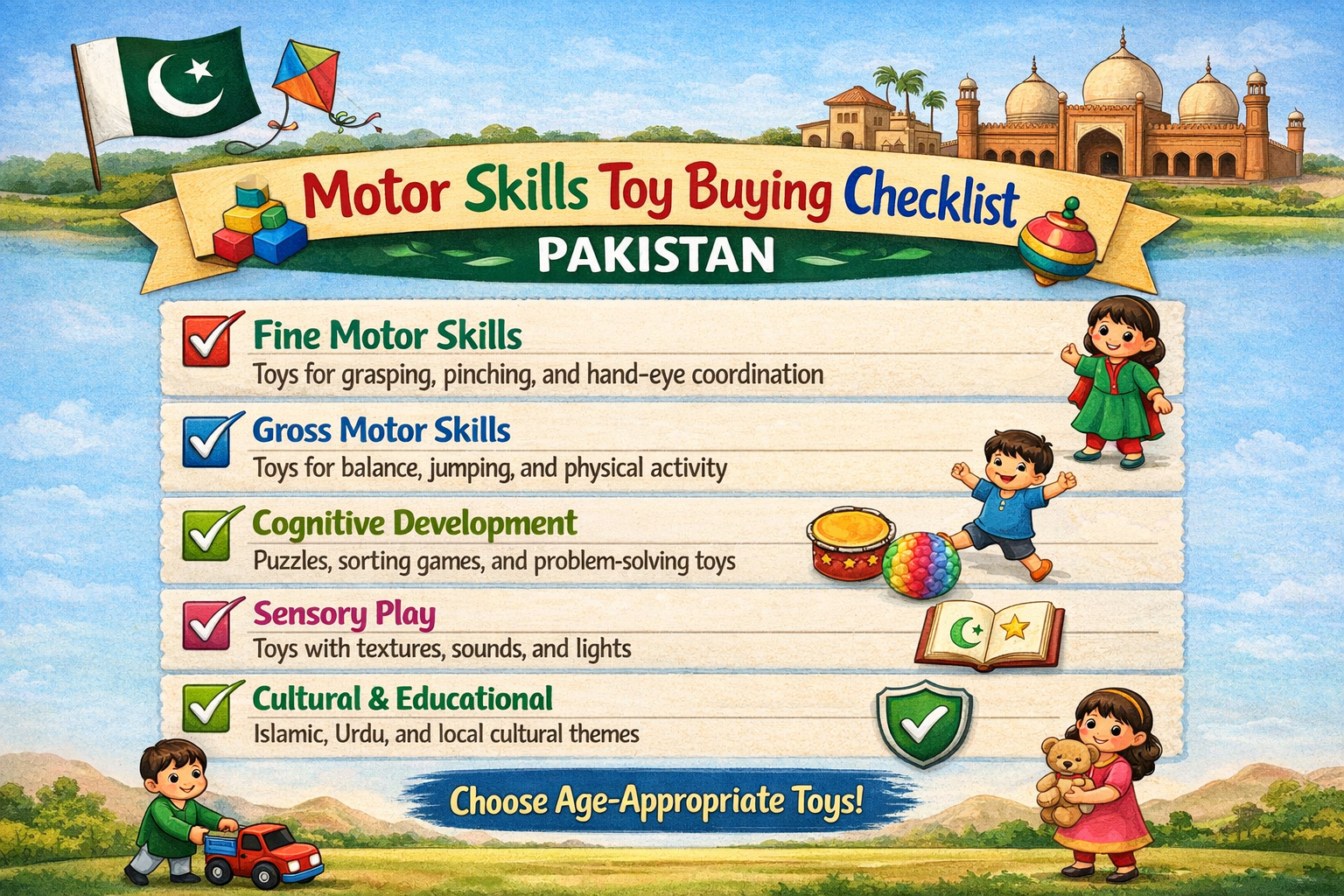
Not every toy with bright colors or educational packaging is actually helpful. Use this checklist before you buy.
Check the age label
Avoid toys with small removable parts for children under 3.
Know your goal
Pick toys for fine motor skills, gross motor skills, or both.
Prefer open-ended toys
Blocks, dough, puzzles, and balance toys stay useful longer than one-trick gadgets.
Look for strong materials
Toys in Pakistani family homes often get shared, dropped, and reused.
Rotate toys each week
You do not need to buy more just to keep play interesting.
Make sure the toy fits your space
Apartment living and joint family homes both need practical choices.
Check return or exchange options
This is especially useful for COD orders.
That simple filter helps parents spend better and choose toys that improve motor skills in kids in a more practical way.
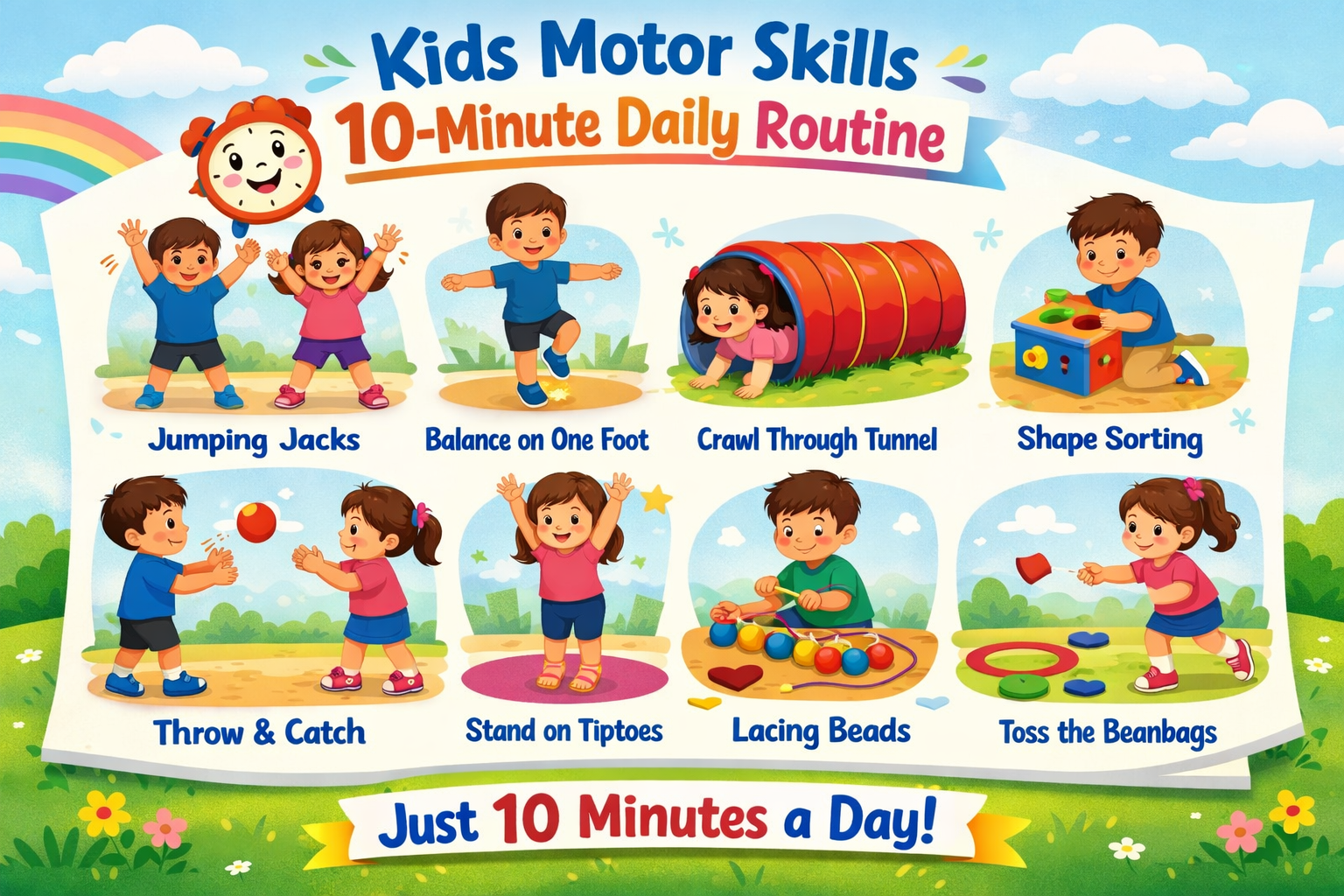
A Simple 10-Minute Routine That Works
Children do not need long sessions. Consistency matters more.
Try this easy routine at home.
2 minutes: stacking or sorting
4 minutes: play dough rolling and cutting
2 minutes: puzzle or peg board
2 minutes: soft ball throw and catch
Do this 4–5 days a week. Over time, many parents notice better grip, smoother hand control, stronger coordination, and less frustration during daily tasks.
From a small business and parent point of view, this is also why starter bundles work well: one fine motor toy plus one gross motor toy gives variety without overcomplicating play.
Final Thoughts
The best toys that improve motor skills in kids are not always expensive. They are age-safe, easy to use, and flexible enough for regular play. Blocks, shape sorters, play dough tools, puzzles, soft balls, and balance-based toys continue to offer strong value because they help children practice real movement skills again and again.
For families in Pakistan, smart buying usually means choosing durable toys, keeping a small rotation, and focusing on toys that support both learning and independence. A simple mix of one fine motor toy and one gross motor toy is often enough to get started well.
If you are building a child’s toy basket, start with practical, open-ended toys that improve motor skills in kids and choose options that fit your home, your child’s age, and your everyday routine.
FAQs
Q : What are the best toys that improve motor skills in kids at home?
A : Some of the best options are blocks, stacking rings, puzzles, peg boards, play dough tools, and lacing beads. For gross motor development, add a soft ball, mini hoop, or balance toy. The key is regular play, not complicated setups.
Q : How do I choose toys that improve motor skills in kids by age?
A : Choose large, simple toys for ages 1–2, such as stackers and sorters. For ages 3–4, add peg boards, dough tools, and simple puzzles. For ages 5–7, use smaller blocks and crafts, and for ages 8–10, move toward STEM kits and coordination games.
Q : How long should my child play daily to improve motor skills?
A : A daily routine of 10–20 minutes is enough for many children. Keep it playful and split it into short activities so the child stays interested.
Q : Do Montessori-style toys help motor skills?
A : Yes, many Montessori-inspired toys support grasping, sorting, transferring, stacking, and hand control. They are often simple by design, which makes them useful for focused practice.
Q : Which toys help with pencil grip and school readiness?
A : Peg boards, play dough tools, lacing beads, small building bricks, and child-safe cutting activities are all helpful. These strengthen finger muscles and improve control before writing tasks become more demanding.