

Blogs
How Card Games Help Child Brain Development (Pakistan Parents’ Guide)
Apr
How Card Games Help Child Brain Development
In many Pakistani homes, the daily question is simple: how do we reduce screen time without turning every free moment into homework? One easy answer is card play. When used in the right way, card games help child brain development by improving memory, focus, problem-solving, patience, and social confidence.
Card games give children a fun mental workout. They ask kids to remember rules, wait for turns, make choices, notice patterns, and handle winning or losing calmly. For parents in Karachi, Lahore, Islamabad, Rawalpindi, Faisalabad, or smaller cities, this makes card games a low-cost learning activity that fits easily into home routines.
The best part is that you do not need expensive toys or a special setup. A simple deck can become a brain-building activity during family time, weekend downtime, or even load-shedding evenings.
Card games help child brain development by training working memory, attention control, flexible thinking, and decision-making. Matching, sequencing, set-making, and turn-based games help children focus, plan, remember information, and manage emotions. For Pakistani parents, they are also budget-friendly, easy to buy online with COD, Easy paisa, or Jazz Cash, and simple to play at home.
Why Card Games Work Like a Brain Gym
When a child plays a card game, the brain is not doing just one thing. It is watching, remembering, comparing, predicting, and reacting.
That is why card games are more powerful than they look. A child may feel like they are “just playing,” but in practice they are building skills that support school learning and everyday behavior.
Card games train children to.
Follow rules
Wait for their turn
Remember patterns
Think before acting
Make small decisions
Accept wins and losses
Communicate with others
These are not only game skills. They are learning skills.
Memory Growth: Stronger Recall Through Play
Many card games ask children to remember what they saw earlier. Which card was turned over? Who played which number? What colour or shape appeared before?
This kind of play strengthens working memory. Working memory helps children hold information in their mind while using it. It supports reading, spelling, math’s steps, and following instructions.
For example, a parent in Karachi might play a short matching game with a 6-year-old after Maghrib. The child is not memorizing a school lesson, but the brain is still practicing recall. Over time, that same skill can support classroom learning.

To make memory play stronger, ask simple questions during the game.
“Where did you see this card before?”
“What card do you think is still left?”
“Can you remember my last move?”
Keep it light. The goal is practice, not pressure.
Focus and Attention: Building the Sit-and-Finish Skill
One big reason card games help child brain development is that they train attention without feeling boring. Children have to watch the game, listen to rules, wait for their turn, and respond at the right time.
This is especially useful in homes where short videos and mobile games have made it harder for children to sit with one task.
Turn-based card games can help children practise.
Staying seated for a short activity
Listening before acting
Waiting patiently
Completing a round
Paying attention to other players
Start with short sessions. A child who struggles with focus may not enjoy a long game at first. Even 10 minutes is enough to begin.
Faster Thinking and Mental Flexibility
Some card games require quick decisions. Should the child play a card now or save it? Should they change their plan because another player made a move? Should they take a risk or play safely?
These small decisions build processing speed and mental flexibility.
Mental flexibility means the child can adjust when something changes. This skill is helpful in school, especially when children face new math’s methods, grammar rules, puzzles, or unexpected questions.
A good card game gives children a safe place to make decisions and learn from them. They can try, fail, laugh, and try again.
Problem-Solving and Logic
Card games naturally teach cause and effect.
A child begins to think
“If I play this card, what happens next?”
“If I save this one, will it help later?”
“What might my opponent do?”
“How can I improve my next move?”
This kind of thinking builds planning and logical reasoning. These skills are useful far beyond the game table.
For younger children, the logic may be simple: match the same colour or remember a pair. For older children, it may involve strategy, prediction, and risk. Both levels are valuable.
Language and Communication Skills
Card games also support speaking and listening. When children explain rules, ask questions, or describe their move, they practise communication.
You can make this even more useful by asking your child to explain the game back to you. This builds vocabulary, sentence structure, and confidence.
Try prompts like
“Tell me the rule again.”
“Why did you choose that card?”
“What should I do next?”
“Can you teach this game to your cousin?”
In many Pakistani homes, where siblings and cousins often play together, this becomes a natural way to improve communication without making it feel like a lesson.
Emotional Control: Learning Patience, Losing, and Trying Again
Children do not only need academic skills. They also need emotional control.
Card games teach children how to wait, follow rules, lose a round, stay calm, and try again. These are important self-regulation skills.
At first, some children may get upset when they lose. That is normal. The key is gentle guidance.
You can say
“It is okay to lose one round.”
“Let’s try a different plan next time.”
“Good players stay calm.”
“Winning is fun, but learning is also important.”
Over time, children learn that losing is not the end. They can recover, rethink, and continue. That is a powerful life skill.
Social Skills and Family Bonding
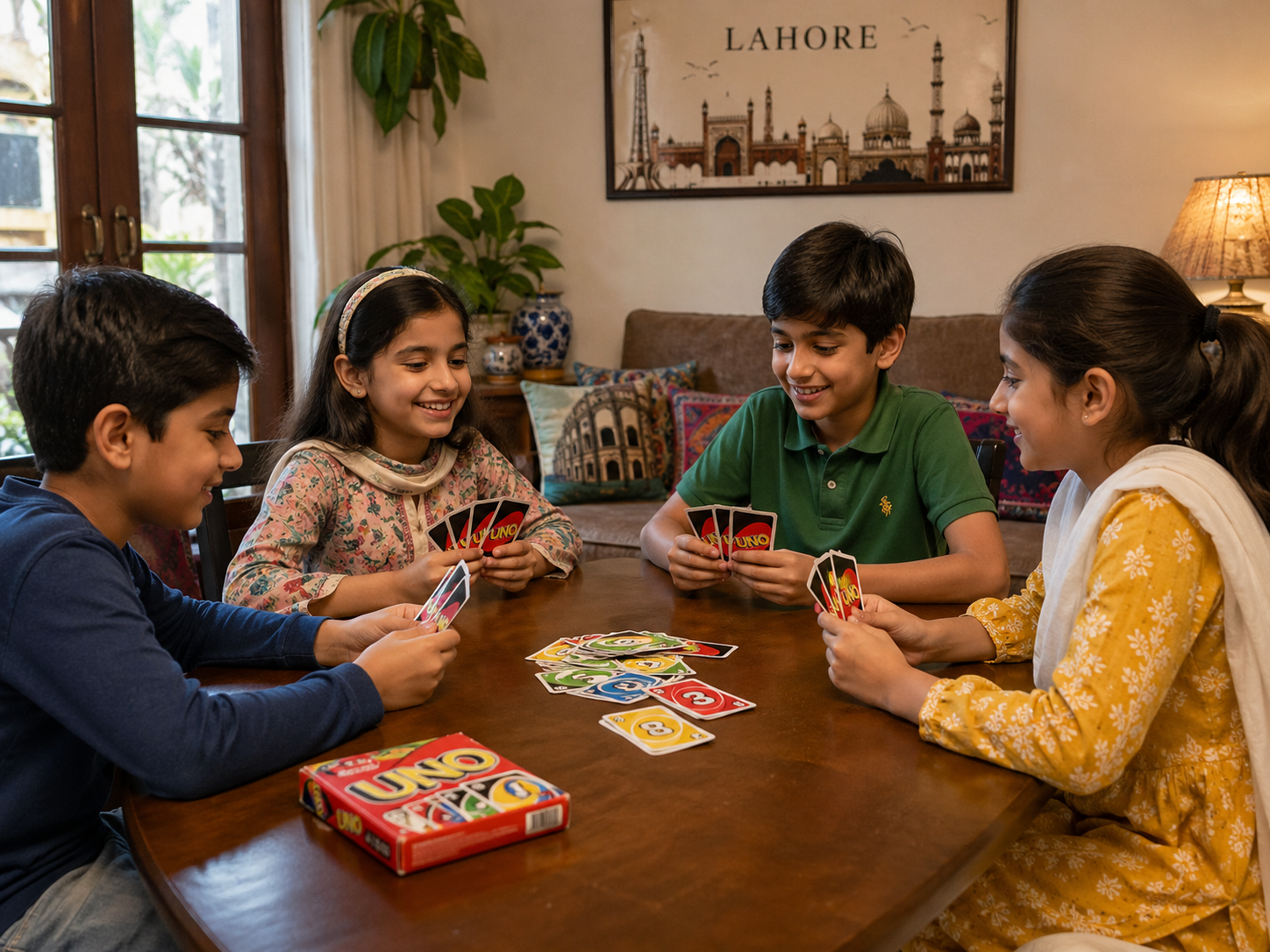
Card games create face-to-face family time. Instead of everyone using separate screens, parents, siblings, and cousins can sit together and play.
This helps children learn.
Fair play
Respect for rules
Taking turns
Reading expressions
Teamwork
Friendly competition
In Pakistan, where family gatherings are common, card games can easily become part of Eid visits, weekend dinners, or cousin hangouts. They entertain children while also teaching them how to behave with others.
Best Card Game Types by Age
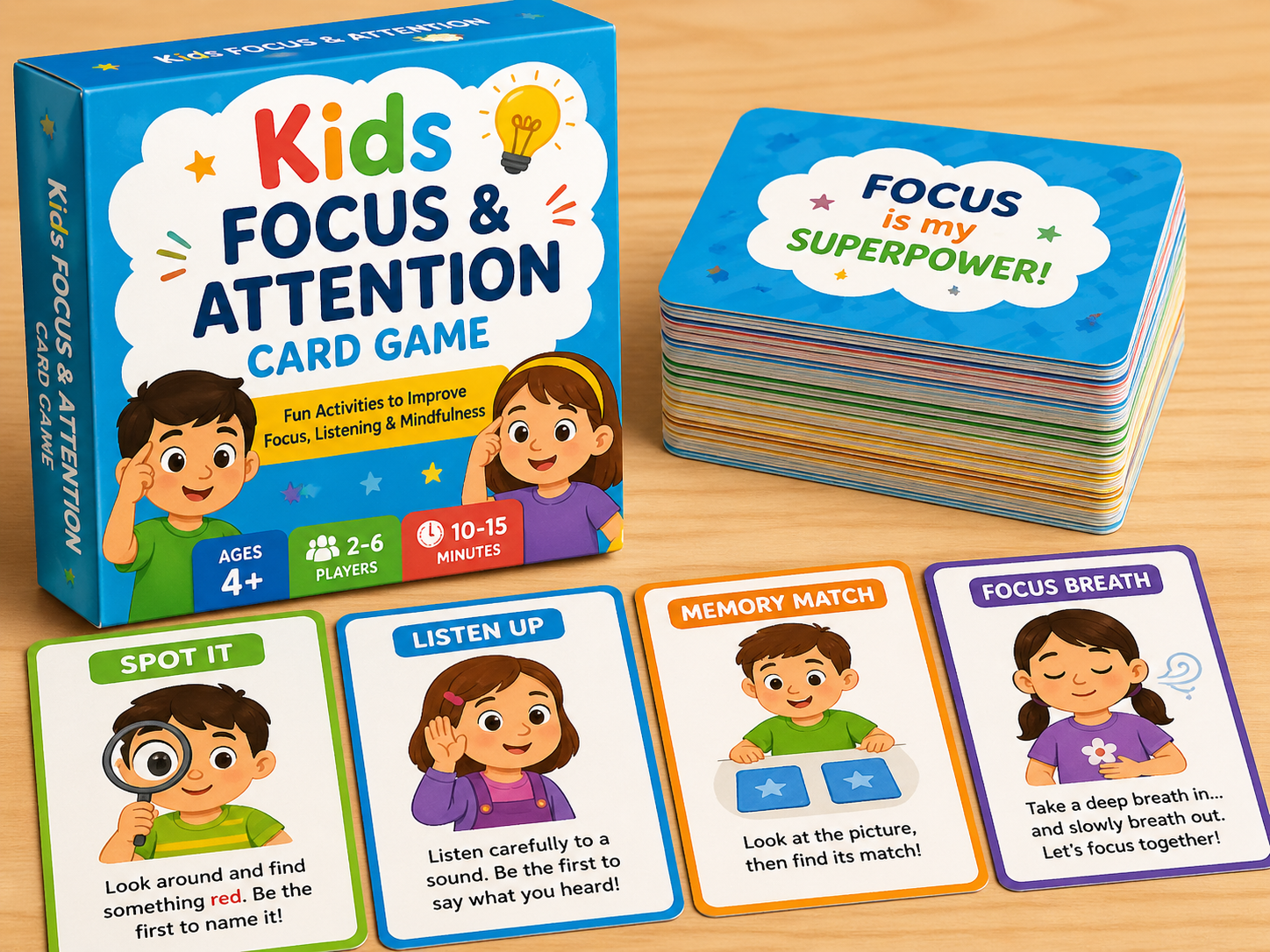
Different ages need different levels of challenge. The right game should feel fun, not frustrating.
| Age Group | Best Game Type | Brain Skills Built |
|---|---|---|
| 3–5 years | Matching, colours, shapes, simple turn-taking | Attention, basic memory, rule-following |
| 6–8 years | Sequencing, number cards, set collection | Working memory, patience, planning |
| 9–12 years | Light strategy and prediction games | Logic, decision-making, flexible thinking |
For younger children, keep the rules short. For older children, add more challenge slowly.
How to Use Card Games at Home in Pakistan
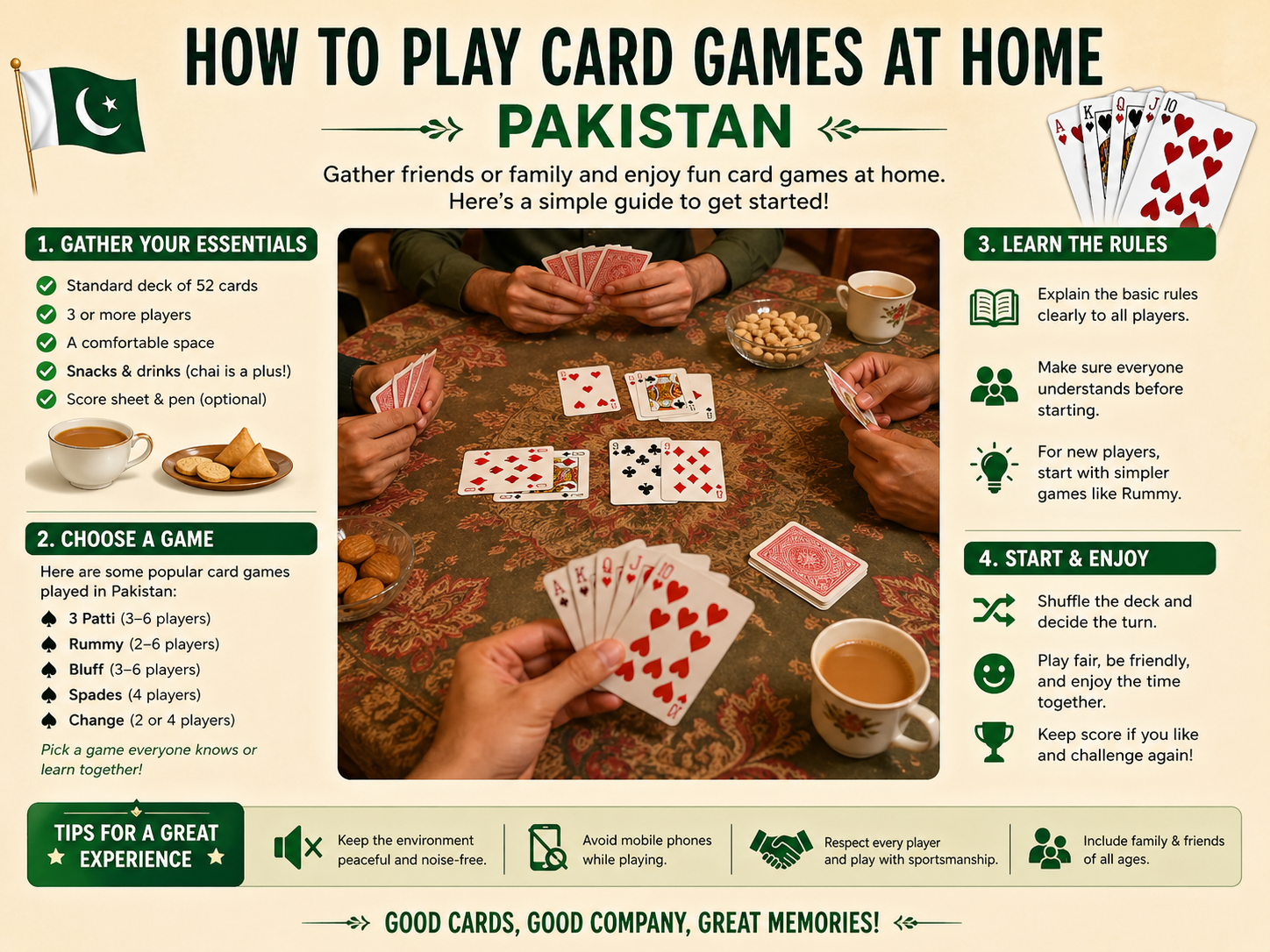
To get real benefits, make card games a small routine. You do not need long sessions.
Try this simple plan.
Play for 10–15 minutes after homework, dinner, or Maghrib.
Start with easy rules so your child feels confident.
Increase difficulty slowly when the game becomes too easy.
Ask thinking questions like, “Why did you choose this card?”
Let your child win sometimes to build confidence.
Rotate games weekly to keep interest fresh.
Avoid scolding mistakes because pressure kills learning.
This routine works well for busy Pakistani families because it does not require tuition-style planning. A small deck, a few minutes, and a relaxed mood are enough.
Tips to Make Card Games More Educational
Card games work best when the child stays relaxed and engaged. Do not turn every move into a test.
Use these simple tips.
Praise effort, not only winning.
Ask your child to explain their move.
Keep the first few games easy.
Stop before the child gets bored.
Play with siblings or cousins for social learning.
Choose age-appropriate games.
Use positive language when the child loses.
The more enjoyable the game feels, the more likely your child will want to repeat it. Repetition is where the brain-building benefit becomes stronger.
Concluding Remarks
Small habits can make a big difference. When played regularly, card games help child brain development by improving memory, focus, decision-making, emotional control, and communication. They also give families a simple way to reduce screen time without making children feel punished.
For Pakistani parents, card games are practical, affordable, and easy to fit into daily life. Start with one age-appropriate deck, play for 10 minutes a day, and keep the mood fun. Whether you buy through COD, Easy paisa, Jazz Cash, or a local toy shop, the real value begins when the family sits together and plays.
FAQs
Q : At what age should kids start playing card games?
A : Children can start simple matching-style card games around age 3. Keep the rules easy and the sessions short. At this stage, the goal is attention, turn-taking, and basic memory.
Q : How do card games improve a child’s memory?
A : Card games ask children to remember rules, patterns, previous moves, and card positions. This strengthens working memory, which supports reading, spelling, maths, and multi-step instructions.
Q : Do card games help with focus and attention span?
A : Yes. Turn-based play teaches children to wait, observe, listen, and respond at the right time. Short daily sessions can help improve the “sit-and-finish” habit.
Q : How long should children play card games daily?
A : A practical range is 10–20 minutes. Short, regular sessions are better than long sessions that make the child tired or bored.
Q : Can card games reduce screen time?
A : They can help, especially when parents join in. A daily 10-minute family card game after dinner can replace passive scrolling with active play and bonding.
Q : Are competitive card games bad for children?
A : No, as long as the competition stays friendly. Avoid teasing or shaming. Healthy competition can teach patience, resilience, and decision-making.
Q : How do I choose the best card game for my child?
A : Choose by age, interest, and temperament. Younger children usually enjoy matching and colour games. Older children may enjoy strategy-based games. If your child gets frustrated, simplify the rules.