

Blogs
Age-Wise Card Games Buying Guide (Pakistan): What to Buy from Age 3 to Adults
Apr
Age-Wise Card Games Buying Guide (Pakistan)
Card games are a simple win for Pakistani homes: no screens, no charging, no big setup. One good deck can keep kids busy after homework, turn a weekend chai session into family time, or make a teen hangout more fun.
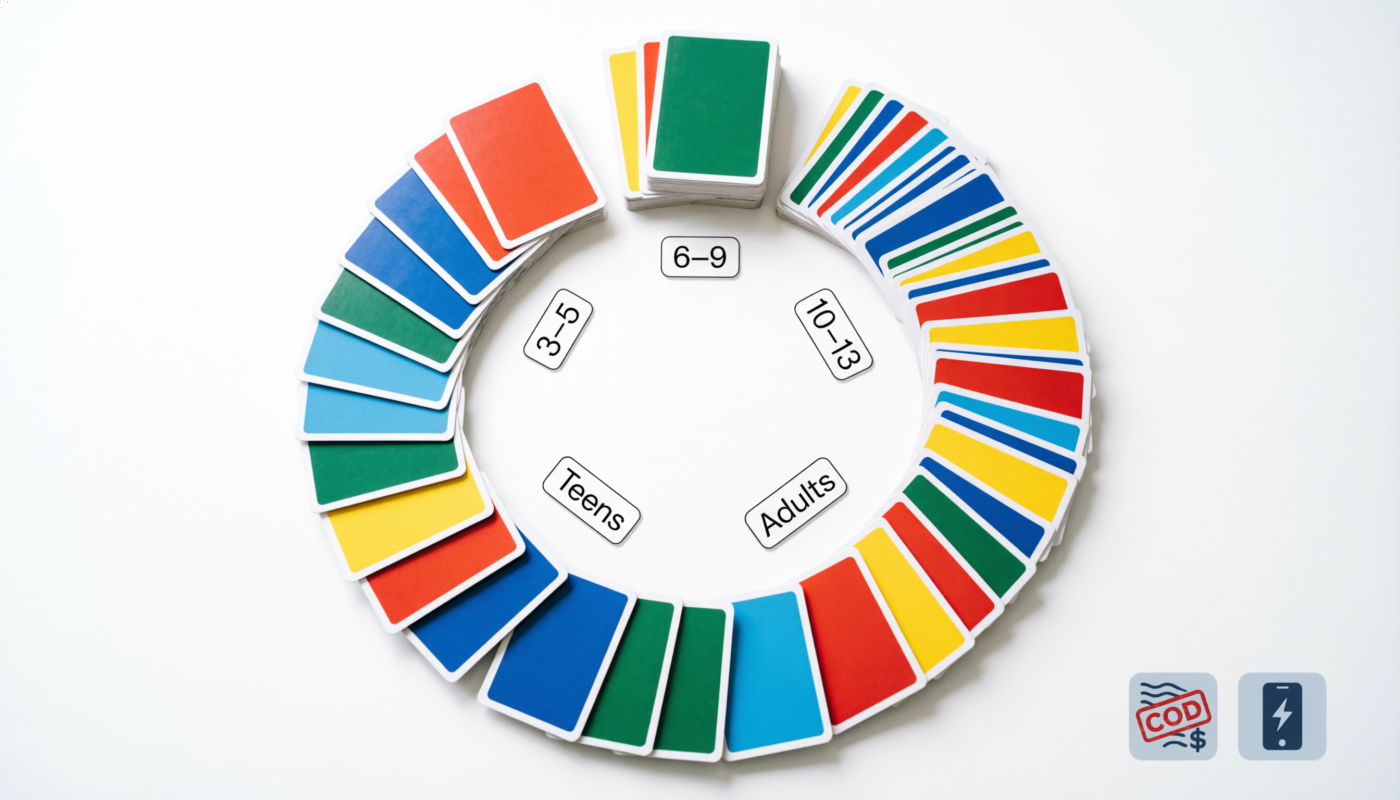
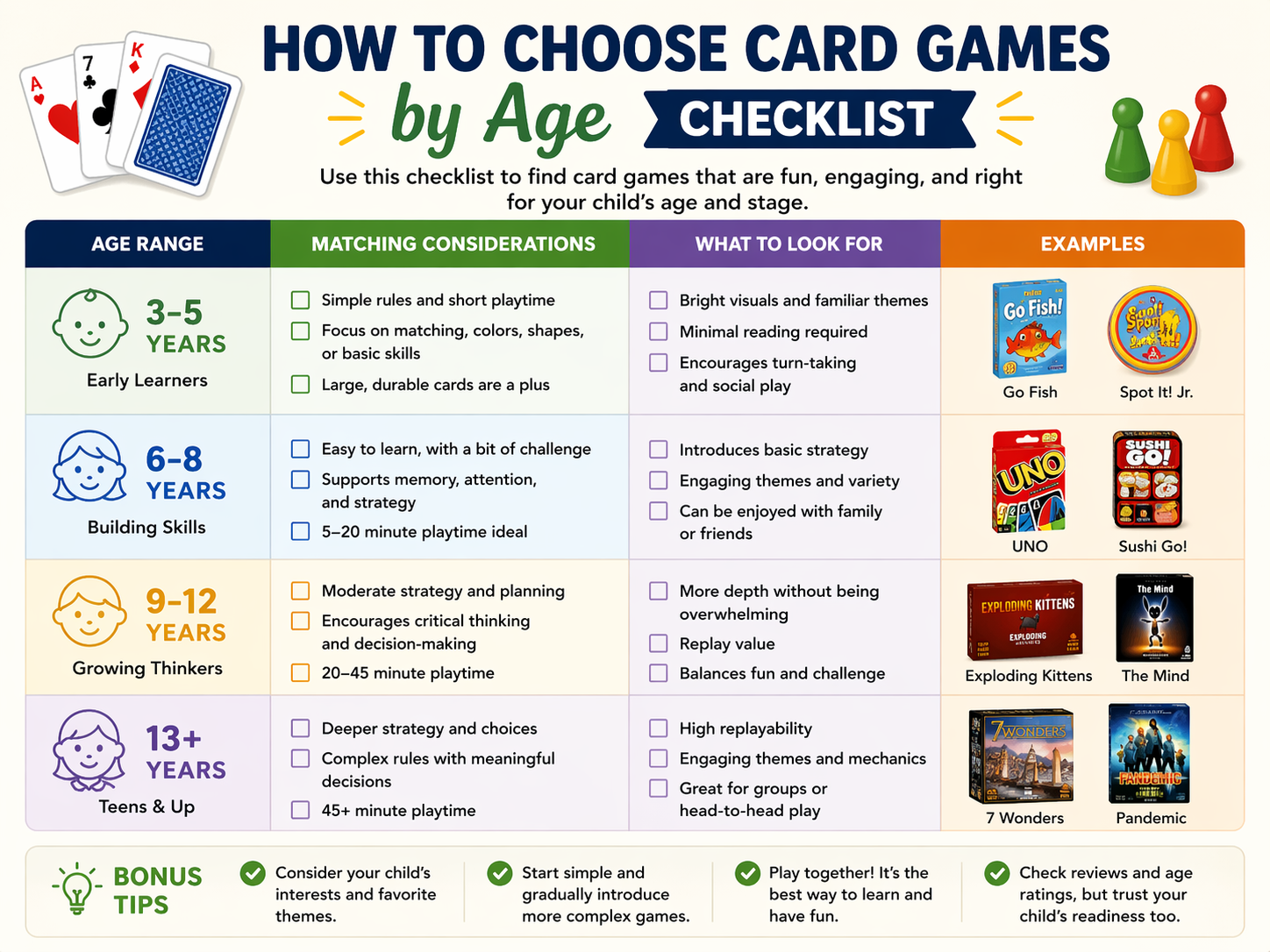
This age-wise card games buying guide helps you choose the right card game based on age, reading level, attention span, player count, and play style. For ages 3–5, pick picture-based matching or memory games. For ages 6–9, choose simple rules and quick rewards. Pre-teens usually enjoy competitive decks, while teens and adults often prefer party, bluffing, classic, or strategy card games.
In Pakistan, also check practical details before buying: card quality, cash on delivery, Easy paisa/Jazz Cash options, return policy, and delivery timelines for cities like Karachi, Lahore, Islamabad, Rawalpindi, and Faisalabad.
Why Age Matters When Buying a Card Game
A card game that works for one age group can completely fail for another. A 4-year-old may love big animal pictures, but a 13-year-old will probably call the same deck “babyish.”
Age affects.
Reading ability: Some games need players to read instructions on every card.
Attention span: Younger kids need quick rounds and simple repetition.
Motor skills: Small or slippery cards can be hard for little hands.
Emotional readiness: Some children struggle with games that involve stealing cards or knocking others out.
Learning goals: Memory, counting, vocabulary, teamwork, patience, and strategy all develop at different stages.
In practice, Pakistani buyers should also look for thicker cards. Thin paper decks can bend quickly, especially in humid weather or busy homes where siblings, cousins, and guests use the same game again and again.
Age 3–5: Simple Matching, Colors & Memory
For preschoolers, keep it visual and easy. The best card games for ages 3–5 have big pictures, bright colors, very few rules, and short turns.
At this age, the goal is not “winning properly.” The goal is helping the child recognize patterns, wait for their turn, and enjoy playing with others.
Best card games for ages 3–5
Memory match cards with animals, fruits, vehicles, or household objects
Color and shape matching decks
“Find the pair” picture games
Simple counting cards with clear visuals

What to check before buying
Rounded corners for safer handling
Large, high-contrast images
Minimal text or no text at all
Thick cards that do not tear easily
A small number of cards so the game does not feel overwhelming
A Karachi parent buying a first card game for a 4-year-old will usually do well with an animal memory deck. The child learns names, builds recall, and the whole family can join for a 10-minute round after dinner.
Age 6–9: Light Strategy + Quick Rewards
Children aged 6–9 can usually follow rules, count points, and understand simple competition. They still need fast rounds, though. Long games with too many instructions can make them lose interest.
For this age group, this age-wise card games buying guide recommends decks that combine fun with basic skill-building.
Best card games for ages 6–9
Number and pattern games
Simple family card games
Speed and observation games
Matching games with scoring
Beginner-friendly educational card games

Best features to look for
Clear icons
Easy scoring
Short rounds of 5–15 minutes
Rules that adults can explain quickly
Enough replay value for siblings or cousins
Pakistan buying tip: Choose listings that show real product photos, mention COD clearly, and explain what is included in the box. For gifts, check delivery options in Lahore, Islamabad, Karachi, or your target city before placing the order.
Age 10–13: Competitive, Skill-Building & Not Too Childish
Pre-teens want games that feel more grown-up. They enjoy competition, smart moves, action cards, and games they can get better at over time.
A good card game for ages 10–13 should be easy to learn but not too easy to master.
Best card games for ages 10–13
Classic competitive card games
Action-card games with skips, reverses, or special moves
Strategy-lite decks with hand management
Team-based games with simple rules
Fast family games with replay value
What to avoid
Overly childish artwork
Games with too much reading on every card
Long rulebooks
Games that only work for very young childrenDecks with weak card quality
This is a great age for family competition. The game should feel exciting without becoming too complicated.
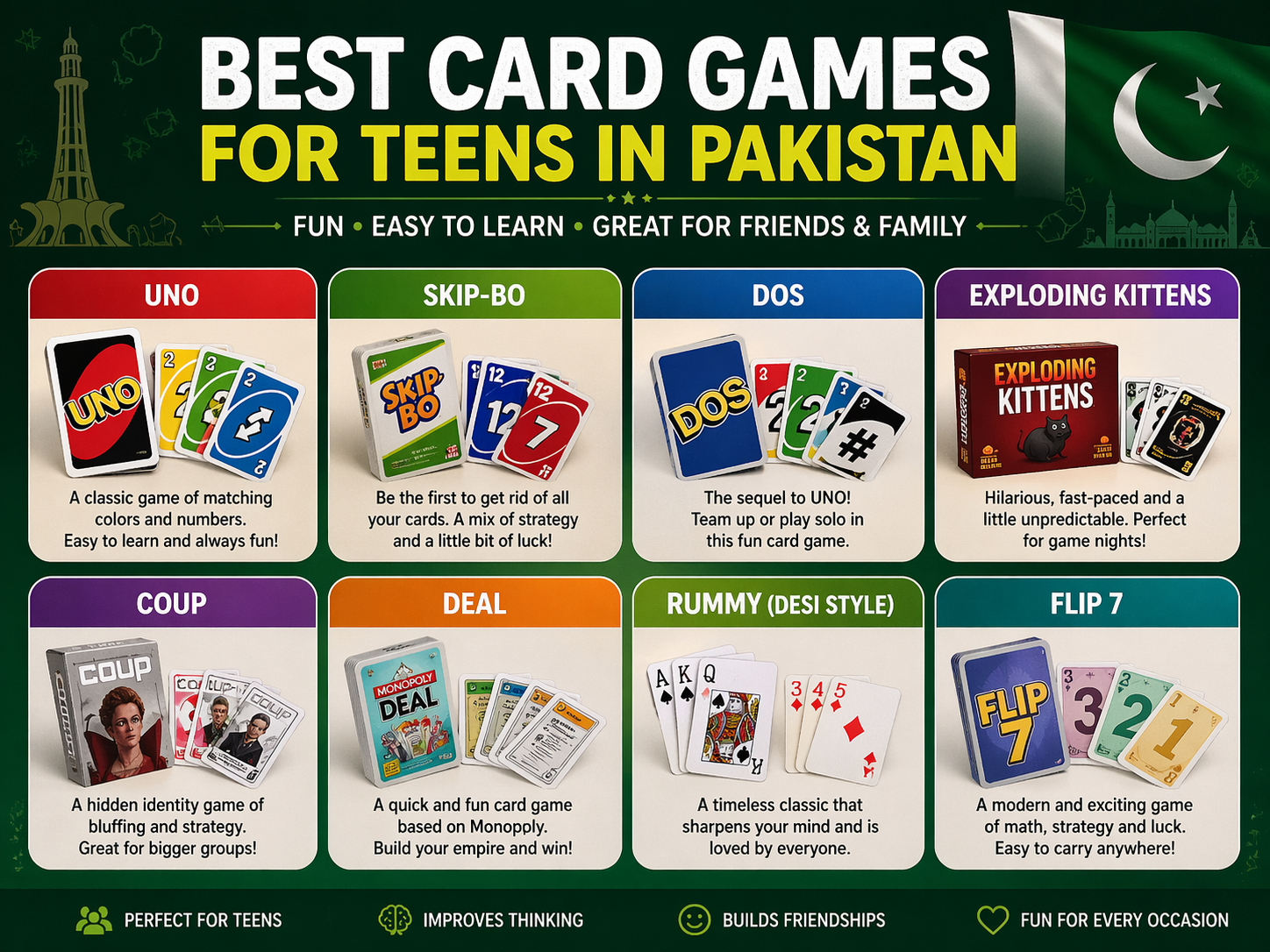
Teens 14–17: Party, Bluffing, Speed & Social Play
Teenagers usually want card games that create reactions. Think bluffing, surprise wins, team banter, fast rounds, and funny moments.
This is where the focus shifts from learning to social energy.
Best card games for teens
Party card games
Bluffing and deduction games
Fast reaction games
Group-friendly challenge decks
Portable games for school, hostel, or travel
What matters for Pakistani teens
Look for 4–8 player support for gatherings.
Choose compact decks that are easy to carry.
Avoid games that depend too much on foreign cultural references unless the players already enjoy that style.
Check whether the content suits your home or gathering environment.
A Lahore hostel student, for example, will usually prefer a compact party deck that fits in a bag and works in a small common room. Fast rounds, low setup, and loud reactions matter more than complicated rules.
Adults & Families: Classics, Strategy & One Deck Everyone Can Play
For adults, the best choice depends on the group. Some families want light fun after dinner. Others enjoy deeper strategy and longer sessions.
The safest pick is usually a deck that is easy to teach, works for different ages, and does not take too long to play.
Best card games for adults and families
Classic family card games
Strategy-focused card games
2-player card games for couples
Party decks for gatherings
Easy-to-teach games for mixed-age groups
Quick checklist for adults
Before buying, ask.
Does the game work for 2 players, 4 players, or 6+ players?
Is the round length realistic for your routine?
Can new players learn it quickly?
Is the card quality strong enough for weekly use?
Will elders, teens, and kids all understand the rules?
For many Pakistani households, a 4–6 player deck is the sweet spot. It works for siblings, parents, cousins, and small guest gatherings.
How to Choose the Right Deck: Quick Buying Checklist
Use this simple checklist from our age-wise card games buying guide before you order.
Age and reading level: Can the player understand the cards without help?
Player count: Is it for solo play, 2 players, or a family group?
Round length: Do you need a 10-minute game or a longer 45-minute session?
Card quality: Are the cards thick, coated, and durable?
Payment options: Does the seller offer COD, Easy paisa, or Jazz Cash?
Delivery coverage: Can they deliver to your city on time?
Return policy: Is there support if the deck is damaged or incomplete?
Common Mistakes Pakistan Buyers Make
Many buyers choose a card game because it looks popular, not because it suits the player. That is how games end up unopened in drawers.
Avoid these mistakes.
Buying text-heavy games for kids who are not confident readers Ignoring player count
Choosing a 2-player game for a family of 6
Buying thin cards that bend after a few uses
Not checking if the deck is sealed and complete
Ordering late when the game is meant for a birthday or Eid gift
Skipping reviews and real product photos
A card game does not need to be expensive to be good. It just needs to match the player’s age, group size, and patience level.
Last Words
A good card game is one of the easiest value-for-money purchases for Pakistani families. It keeps kids busy, gives teens something fun to do together, and brings adults into the same room without screens.
The smartest approach is simple: match the deck to the player’s age, reading comfort, attention span, and group size. This age-wise card games buying guide helps you avoid games that are too hard, too childish, or not practical for your home.
Before buying, shortlist 2–3 options by age, confirm COD or Easy paisa/Jazz Cash, check card quality, and pick the deck your group will actually play.
Browse your age category first, then choose a durable card game that fits your family size, play style, and delivery needs in Pakistan.
FAQs
Q : What is the best card game for kids aged 3–5?
A : For ages 3–5, choose picture-based memory or matching card games with large visuals and minimal text. These games help children build attention, vocabulary, and turn-taking without confusing rules. Thick cards and rounded corners are a plus.
Q : What card games are good for 6–9 year old’s?
A : Children aged 6–9 usually enjoy simple rule-based games with quick rounds, clear icons, and easy scoring. Matching, counting, observation, and light strategy games work well. Aim for games that can be played in 5–15 minutes.
Q : What card games suit 10–13 year old’s?
A : Pre-teens usually prefer competitive games that feel more grown-up. Classic action card games and strategy-lite decks are good choices because they are easy to learn but still challenging. Avoid games with childish visuals or too much text.
Q : What are the best card games for teens in Pakistan?
A : Teens often enjoy party, bluffing, speed, and social card games. Look for decks that support 4–8 players and are easy to carry to gatherings, hostels, or family events. Also check COD, Easy paisa/Jazz Cash, and delivery reliability before ordering.
Q : How do I choose a card game by age?
A : Start with reading level and attention span. Ages 3–5 need pictures and matching, ages 6–9 can handle simple rules, ages 10–13 enjoy competition, and teens or adults usually prefer social or strategy-based games. Also match the player count to your household.
Q : How do I check card game quality before buying online?
A : Look for real photos, card thickness details, reviews, and clear packaging information. Thin paper cards bend quickly with frequent use. In Pakistan, also check COD availability, return policy, and whether the deck is sealed and complete.
Q : How many players should a family card game support?
A : For most Pakistani homes, 4–6 players is a practical range because it fits siblings, parents, and cousins. If you often host guests, choose a deck that supports 6–8 players. Always check the player count before ordering.
Q : Are card games a good gift in Pakistan?
A : Yes, card games are easy to gift for birthdays, Eid, family visits, and casual celebrations. Choose an age-appropriate deck, check delivery time, and prefer sealed packaging if you are sending it directly to someone.
Q : What payment methods should I look for when ordering card games in Pakistan?
A : COD is common, while Easy paisa and Jazz Cash are useful for quick checkout or sending gifts to another city. Always confirm payment options, delivery coverage, and return policy before placing the order.