
Blogs
Educational Toys That Improve Memory & IQ (Pakistan Guide for Smart Parents)
Apr
Educational Toys for Faster Learning: Memory Games, Puzzles & STEM
Parents across Pakistan are looking for toys that do more than keep kids busy. The right educational toys that improve memory and IQ can help children build focus, strengthen recall, and get better at solving problems through everyday play.
The best options are usually simple and screen-free: memory matching games, puzzles, building sets, logic toys, and pattern activities. When children use them regularly, these toys can support working memory, attention, visual-spatial thinking, and reasoning skills that matter in school and daily learning.
That matters even more for families trying to balance study time, screen time, and practical shopping habits. In Pakistan, many parents prefer COD, fast delivery, and payment options like Easy paisa and Jazz Cash, so it helps to know exactly which toys are worth buying and why.
What Are the Best Educational Toys That Improve Memory and IQ?
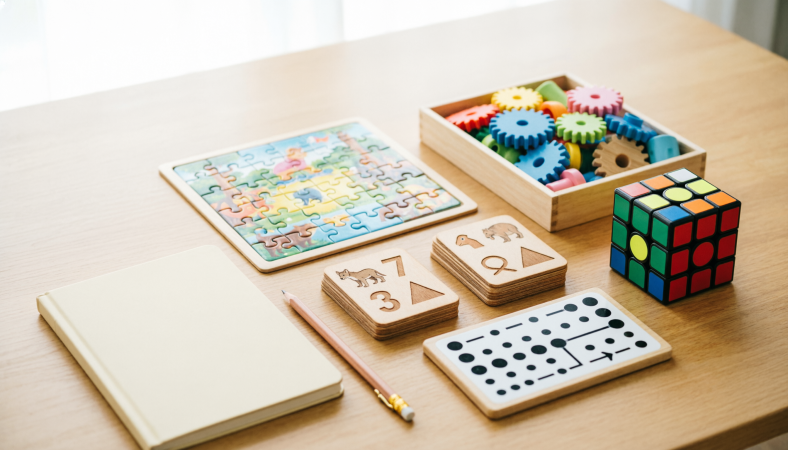
The best educational toys that improve memory and IQ are toys that make children think, remember, compare, and solve. Strong examples include memory card games, jigsaw puzzles, STEM building blocks, Rubik’s-style cubes, and pattern or sequence games.
These toys do not “raise IQ overnight,” but they can improve the skills linked to better learning performance: working memory, attention span, problem-solving, and logical thinking. In practice, the biggest gains usually come from consistent play with the right difficulty level.
Why These Toys Actually Help
Children learn best when play asks the brain to do real work. A toy becomes educational when it pushes a child to notice details, remember information, test ideas, and correct mistakes.
Memory improves through repetition
Kids get better at memory when they practice.
Recalling where a card or object was
Following a sequence in order
Staying focused long enough to finish a task
IQ-style skills improve through challenge
Reasoning grows when children work on.
Logic and cause-and-effect
Isual-spatial thinking
Problem-solving through trial and error
PlanVning ahead
That is why the most useful toys are usually the ones that require action, patience, and thinking, not just lights and buttons.
Memory Matching Games for Working Memory
Memory cards, flip-and-match sets, and picture matching boards are some of the easiest ways to support recall. They are simple, affordable, and effective.

Why they work
Kids must remember locations, pictures, and patterns
They improve attention and patience
They are easy to scale from beginner to harder levels
A child might begin with just 8 cards and move up to 24 cards once the game starts feeling easier. That gradual increase is what makes the toy useful over time.
For many Pakistani families, this is a practical starting point because matching sets are widely available, easy to order, and work well for short daily play sessions.
Jigsaw Puzzles and Picture Puzzles for Reasoning
Puzzles remain one of the best educational toys that improve memory and IQ because they train both recall and reasoning at the same time.
A child has to remember shapes, notice patterns, test where pieces fit, and keep going even when the answer is not obvious. That is valuable brain work.
Key benefits
Stronger visual-spatial skills
Better pattern recognition
More patient problem-solving
Improved focus on one task

Simple age guide
| Age | Good puzzle range |
|---|---|
| 3–4 | 12–24 piece puzzles |
| 5–7 | 48–100 piece puzzles |
| 8+ | 150–300+ pieces and logic puzzles |
STEM Building Blocks for Smart Thinking
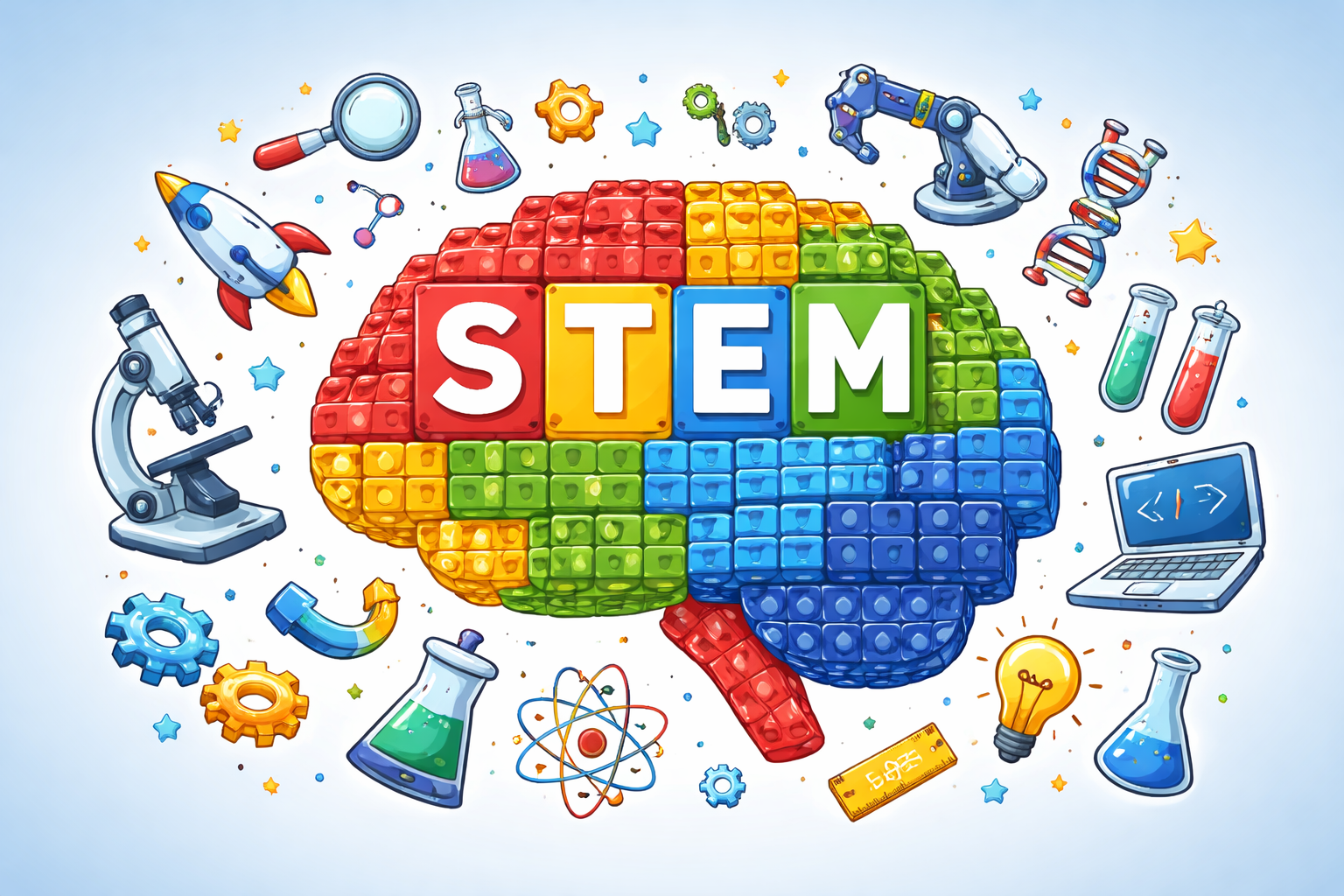
Building toys help children think ahead. Blocks, magnetic tiles, gears, and beginner engineering kits all encourage kids to test ideas with their hands.
When a child realizes, “If I build higher, I need a stronger base,” that is more than play. It is planning, reasoning, and cause-and-effect learning happening in real time.
What building toys can support
Spatial awareness
Creative thinking
Early engineering logic
Concentration and persistence
For parents in Karachi, Lahore, Islamabad, and even tier-2 cities, STEM-style toys can be a smart buy because they often have strong repeat-play value. Kids do not finish them once and forget them. They come back to them.
Recommended pick: /product/stem-building-block-set/
Rubik’s Cubes and Twist Puzzles for Older Kids
For older children and teenagers, twist puzzles can be especially useful. They require players to remember steps, plan future moves, and stay calm while solving something that feels difficult at first.
Skills they build
Working memory
Mental flexibility
Visual rotation
Persistence
This makes them a strong option for children who enjoy challenge-based play, especially those who get bored with simpler toys too quickly.
Pattern, Sequence, and Logic Games for Faster Thinking
Some toys give children that “I figured it out” feeling very quickly. Pattern boards, sequence cards, and beginner logic grids are excellent for this.
They help children learn how to spot rules, predict what comes next, and organize information clearly. That kind of structured thinking can support both classroom learning and everyday confidence.
Good examples
Copy-the-pattern boards
Arrange-in-order sequence cards
Beginner logic and deduction games
How to Choose Educational Toys in Pakistan
Buying the right toy matters just as much as choosing an educational category. A great toy for one child can be frustrating or boring for another.
Match the toy to age and ability
Too easy, and the child loses interest. Too hard, and the toy gets ignored. The best choice feels challenging but still doable.
Choose screen-free, hands-on options first
Physical toys usually do more for focus, fine motor practice, and calmer attention. They are also a better fit for parents trying to reduce passive screen time.
Look for repeat-play value
The best educational toys that improve memory and IQ are toys children want to use again and again. Repetition is where the benefit comes from.
Buy by goal
Use this shortcut.
For memory: matching cards, recall games, sequence toys
For reasoning: jigsaw puzzles, logic games
For spatial skills: blocks, magnetic tiles, cubes
For focus: puzzles, construction toys, pattern boards
Keep shopping practical
For many parents in Pakistan, it helps to choose toys that are easy to reorder, gift, or buy through familiar payment methods like COD, Easy paisa, or Jazz Cash.
Real-Life Pakistan Examples
Lahore example: better recall for schoolwork
A class-2 student keeps forgetting spellings and multi-step instructions. The parent adds 15 minutes of memory games and sequence cards after homework, 4–5 days a week. Over time, the child starts recalling instructions faster and needs fewer reminders.
Karachi example: replacing passive screen time
A family swaps 30 minutes of YouTube time for puzzles and building blocks. The child stays more engaged, gets mentally tired in a healthier way, and bedtime becomes less of a struggle.
These toys do not replace study. They make the brain more ready for study.
How to Use These Toys Without Kids Getting Bored
Consistency matters, but variety helps.
Try rotating 2–3 toys through the week instead of offering everything at once. A simple routine could look like this:
Monday: puzzle time
Tuesday: memory cards
Wednesday: blocks
Thursday: logic game
Friday: favorite toy repeat
Keep sessions short and manageable. For most children, 15–25 minutes daily is enough. Younger kids may do better with 10–15 minutes.
Many parents in Pakistan also find that fixed routines work best, such as after homework or after Asr, because the child starts expecting that play window.

Final Thoughts
The most effective educational toys that improve memory and IQ are not always the most expensive ones. They are the toys that encourage children to remember, focus, compare, build, and solve.
If you want better learning habits at home, start with one memory toy and one reasoning toy. Choose something age-appropriate, keep it screen-free where possible, and use it regularly. Over time, the results often show up where parents care most: stronger focus, faster recall, and more confidence during learning.
FAQs
Q : Do educational toys really improve memory and IQ?
They can improve the skills connected to memory and IQ-style performance, especially working memory, attention, and problem-solving. The biggest difference usually comes from regular use, not one-time play.
Q : What are the best educational toys that improve memory and IQ for ages 3–5?
A : For ages 3–5, good options include chunky puzzles, shape sorters, picture matching cards, and simple pattern boards. These are easier for younger kids to handle without unnecessary frustration.
Q : What toys help with concentration and focus for school-going kids?
A : Memory games, jigsaw puzzles, building blocks, and logic boards are all useful. They encourage children to stick with one goal until they finish.
Q : Are physical toys better than screen-based learning games?
A : In many cases, yes. Physical toys are usually better for focus, fine motor skills, and calmer play. Screen-based games can help in some situations, but they often add more stimulation than reflection.
Q : How long does it take to notice improvement?
A : Some parents notice small changes in focus within 2–4 weeks when children play 4–5 days a week. Stronger gains usually take 2–3 months of steady use.
Q : Do these toys work for teenagers too?
A : Yes. Older kids and teenagers often benefit from strategy games, advanced puzzles, Rubik’s cubes, and higher-level STEM kits that challenge planning and mental flexibility.
Q : How do I choose the right difficulty level?
A : A good toy should feel slightly challenging. If a child gives up in 2 minutes, it is probably too hard. If they solve it instantly every time, it is too easy.