

Blogs
Card Games That Improve Social Skills in Kids (Top Picks for Pakistan)
Apr
Card Games That Improve Social Skills in Kids for Family Game Night
Kids do not learn turn-taking, patience, or polite conversation overnight. They build those habits through practice, and one of the easiest ways to help is with card games. For parents, teachers, and caregivers looking for Card Games That Improve Social Skills in Kids, the good news is simple: the right games can teach sharing, listening, teamwork, and emotional control in a way that feels fun instead of forced.
For Pakistani families, this works especially well. A card deck is affordable, easy to carry, and perfect for homes, classrooms, tuition groups, and family gatherings in Karachi, Lahore, Islamabad, and beyond. During weekends, holidays, or even load-shedding, card games can turn a short play session into a valuable social lesson.
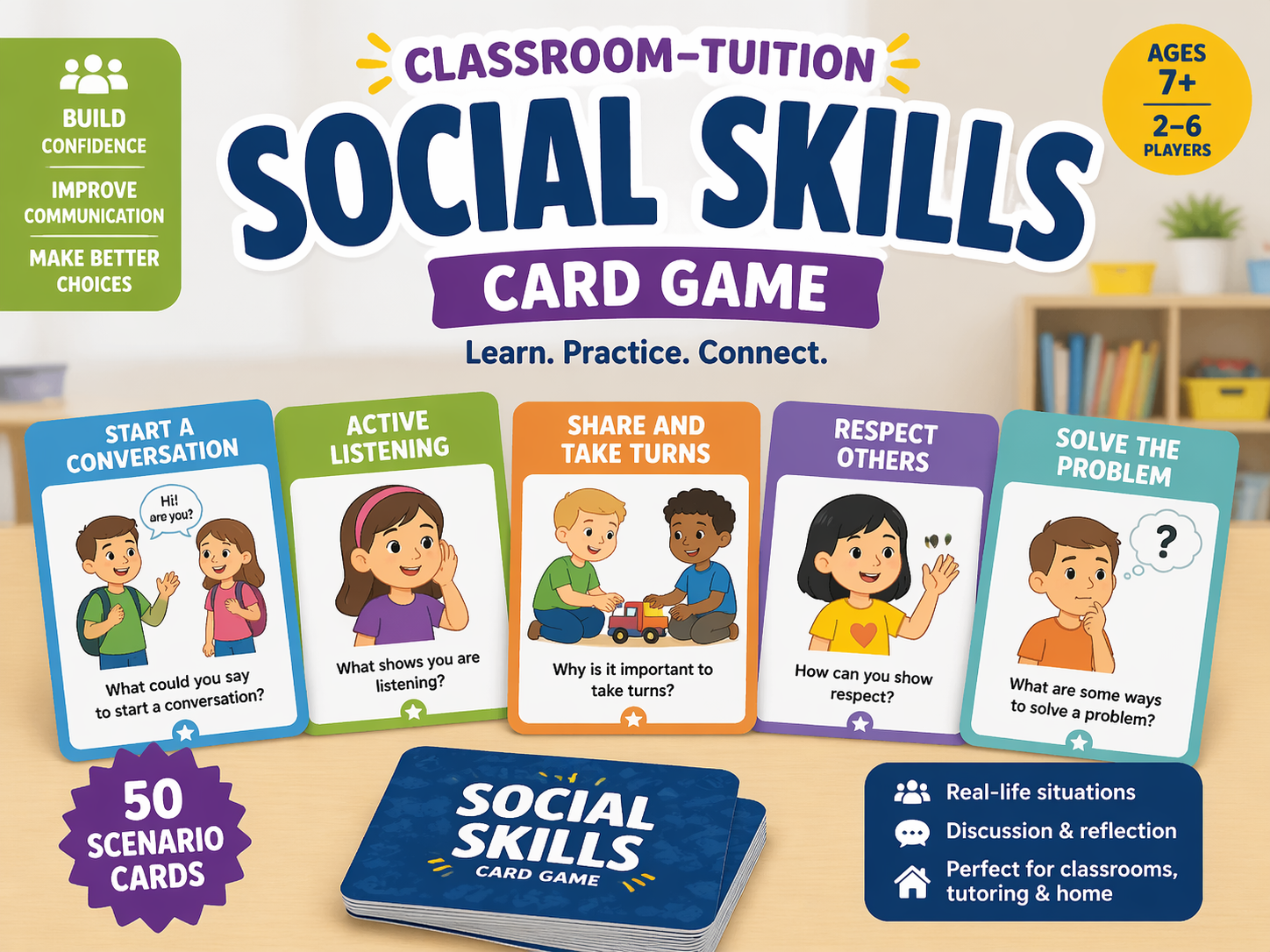
Card Games That Improve Social Skills in Kids help children practice real-life behaviors like waiting their turn, following rules, speaking respectfully, listening to others, and handling wins or losses calmly. Games that involve matching, observation, memory, or cooperative storytelling are especially useful because they create natural moments for patience, empathy, and communication.
That is what makes card games more effective than constant reminders. Instead of hearing “wait your turn” again and again, kids actually live that moment during play.
Why Card Games Work Better Than Lectures
Children usually learn social behavior best when they are involved, not when they are being corrected from the side. Card games create small social situations again and again. A child has to wait, react, listen, speak, accept a rule, and manage disappointment in real time.
That repeated practice can strengthen skills such as.
Turn-taking and patience
Active listening
Rule-following
Teamwork and flexibility
Winning with kindness
Losing without meltdowns
For many parents, that is the biggest benefit of Card Games That Improve Social Skills in Kids. The learning happens naturally while the child is focused on having fun.
Best Card Games That Improve Social Skills in Kids
Matching and Color or Number Games
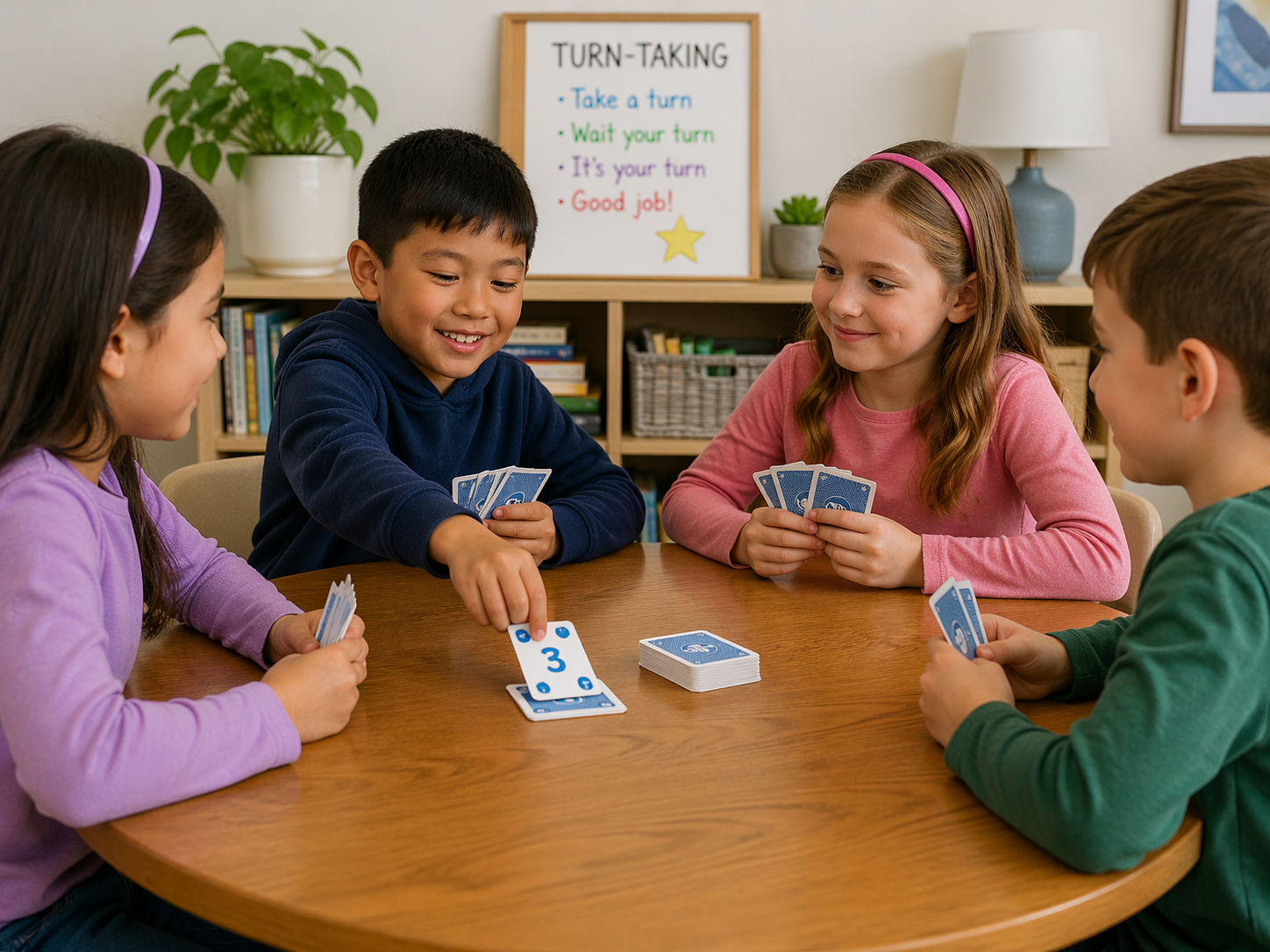
UNO-style games are a great starting point because the rules are easy to understand and each turn is short. That makes them ideal for children who interrupt, rush, or struggle to wait calmly.
Social skills they build.
Waiting for a turn
Following simple rules
Coping with skip or reverse moments
Staying calm when the game changes suddenly
These are some of the most practical Card Games That Improve Social Skills in Kids because they keep children engaged without overwhelming them.
Fast Observation Games
Symbol-matching or “spot it first” style games are excellent for children who need a confidence boost. Shy kids often benefit from quick games because they get many chances to participate without having to speak for too long.
Social skills they build.
Speaking up confidently
Accepting other players’ wins
Staying composed under pressure
Competing without arguing
Cooperative Storytelling Cards
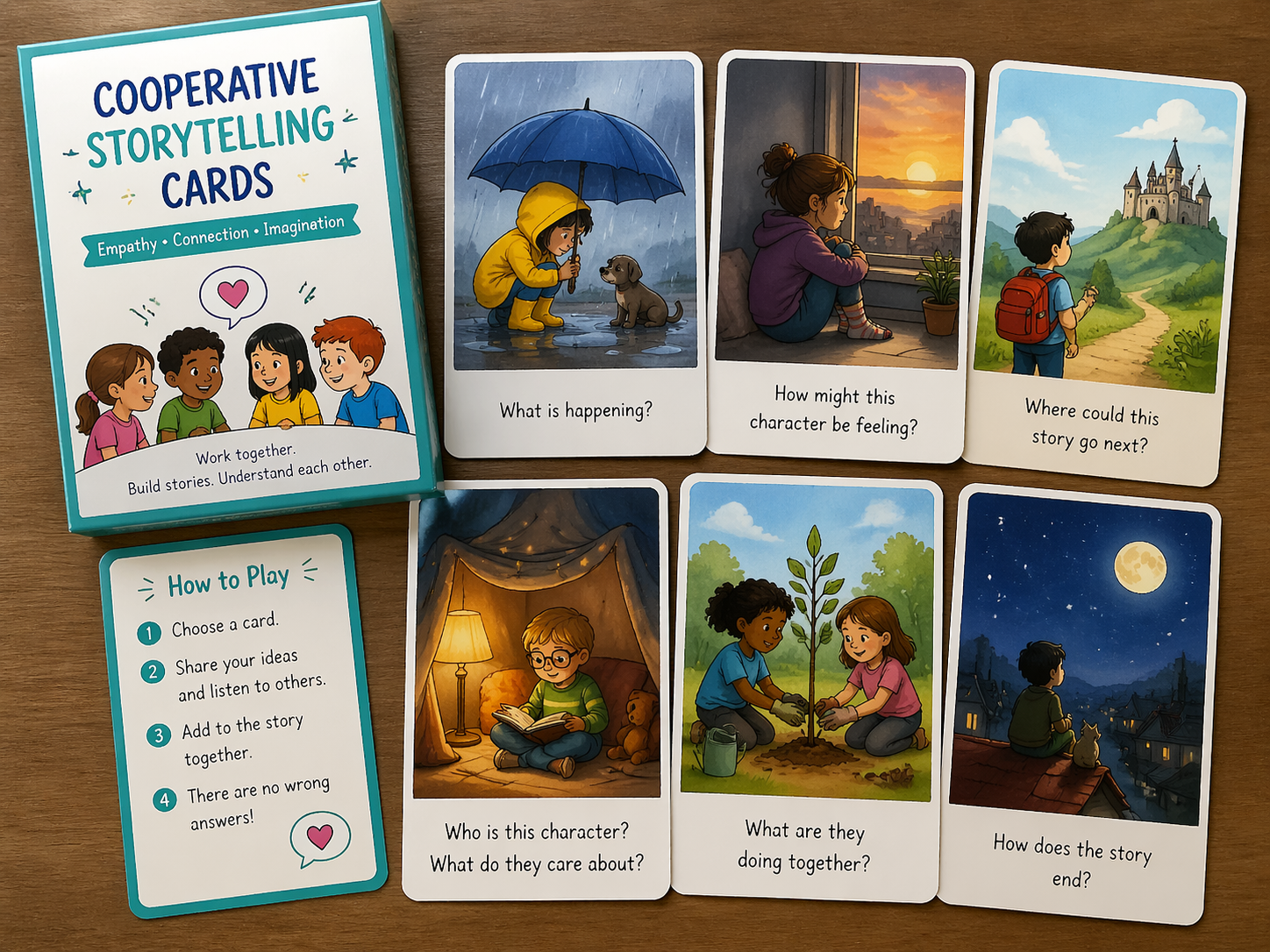
Some of the best Card Games That Improve Social Skills in Kids are not focused on winning at all. Storytelling card decks ask one child to add an idea and another child to continue it. That creates a natural reason to listen before speaking.
Social skills they build.
Empathy
Listening without interrupting
Respecting different ideas
Including quieter children
A helpful rule here is: nobody rejects another player’s idea. Instead, everyone responds with “Yes, and…” That one simple shift can make group play much more respectful.
Light Strategy and Sequencing Games
Kid-friendly sequence or planning games work well for children who need to improve teamwork. These games encourage players to think together, make suggestions politely, and respond to mistakes without blaming others.
Social skills they build.
Cooperative planning
Calm discussion
Problem-solving together
Encouraging language
Memory and Pair Games
For younger children, memory-based card games can be surprisingly effective. They teach kids to pause, observe, and wait instead of grabbing or reacting impulsively.
Social skills they build.
Fair play
Patience
Emotional control
Celebrating others without frustration
Real-Life Pakistan-Friendly Examples
Karachi Family Game Night
A parent in Karachi buys a simple card deck on cash on delivery because they are not sure whether their 6-year-old will even enjoy it. After a few short sessions, they notice something small but important: instead of grabbing the cards, the child starts saying, “It’s your turn.” That is how progress often looks at first. Small, repeatable improvements.
Lahore Tuition Group
In a tuition group in Lahore, a child who gets upset after losing is introduced to a fast observation game. The tutor adds one extra rule: everyone claps for the winner. Over time, the child still wants to win, but the reaction becomes calmer and more respectful.
From a practical parenting point of view, this is why Card Games That Improve Social Skills in Kids are so useful. They let adults teach behavior without turning every lesson into a lecture.
How to Choose the Right Card Game by Age
Ages 4 to 6
Choose simple matching, memory, and short-turn games.
Best for.
Learning to wait
Sharing materials
Following basic rules
Ages 7 to 9
Choose observation games, light strategy games, and simple teamwork activities.
Best for.
Confidence
Patience
Handling competition better
Ages 10 to 12
Choose storytelling decks, cooperative challenge cards, and games with more discussion.
Best for.
Empathy
Communication
Leadership without bossiness
Simple Rules That Make Card Games More Effective
To get the most out of Card Games That Improve Social Skills in Kids, add a few house rules that focus on behavior, not just gameplay.
No interrupting during another player’s turn.
Use kind phrases like “Good try” or “Nice move.”
No teasing after winning.
Take one deep breath before reacting to a loss.
Rotate turns and partners in group play.
End the game with one positive comment for another player.
These little rules matter. In practice, they often shape the social lesson more than the game itself.
Tips for Parents, Teachers, and Caregivers in Pakistan
For families in Pakistan, the best games are usually the ones that are simple to repeat. A card game that can be played in a small lounge, at a dining table, in a tuition center, or during a family visit is often more useful than something that needs lots of setup.
A few practical tips.
Keep sessions short so children stay positive
Choose games with clear rules and quick turns
Start with 2 to 4 players before trying bigger groups
Look for decks available with COD, Easy paisa, or Jazz Cash if shopping online
Let siblings of mixed ages play together when the rules are simple enough
That mix of convenience and social value is exactly why these games work well in local family routines.
Final Take
If you want a simple, screen-free way to help children become more patient, confident, and cooperative, start with a deck of cards. The best Card Games That Improve Social Skills in Kids do more than entertain. They create everyday chances to practice listening, kindness, self-control, and teamwork in a relaxed setting.
For Pakistani parents, teachers, and caregivers, that makes card games a practical tool for both home and classroom use. Pick one age-appropriate game, play it a few times this week, and watch how small social habits begin to improve.
FAQs
Q : What are the best card games for improving kids’ social skills?
A : The best options are games that encourage turn-taking, calm competition, listening, and teamwork. Matching games, symbol-spotting decks, memory games, and cooperative storytelling cards are all strong choices.
Q : How do card games teach turn-taking to kids?
A : Card games create a clear structure: one person plays, the others wait. With repeated play, children start to understand the rhythm of group interaction and become better at waiting without interrupting.
Q: Which card games work best for shy kids?
A : Fast observation games and storytelling cards are often a good fit. They give shy children a chance to participate in small, low-pressure ways and gradually build confidence.
Q : Can card games help with losing gracefully?
A : Yes. Short rounds, calm reactions, and simple rules around sportsmanship can help children handle disappointment better. Praising good behavior matters more than praising the win.
Q : How often should kids play to see improvement?
A : A short session a few times a week is usually enough to build habits. Even 15 to 25 minutes, 3 to 4 times weekly, can create noticeable changes in patience, manners, and communication over time.