Blogs
Age-Wise Educational Toys Buying Guide (Pakistan): What to Buy from 0–10 Years
Apr
Age-Wise Educational Toys Buying Guide (Pakistan)
Buying toys for kids sounds easy until you realize how many options look fun but do very little for learning. The right choice depends less on brand names and more on your child’s age, stage, and attention span.
This age-wise educational toys buying guide is built for parents and gift buyers in Pakistan who want toys that are safe, useful, and worth the money. In simple terms: babies do best with sensory toys, toddlers need stacking and sorting toys, preschoolers learn through pretend play, and older kids benefit from puzzles, strategy games, and beginner STEM kits.
Why an Age-Wise Approach Matters
A toy that works beautifully for a 6-year-old can frustrate a 2-year-old. On the other hand, a toy made for toddlers will not hold the interest of an 8-year-old for long. That is why any smart age-wise educational toys buying guide starts with development, not marketing.
When comparing toys, focus on four things.
Safety for the child’s age
The skill the toy actually builds
Durability for repeated use
Whether the child can enjoy it without constant adult help
That last point matters more than many parents expect. In practice, the best educational toys are usually the ones children return to again and again.
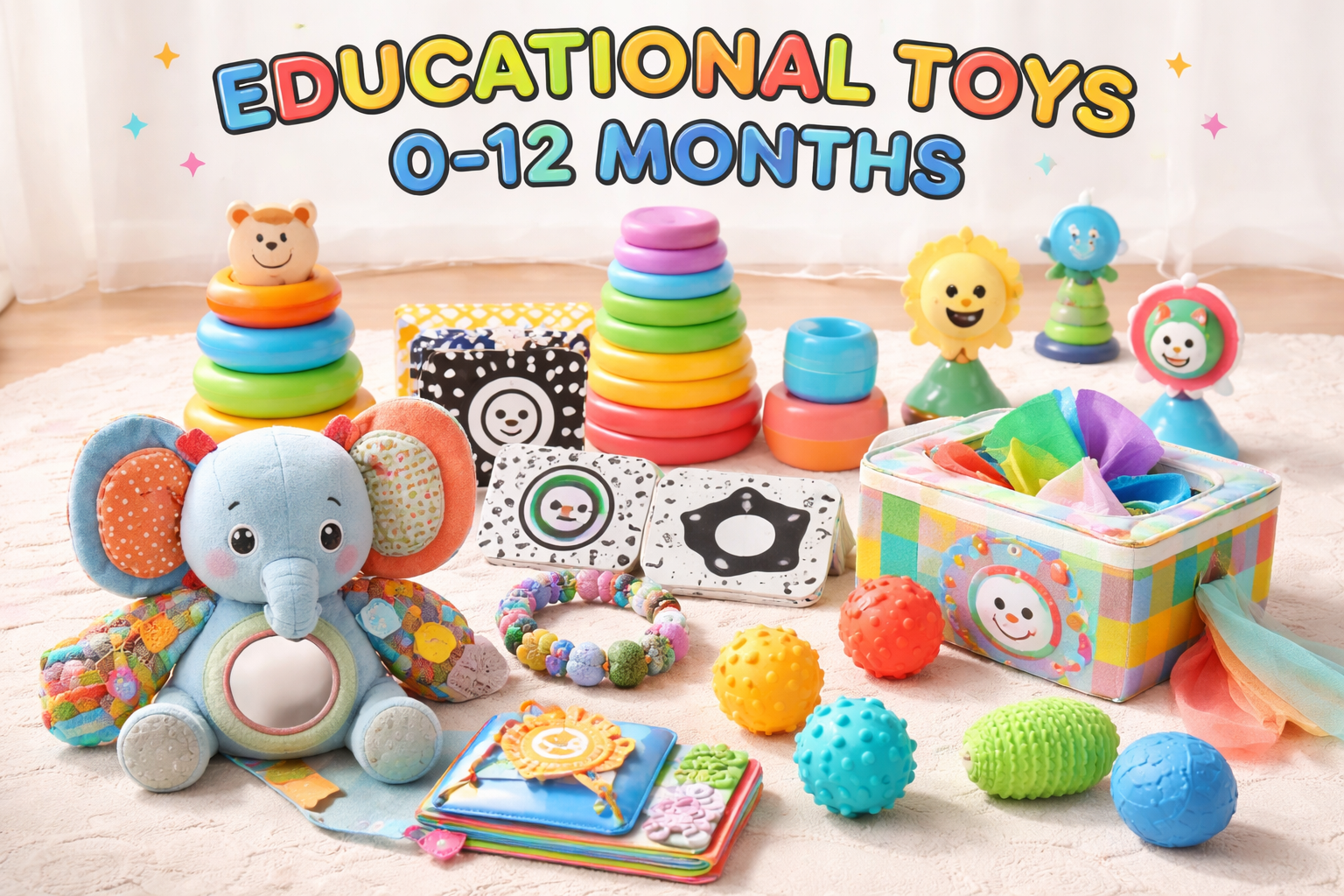
0–12 Months: Sensory Play and Safe Exploration
At this stage, babies are learning through sight, sound, texture, and movement. They are not “playing” in the same way older children do yet, but they are constantly absorbing information.
Skills developing now
Visual tracking
Grasping and reaching
Early cause and effect
Sound recognition
Best toy types
High-contrast soft books
Easy-grip rattles
Soft sensory balls
Textured teething toys
Stacking cups for older babies
What to avoid
Small detachable parts
Sharp plastic edges
Toys with a strong chemical smell
Heavy toys that can hurt if dropped
For Pakistani parents ordering online, size can be misleading. Product photos often make small toys look much bigger than they are. Check dimensions carefully before placing a COD order.
1–2 Years: Stack, Sort, Touch, Repeat
Toddlers learn best through repetition. They love to fill, empty, stack, match, drop, and do the same thing ten times in a row. That is not random behavior. It is how they build coordination and problem-solving.
Skills developing now
Hand-eye coordination
Object recognition
Early language
Problem-solving through trial and error
Best toy types
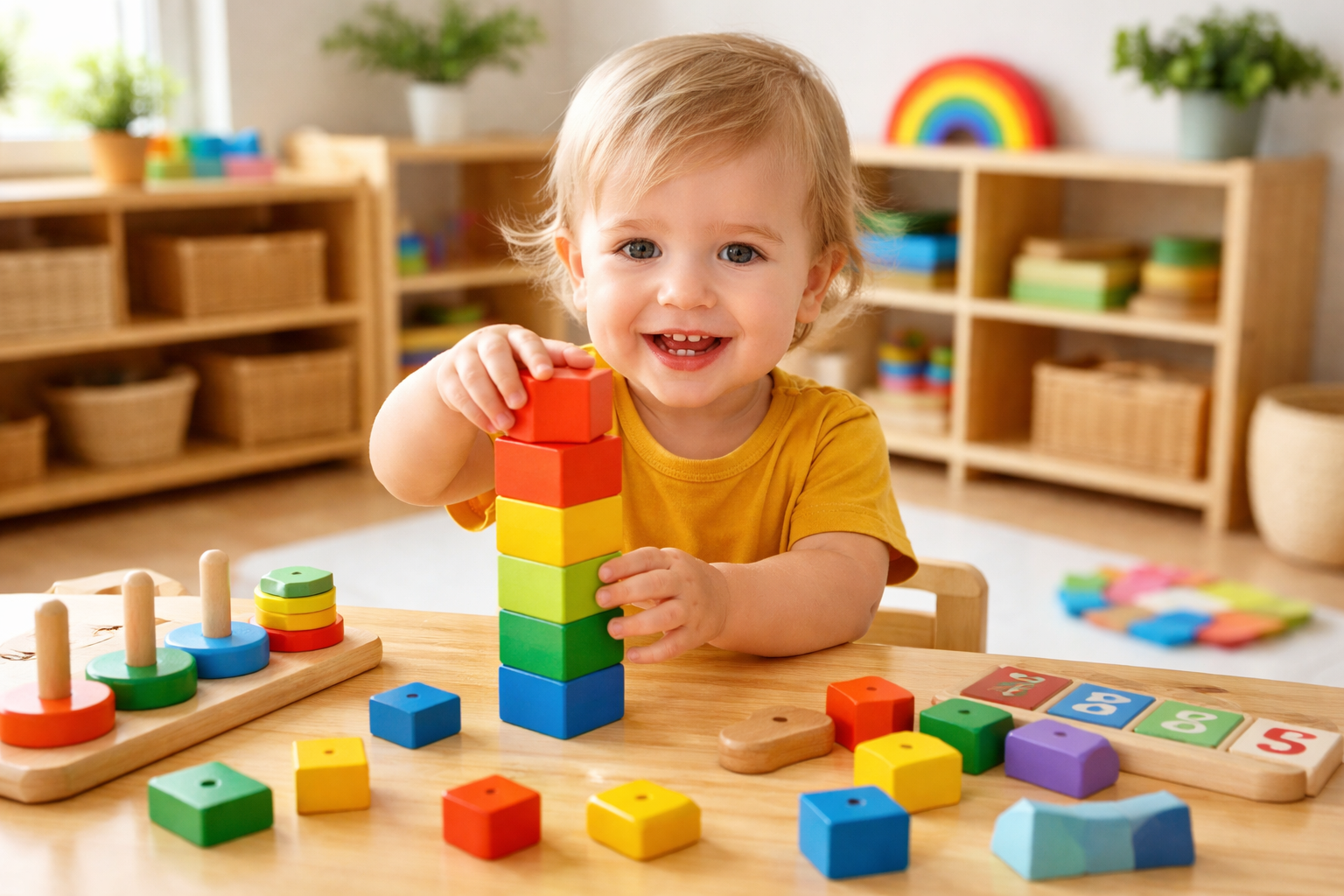
Large building blocks
Shape sorters
Chunky wooden puzzles
Pull-along toys
Simple busy boards
A sturdy block set is often one of the safest buys at this age. Many parents in Karachi, Lahore, and Islamabad want one toy that feels useful for months, not days. Blocks usually deliver because children can stack them, sort them, knock them over, and rebuild.
3–4 Years: Pretend Play and Early Logic
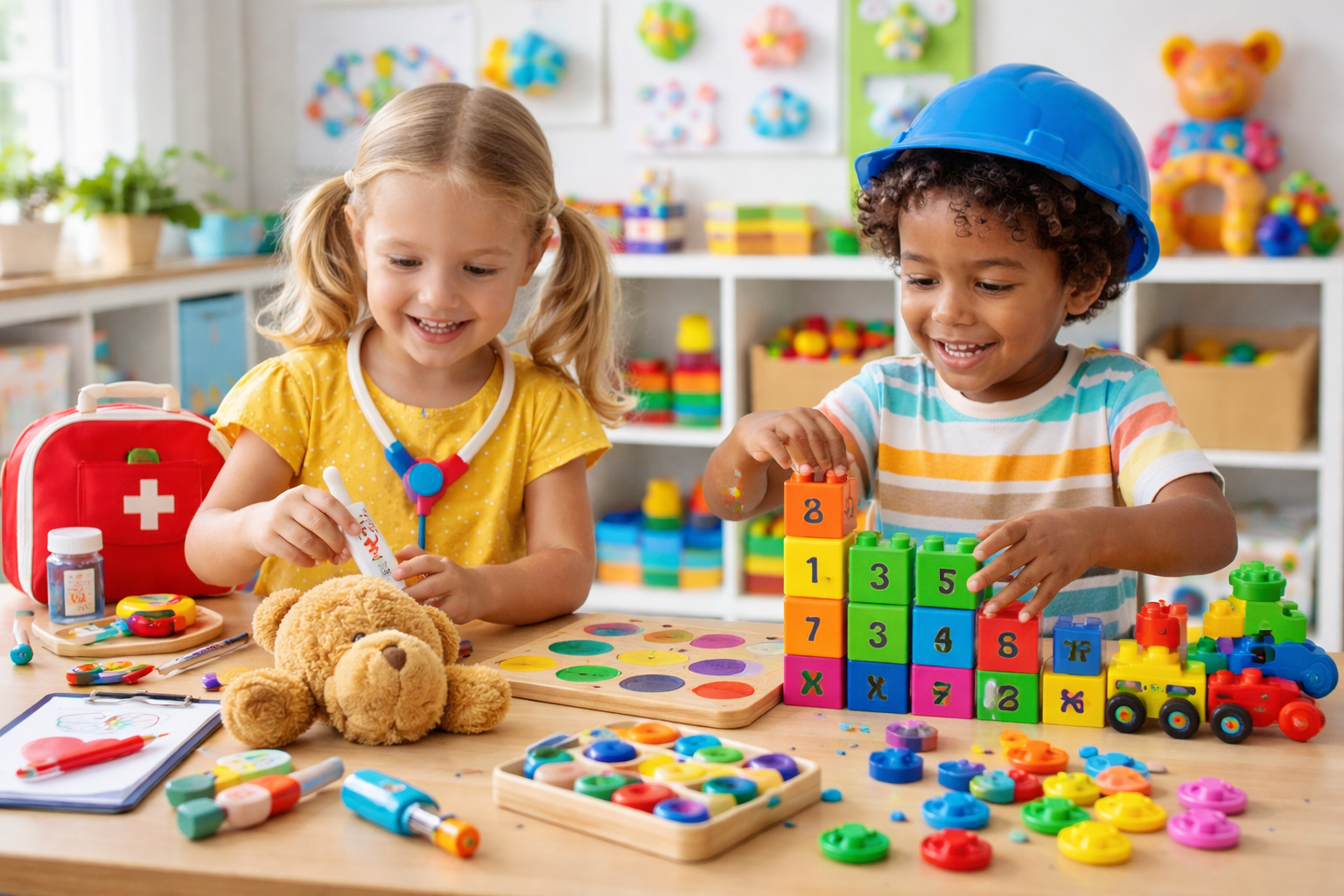
This is the stage where imagination takes over. Children begin copying adults, making up stories, and turning ordinary play into learning. It is a key phase in any age-wise educational toys buying guide because language, confidence, and social skills all grow quickly here.
Skills developing now
Storytelling and imagination
Social interaction
Sorting and pattern recognition
Early counting
Emotional expression through role-play
Best toy types
Pretend kitchen sets
Doctor kits
Tool sets
Alphabet boards
Number boards
Large magnetic tiles
Simple turn-taking games
What to avoid
Overly advanced STEM kits
Toys with too many tiny pieces
Complicated rules that need constant supervision
For many families, pretend play is one of the best low-screen ways to build speech. Children naturally talk more when they are pretending to cook, shop, or care for a doll or patient.
5–6 Years: School Readiness With Fun Built In
At this age, many children are entering KG or early primary classes. Parents often want toys that support learning without making home feel like school. That balance matters.
Skills developing now
Letter recognition
Pencil control
Counting and comparing
Following multi-step instructions
Pattern building
Best toy types
Phonics flashcards
Letter tiles
Beginner math games
Tracing boards
Pattern blocks
Tangrams
Scissor-skill craft kits
In Lahore and other big cities, parents often look for toys that help with focus and hand control. A tracing board paired with pattern blocks can do both while still feeling playful.
7–8 Years: STEM Curiosity and Real Problem-Solving
Around this age, many children want toys that feel more “serious.” They start enjoying challenges, rules, and tasks that take patience. This is where STEM toys begin to make more sense, as long as they are age-appropriate.
Skills developing now
Logical reasoning
Planning
Persistence
Spatial awareness
Curiosity about how things work
Best toy types
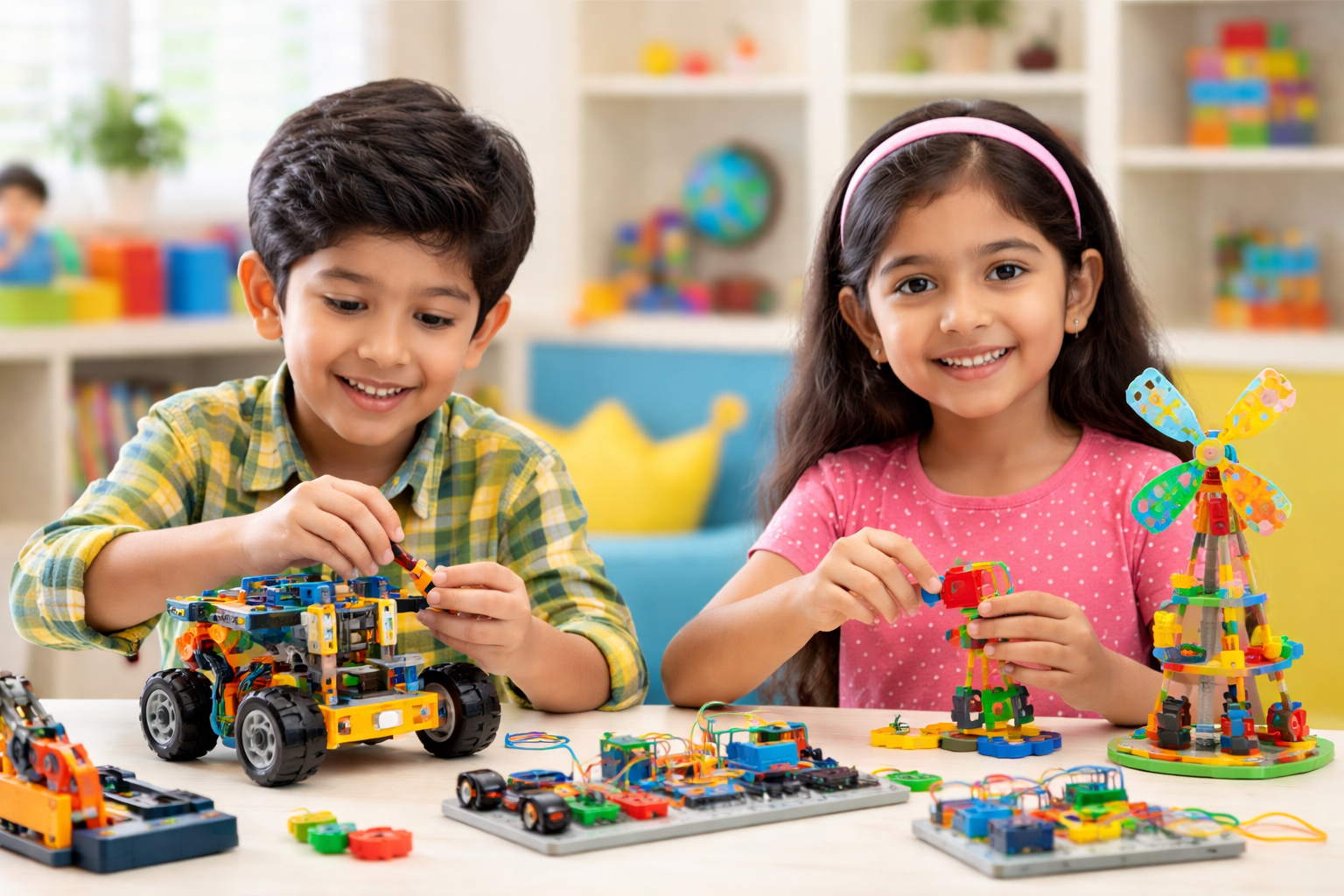
Beginner science kits
Screen-free coding games
Engineering building sets
Puzzle sets
Logic games
Circuit toys made for kids
A useful rule here is simple: choose one core logic toy and one creative toy. That might mean a science kit plus an art set, or a building set plus a sketchbook activity kit. It keeps learning balanced.
9–10 Years: Creativity, Strategy, and Independence
Older kids usually want more control over how they play. They like open-ended projects, challenges, and toys that let them build something of their own.
Skills developing now
Strategic thinking
Creative independence
Longer focus
Project-based learning
Confidence through mastery
Best toy types
Advanced building sets
Strategy board games
Robotics beginner kits
DIY craft sets
Drawing and painting kits
More detailed puzzle sets
At this stage, quality starts to matter even more. Cheap pieces that crack or do not fit properly can quickly ruin motivation. From a buying point of view, it is often better to buy one durable set than several weak ones.
A Quick Buying Checklist for Pakistan
Before ordering, run through this short checklist.
Does the age label match your child’s actual stage?
Is the toy made from safe, non-toxic material?
Are there any choking hazards or sharp edges?
Does the toy teach one clear skill?
Is it easy to store after playtime?
Does the seller clearly show size, material, and piece count?
Are COD, Easy paisa, or Jazz Cash available if needed?
Is delivery realistic for your city?
For buyers in Karachi, Lahore, and other major cities, quick delivery is often easier to find. In smaller towns, it helps to confirm dispatch times before ordering, especially for birthday gifts.
Common Mistakes Parents Make
Even well-meaning buyers make a few predictable mistakes.
Buying a toy because it looks trendy
Choosing something too advanced
Ignoring size details in product listings
Prioritizing quantity over quality
Buying noisy electronic toys that offer little replay value
Many parents in Pakistan also get tempted by “deal” listings that look unusually cheap. That is where piece count, material details, and return policy matter most.
Concluding Remarks
The best toy is not the loudest, biggest, or most expensive one. It is the one that matches your child’s age, supports a real skill, and gets used again and again.
That is exactly what this age-wise educational toys buying guide is meant to help you do. For babies, think sensory. For toddlers, think stacking and sorting. For preschoolers, focus on pretend play. For older kids, lean into puzzles, strategy, and beginner STEM.
In Pakistan, it also makes sense to think practically. Check durability, confirm payment options like COD or Easy paisa/Jazz Cash, and make sure delivery timing works for your city. One age-appropriate educational toy can do far more than five random impulse buys.
FAQs
Q : What is the best educational toy for a 1-year-old in Pakistan?
A : Large stacking blocks, shape sorters, and soft sensory toys are usually strong choices for 1-year-olds. They help with hand-eye coordination, early problem-solving, and independent play. Safety matters most, so avoid small detachable parts.
Q : How do I choose educational toys by age?
A : Start with the skill your child is developing right now. Babies need sensory exploration, toddlers need sorting and stacking, preschoolers thrive with pretend play, and older kids benefit from puzzles, strategy, and STEM-based toys.
Q : Are wooden toys better than plastic toys?
A : Not always, but wooden toys often feel sturdier and last longer. Good-quality plastic toys can also be safe and durable. The real test is smooth finishing, non-toxic material, and strong construction.
Q : How many educational toys should I buy at once?
A : Usually, one or two good toys are enough. Children learn through repeated use, so fewer high-quality toys often work better than a pile of random ones.
Q : What educational toys help with speech and language?
A : Picture cards, storybooks, pretend play sets, and naming games are excellent for speech development. For ages 2–4, role-play toys are especially useful because they naturally encourage conversation.