Blogs
Learning Toys for Autism & Special Needs Kids in Pakistan (Buyer Guide)

Mar
Learning Toys for Autism & Special Needs Kids: What to Buy & What to Avoid
Finding the right Learning Toys for Autism & Special Needs Kids can feel overwhelming, especially when every child responds differently. In Pakistan, parents also have to think about practical things like COD, Easy paisa or Jazz Cash, reliable delivery, and whether a toy will actually help at home, in school, or on outings.
The best learning toys are the ones that match your child’s real needs: calming sensory input, better communication, stronger fine motor skills, or smoother daily routines. Instead of buying random “educational” toys, it helps to start with one clear goal and choose tools your child can use again and again without stress.
The best Learning Toys for Autism & Special Needs Kids are toys that support sensory regulation, communication, attention, fine motor development, and routine-building. Good starter options include quiet fidgets, knob puzzles, therapy putty, picture cards, shape sorters, and visual schedule boards.
For families in Pakistan, it also makes sense to choose durable, easy-to-clean toys with flexible payment options like COD, Easy paisa, or Jazz Cash, plus home delivery to cities such as Karachi, Lahore, Islamabad, and beyond.
Why the right toy matters
Not every toy is helpful. Some entertain for five minutes and then end up forgotten in a drawer. Others become part of daily life because they make things easier for both the child and the parent.
The right toy can help with.
Sensory regulation and calmer behavior
Communication through requesting, pointing, or labeling
Hand strength and coordination
Turn-taking and shared play
Routines that reduce anxiety
In practice, the best toy is usually not the fanciest one. It is the one your child reaches for willingly and uses without getting overwhelmed.
How to choose Learning Toys for Autism & Special Needs Kids
Start with your child’s sensory profile
Two children may have the same diagnosis and still need completely different toys.
A sensory-seeking child may enjoy.
Squeezing
spinning
Jumping
Deep pressure
Movement-based play
Useful options can include therapy putty, textured balls, pop-it boards, or supervised movement toys.
A sensory-avoiding child may prefer.
Quiet toys
Soft textures
Predictable play
Low-noise items
Simple visuals
In that case, calm puzzles, soft tactile toys, and low-stimulation matching games are often a better fit.
Pick one goal for each toy
Before buying, ask yourself what you want the toy to help with.
Examples.
“I want my child to request what they need.”
Choose communication toys.
“I want something that helps during outings or homework.”
Choose sensory regulation tools.
“I want to improve grip and hand control.”
Choose fine motor toys.
This simple step saves money and keeps shopping focused.
Check safety and durability
For Learning Toys for Autism & Special Needs Kids, safety matters just as much as learning value.
Look for.
Non-toxic materials
Washable surfaces
Strong stitching or sturdy plastic
No sharp edges
No tiny loose parts if mouthing is common
For Pakistani homes, easy cleaning matters even more because toys get used everywhere, from school bags to car rides to family gatherings.
Best toy categories for autism and special needs
Sensory regulation toys for calm and focus
These are often the first category parents try, and for good reason. A calming toy can help during homework, long drives, clinic visits, weddings, mosque visits, or crowded shopping trips.
Good examples include.
Quiet fidget cubes
Textured sensory balls
Pop-it boards
Therapy putty
soft chew-safe sensory items where appropriate
A Karachi parent might keep a small calm kit in a handbag with a soft fidget, mini timer, and picture card. On a busy supermarket trip, that small setup can make the difference between a stressful outing and a manageable one.

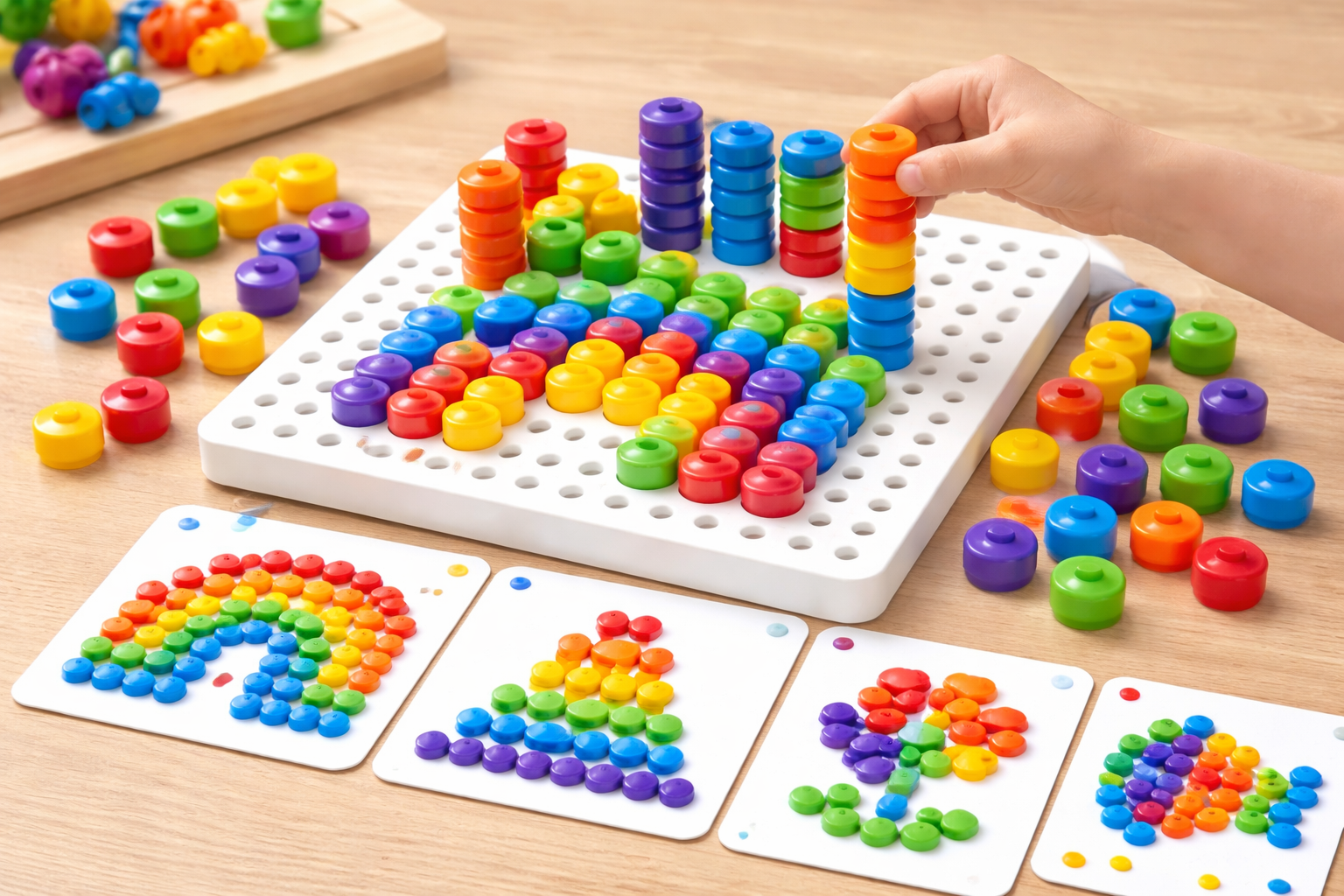
Fine motor and pre-writing toys
These toys help children strengthen their fingers and improve coordination before expecting neat pencil control.
Helpful options include.
Peg boards
Stacking rings
Stacking cups
Shape sorters
Chunky knob puzzles
Supervised lacing beads
Building blocks
This type of Learning Toys for Autism & Special Needs Kids supports more than school readiness. It also helps with daily tasks like zipping, buttoning, and spoon use.
Communication and speech-building toys
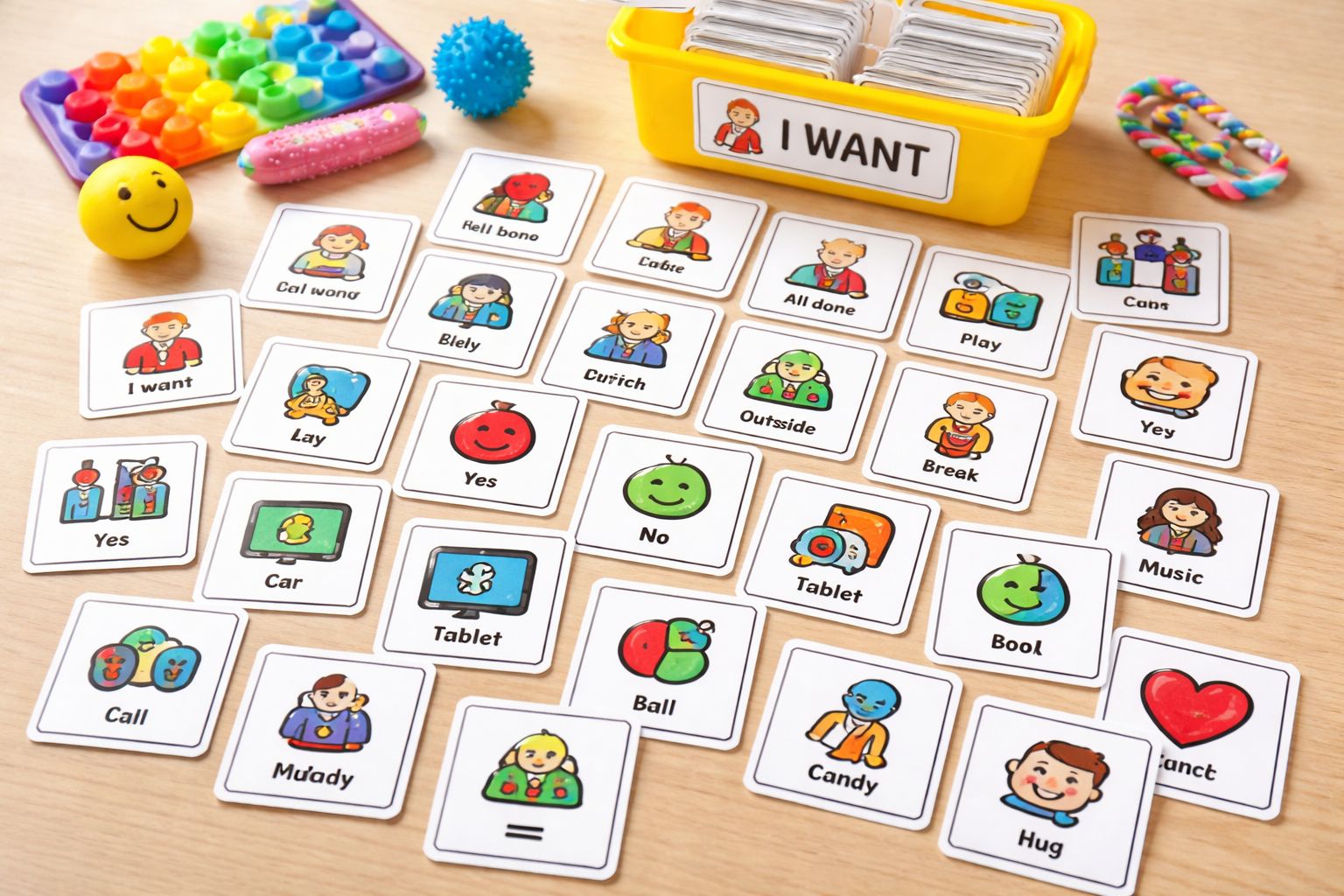
For children with speech delay or limited verbal language, toys should create a reason to communicate.
Strong choices include.
Picture cards
Choice boards
Simple matching games
Cause-and-effect toys
Story sequencing cards
Pretend-play items with clear routines
A simple home strategy works well: offer only two choices. For example, show a child a card for banana and a card for biscuits, then wait for a point, gesture, sound, or word. That reduces guessing and builds communication with less pressure.
Social and turn-taking toys
Some children enjoy playing alone first, then gradually learn to share attention with another person. The right toy can make this easier.
Useful options.
Rolling ball ramps
Simple color or shape board games
Copying patterns with blocks
Beginner pretend-play sets
Matching games played together
These toys help teach “my turn” and “your turn” in a natural way.
Routine and independence tools
Not every useful learning tool looks like a toy, but these items can be some of the most practical for families.
Best options include.
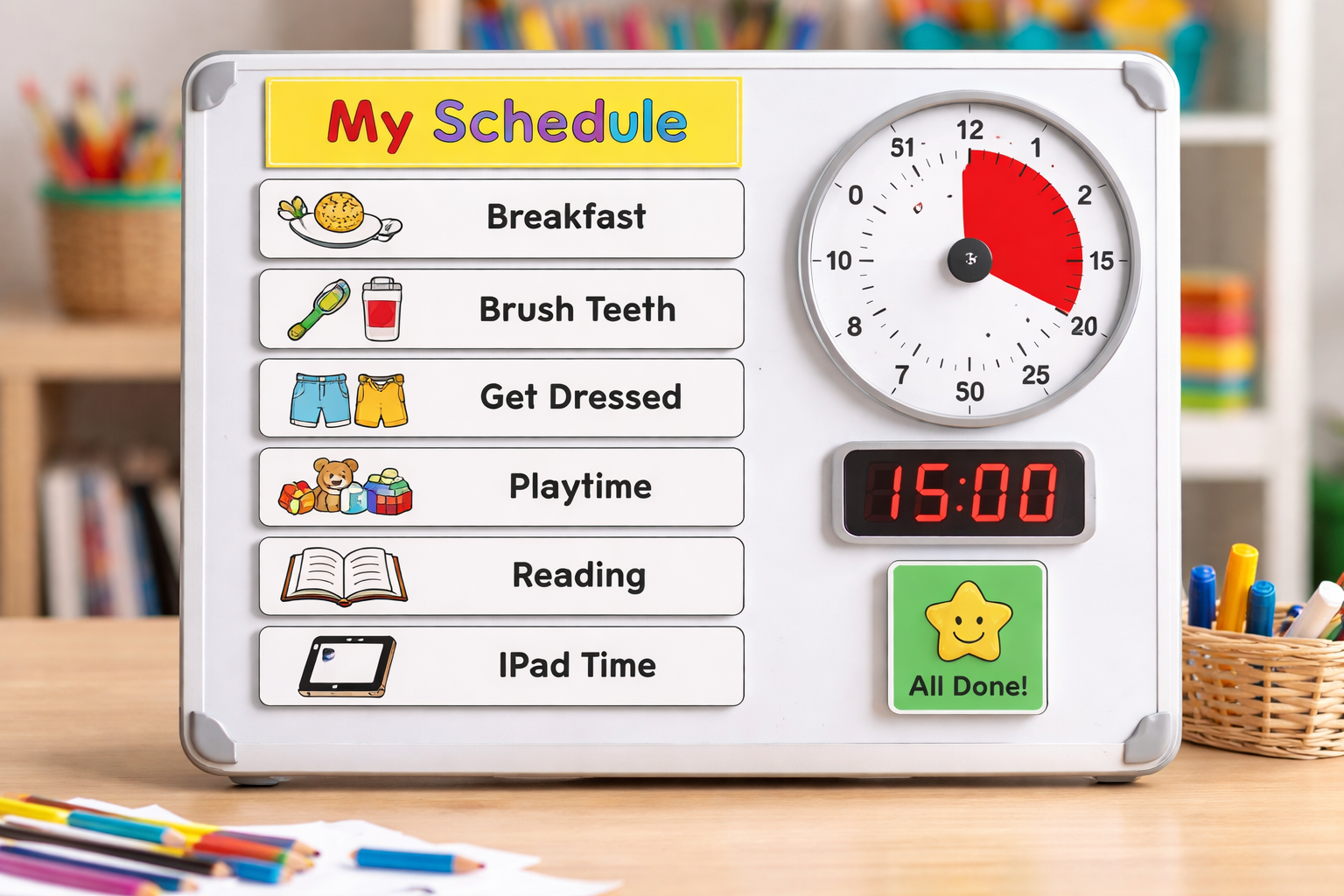
Visual schedule boards
First-then boards
Visual timers
Token boards
Daily routine charts
For many children, predictability lowers anxiety. A visual morning routine can make getting ready for school much smoother than repeating the same verbal instructions again and again.
What to avoid
Not every toy labeled “educational” is a good buy.
Try to avoid.
Very loud musical toys
Flashing lights with no real learning purpose
Toys with too many random sounds
Tiny loose parts if safety is a concern
Toys that only entertain once and then lose value
Products that force performance instead of comfort and connection
Overbuying is another common mistake. Two or three well-chosen toys are usually more useful than a big pile of random ones.
Smart buying tips for Pakistan
Shopping for Learning Toys for Autism & Special Needs Kids in Pakistan comes with its own realities. Parents often want low-risk ordering, simple payment options, and reliable delivery.
A few practical tips.
Start with one sensory item and one skill-building item.
Prefer stores that offer COD when possible.
Use Easy paisa or Jazz Cash for faster prepaid orders if needed.
Check return policies before ordering.
Confirm delivery coverage for your city.
Ask your OT or speech therapist to review toy photos before you buy, if your child already attends therapy.
Karachi, Lahore, and Islamabad usually have easier delivery access, but families in smaller cities may need to be more selective and order from stores with stronger nationwide shipping.
Simple starter toy plan
If you are not sure where to begin, start with this balanced setup:
| Goal | Starter toy idea | Why it helps |
|---|---|---|
| Calm and focus | Quiet fidget or therapy putty | Supports regulation |
| Fine motor | Knob puzzle or peg board | Builds hand control |
| Communication | Picture cards or choice board | Encourages requesting |
| Routine | Visual timer or schedule board | Makes transitions easier |
Concluding Remarks
Choosing Learning Toys for Autism & Special Needs Kids is not about buying the most expensive product or the trendiest therapy item. It is about matching the toy to your child’s needs and keeping the goal clear: calm, communication, fine motor strength, social play, or routine support.
Start small. Observe what works over a full week. Then build a toy rotation that fits real life in Pakistan, whether that means school mornings, family events, long car rides, or quiet time at home.
When you shop, focus on comfort, repeat use, durability, and simple payment options like COD, Easy paisa, or Jazz Cash. The right toy should make daily life easier, not noisier.
FAQs
Q : What are the best Learning Toys for Autism & Special Needs Kids?
A : The best toys depend on the child’s needs, but quiet fidgets, therapy putty, knob puzzles, shape sorters, picture cards, and visual schedule boards are all strong starting points. Choose toys that your child can use repeatedly without frustration.
Q : How do I know if a toy is overstimulating?
A : A toy may be overstimulating if your child covers their ears, throws the toy away, becomes more distressed, or struggles to return to calm after play. Loud sounds, bright lights, and unpredictable responses are common triggers.
Q : Can learning toys help with speech delay?
A : Yes. Communication toys can help children request, point, choose, label, and interact more clearly. Picture cards, choice boards, matching games, and cause-and-effect toys are especially useful.
Q : What toys are best for sensory-seeking children?
A : Sensory-seeking children often enjoy toys that offer pressure, squeezing, movement, or strong tactile input. Therapy putty, textured balls, pop-it boards, and supervised movement toys are popular choices.
Q : What toys are best for sensory-avoiding children?
A : Sensory-avoiding children usually do better with quieter, softer, and more predictable toys. Simple puzzles, low-noise fidgets, soft textures, and visual tools often work better than flashy or noisy products.
Q : Are expensive therapy toys necessary?
A : No. Many affordable toys can be very effective when they match the child’s needs and are used consistently. Price matters less than fit, safety, and repeat use.
Q : Which toys help with fine motor skills?
A : Peg boards, lacing beads with supervision, therapy putty, shape sorters, knob puzzles, and building blocks all support fine motor development. They can also help with everyday tasks like buttons and zippers.
Q : Can these toys be used at school or tuition?
A : Yes, especially quiet fidgets, mini visual timers, and picture cards. It helps to keep a small pouch with silent items that support learning without distracting the class.
Q : What payment and delivery options work best in Pakistan?
A : COD is useful when trying a new toy for the first time. Easy paisa and Jazz Cash are also practical for fast prepaid orders. Before buying, check return terms and confirm delivery to your area.