Blogs
Educational Toys for Homeschooling in Pakistan: Best Picks, Age Guide & Buying Tips
Apr
Educational Toys for Homeschooling in Pakistan: Montessori, STEM & Learning Games
Homeschooling can work beautifully at home, but only when learning does not feel like a constant battle. That is why educational toys for homeschooling in Pakistan matter so much. The right toys turn reading, math, focus, and problem-solving into something children can actually enjoy.
For most Pakistani parents, the best options are simple, durable, and easy to use in short daily sessions. Montessori boards, puzzles, flashcards, STEM kits, and pretend-play sets can all support homeschooling when chosen by age, skill, and learning goal. It also helps to buy from stores that offer Cash on Delivery (COD) or wallet payments like Easy paisa and Jazz Cash, especially if you are ordering in cities such as Karachi, Lahore, or Islamabad.
Why educational toys matter in a homeschool routine
At home, attention span is everything. Worksheets have their place, but hands-on tools often keep kids engaged for longer and with less resistance.
Good educational toys can help children.
Build early reading and number skills
Improve fine motor control
Practice focus and memory
Learn independently for short periods
Reduce unnecessary screen time
A practical way to shop is this: one learning goal, one toy category. Instead of buying random “smart toys,” choose tools that fit your child’s current stage.
Educational toys for homeschooling in Pakistan by age
Ages 2–4: sensory and motor skill builders
At this stage, children learn best through touch, movement, repetition, and imitation.
Good options include.
Shape sorters
Stacking rings and blocks
Lacing beads
Threading toys
Sensory or busy boards
Simple color and size matching toys
These toys support hand control, coordination, early vocabulary, and calm concentration. In practice, even 10 to 15 minutes a day can be enough for this age group.
Ages 4–6: pre-reading and early math toys
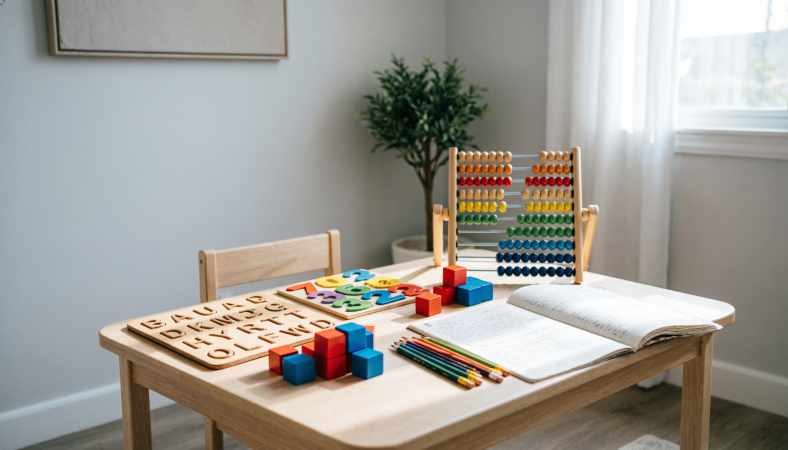
This is one of the most important stages for building strong homeschool foundations. Children here benefit from toys that make letters, sounds, and numbers feel physical and easy to manipulate.
Look for.
Alphabet boards
Phonics tiles
Counting rods
Number puzzles
Abacus sets
Matching and sequencing cards
These educational toys for homeschooling in Pakistan can often reduce the need for long worksheet sessions. Many parents find that a short toy-based lesson works better than trying to force writing practice for too long.
Ages 6–9: problem-solving and STEM exploration
Primary-age children usually need a bit more challenge. This is where logic, building, and early science activities become useful.
Helpful choices include.
Tangrams
Logic puzzles
Magnetic building sets
Beginner STEM kits
Simple science activity boxes
Rubik-style cubes
Start with guided play for the first couple of sessions, then let your child try the activity independently. That shift often builds confidence faster than constant supervision.
Ages 9–12: critical thinking and project-based learning
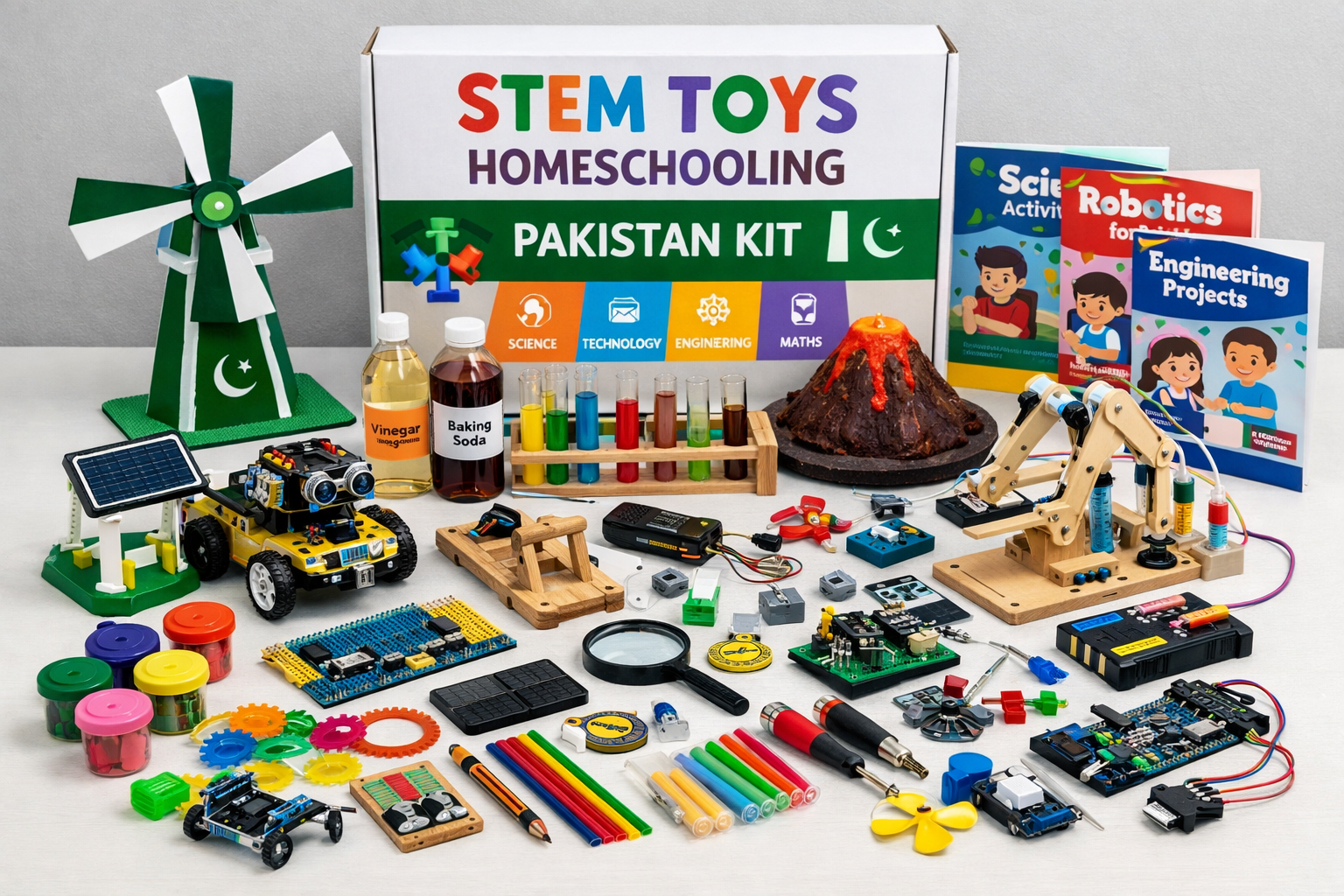
Older children often engage better when a toy leads to a visible result. They want to build, test, solve, and present.
Great options include.
Model-building kits
Beginner robotics sets
Strategy and logic games
Screen-free coding cards
Engineering-style challenge kits
For this age, the best picks are usually the ones that create an outcome: a model, a puzzle solution, a mini experiment, or a finished project.
Best categories of educational toys for homeschooling in Pakistan
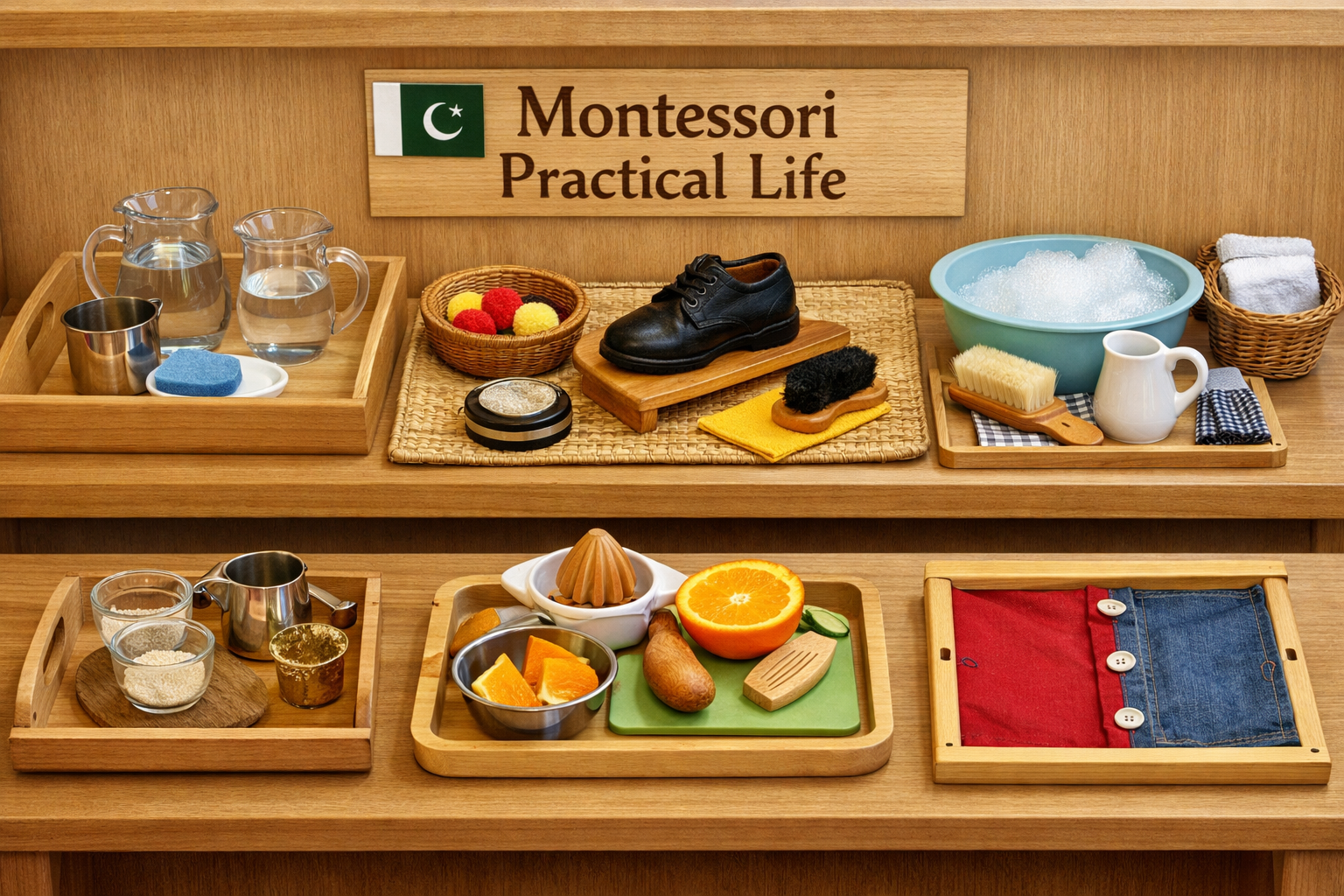
Montessori and practical life toys
Montessori toys work especially well for younger children and for kids who need calm, focused activities. Practical life tools like sorting trays, pouring sets, and buttoning frames help children develop independence while improving coordination.
They are a smart fit when your child.
Gets distracted easily
Learns better through repetition
Enjoys real-life tasks
Needs help building focus
Puzzles and brain games
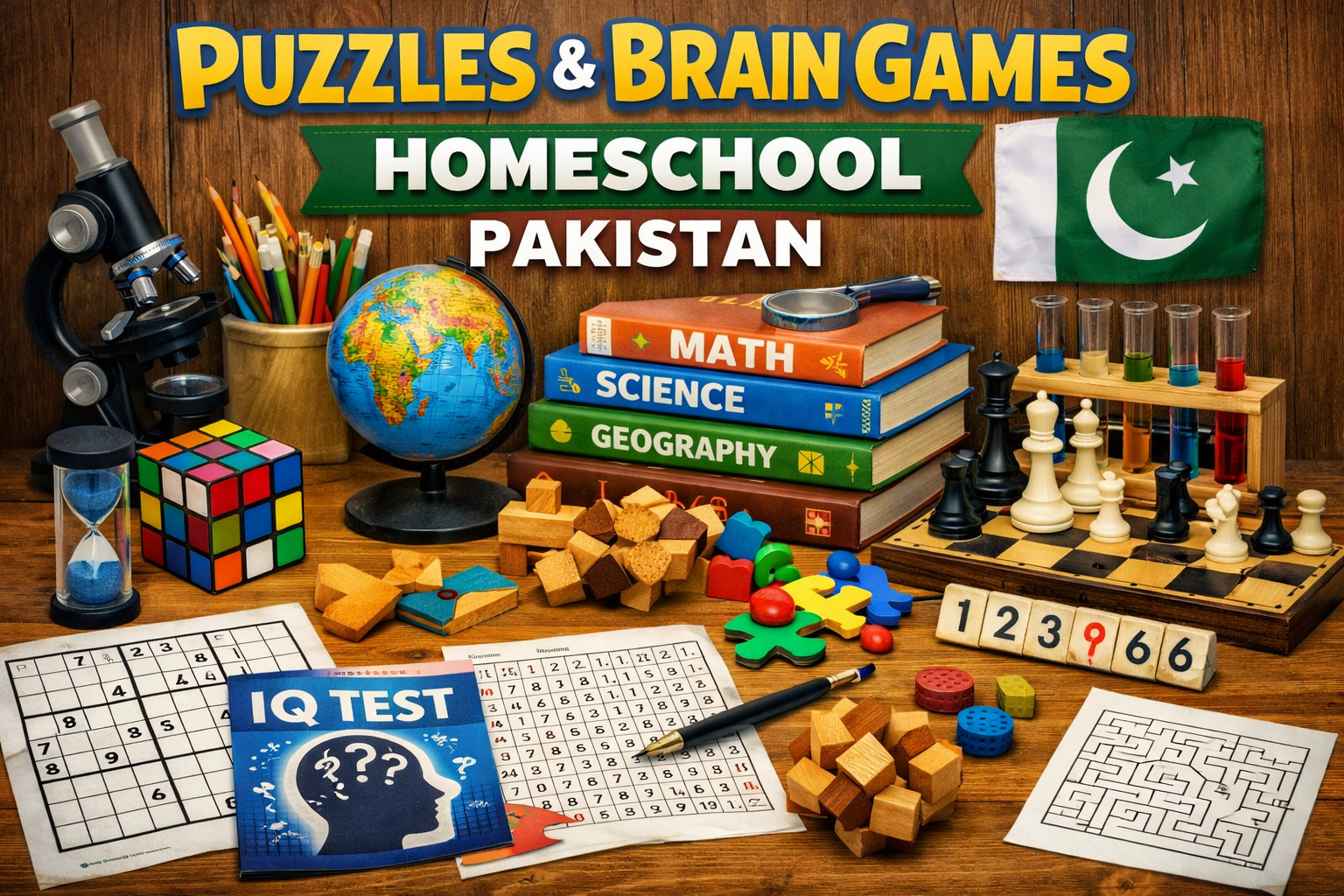
Every homeschool setup benefits from a few solid puzzles. They help with patience, logic, visual-spatial thinking, and persistence.
A simple way to manage them is to keep.
One easy puzzle for confidence
One medium puzzle for daily use
One harder puzzle for weekend challenge time
That mix keeps things interesting without making learning feel too easy or too frustrating.
Flashcards, word games, and storytelling toys
These are especially useful in Pakistani homes because they can be adapted to different learning styles and languages. Some families want English phonics support, while others may also include Urdu vocabulary or general knowledge practice.
Useful picks include.
phonics flashcards
picture-word matching cards
storytelling cubes
memory cards
simple spelling games
These tools are also great for children who know the answer but hesitate to speak.
Pretend-play sets
Pretend play is often underestimated. It may look like free play, but it teaches communication, sequencing, confidence, and real-world understanding.
Good examples include.
Doctor kits
Kitchen sets
Mini grocery setups
tool kits
Cashier or shopkeeper toys
For homeschooling, pretend play can support both language development and life skills in a very natural way.
A simple homeschool routine that works at home
You do not need an elaborate setup. A simple routine usually works better.
Here is one easy structure.
15 minutes of language play
Use phonics tiles, flashcards, or a letter board.
15 minutes of math play
Use counting rods, number puzzles, or an abacus.
15 minutes of logic or skill work
Use a puzzle, tangram, or sensory activity.
10 to 15 minutes of creative or pretend play
End with something lighter to keep motivation high.
This kind of routine suits many Pakistani families because it is flexible. It can work in apartments, shared family homes, and busy households where parents are managing work and home responsibilities at the same time.
For example, a parent in Karachi might prefer shorter sessions and monthly reorders with COD so quality can be checked at the door. A parent in Lahore may use Jazz Cash or Easy paisa to speed up order confirmation and avoid delays before weekend learning time. In larger cities like Islamabad, Rawalpindi, Faisalabad, and Multan, delivery expectations may vary by store, so it helps to check dispatch timing before you order.
How to choose educational toys for homeschooling in Pakistan
Before buying, use this simple checklist.
Start with the learning goal
Decide whether you want help with reading, math, focus, creativity, or independent play.
Match the toy to skill level, not just age
The age printed on the box is a guide, not a rule.
Choose durable, washable materials
Toys used daily at home need to hold up well.
Check safety carefully
Avoid small parts for younger children and look for smooth finishes.
Think about payment and delivery
COD is useful for first-time orders. Easy paisa and Jazz Cash can be convenient for faster confirmation.
Rotate toys weekly
Children do not always need more toys. They often just need a fresh rotation.
Buying tips for budget-conscious Pakistani parents
Homeschooling does not have to be expensive. In fact, a smaller, smarter collection often works better than a huge pile of toys.
A practical starter setup could include.
One language toy
One math toy
One puzzle or logic toy
One open-ended creative or pretend-play toy
That is enough to build a useful weekly routine for many families. From a small-budget point of view, it is usually better to buy a few good tools that get repeated use than to keep ordering trendy items that lose appeal after a few days.

Concluding Remarks
The best educational toys for homeschooling in Pakistan are the ones that make learning easier, calmer, and more consistent at home. Montessori tools, puzzles, flashcards, STEM kits, and pretend-play sets can all support strong homeschool routines when you choose them with purpose.
Start small. Pick one language toy, one math toy, and one problem-solving toy, then build from there. With the right mix of learning tools, plus convenient buying options like COD, Easy paisa, and Jazz Cash, homeschooling in Pakistan can feel far more manageable for both parents and children.
FAQs
Q : What are the best educational toys for homeschooling in Pakistan?
A : The best options usually include Montessori boards, puzzles, flashcards, counting toys, STEM kits, and pretend-play sets. The right choice depends on your child’s age, skill level, and what you want to teach at home.
Q : How many educational toys does a homeschool child need?
A : Most children do not need many. A starter set of 3 to 5 useful toys is often enough when you rotate them well and use them consistently.
Q : Are Montessori toys good for homeschooling in Pakistan?
A : Yes. Montessori toys are especially useful for focus, independence, and hands-on learning. They can work very well in home-based routines, especially for younger children.
Q : How can I reduce screen time with educational toys?
A : Create a daily learning block using toys instead of handing over a phone or tablet. Puzzles, flashcards, building sets, and sensory activities are all strong screen-free alternatives.
Q : What payment options are common when buying educational toys online in Pakistan?
A : Many Pakistani parents still prefer Cash on Delivery, especially for first-time purchases. Easy paisa and Jazz Cash are also common and can make order confirmation quicker.