

Blogs
Candle Safety Tips for Homes: A Practical Guide for Pakistan Households

Jun
Candle Safety Tips for Homes in Pakistan: Prevent Fires & Smoke
Candles can make a room feel warm, calm, and welcoming but they need careful handling. These candle safety tips for homes are especially useful in Pakistan, where load-shedding, ceiling fans, kids, pets, and compact rooms can quickly turn a small flame into a serious risk.
The safest way to use candles at home is simple: place them on a stable, heat-resistant surface, keep them away from curtains and fans, trim the wick, and never leave them burning unattended. In apartments, portion houses, and joint family setups, it’s also important to keep candles out of reach of children and pets.
Used properly, candles can still be part of your décor, gifting, dinner setup, or emergency lighting routine. You just need safer habits.
Why Candle Safety Matters in Pakistan Homes
In many Pakistani homes, candles are used during load-shedding, birthdays, dholkis, family dinners, and cozy evening setups. The problem is that candles are often treated casually placed on TV units, near curtains, or on low tables where kids and pets can reach them.
A candle flame may look small, but it can cause.
Fire near curtains, bedsheets, rugs, or papers
Hot wax burns
Smoke and soot buildup
Damage to furniture or plastic surfaces
Accidental tipping in busy family spaces
These candle safety tips for homes help reduce those risks without taking away the comfort and beauty candles bring.
Candle Safety Tips for Homes.
Good candle safety starts with placement. Before lighting any candle, check what is around it.
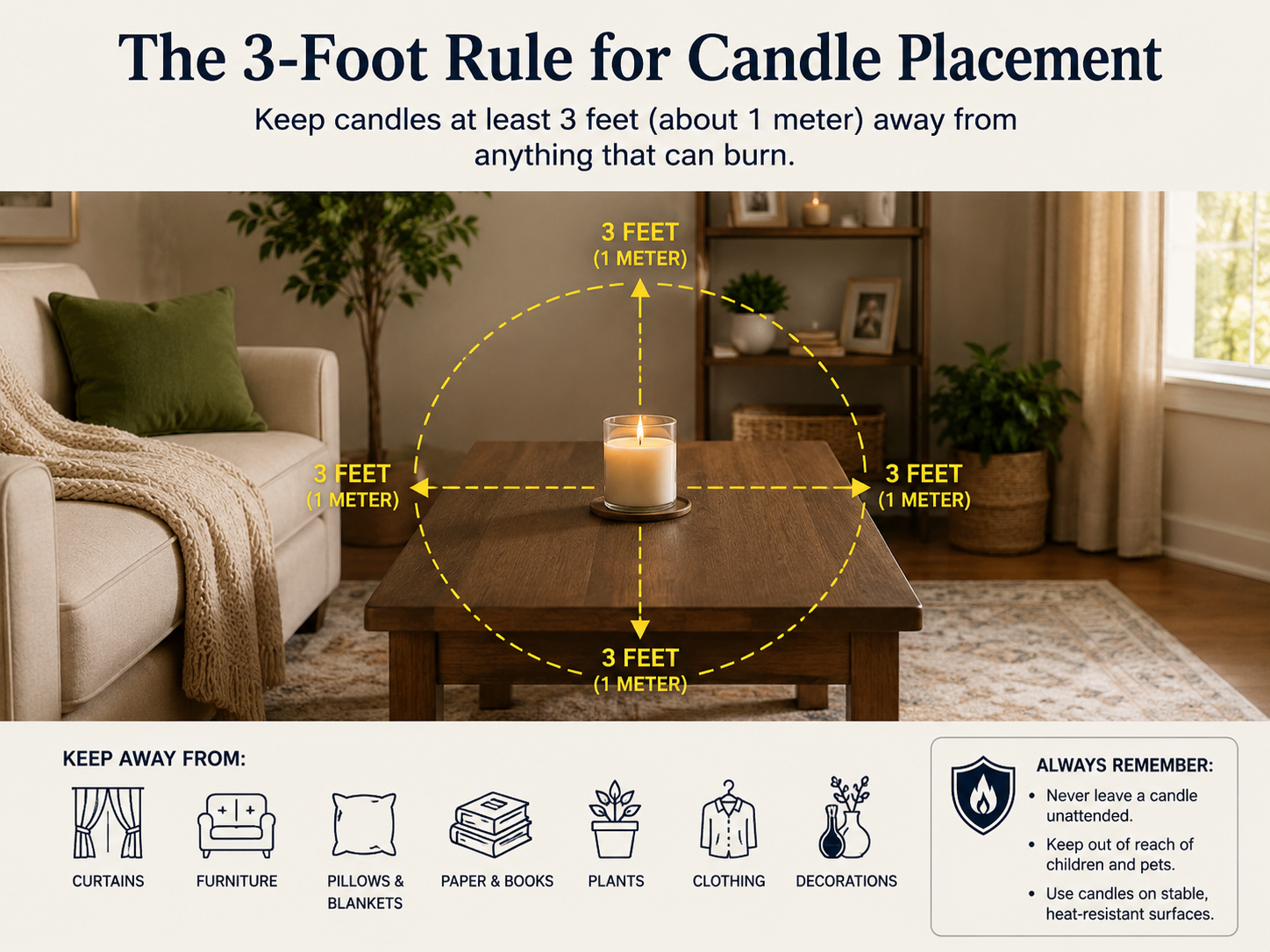
Follow the 3-foot rule
Keep candles at least 3 feet away from anything that can catch fire, including.
Curtains and blinds
Bedsheets and cushions
Books, papers, and cardboard
Clothes, dupattas, and towels
Wooden décor pieces
This matters even more in rooms with fabric-heavy décor or tight furniture layouts.
Keep candles away from fans and drafts
Ceiling fans are common in Pakistani homes, and they can make candles more dangerous. Strong airflow can push the flame sideways, increase soot, or blow lightweight items toward the candle.
Avoid placing candles near.
Running ceiling fans
Open windows with strong wind
Air coolers
AC airflow
Doorways with frequent movement
A steady flame is safer than a flickering one.
Use a stable, heat-resistant surface
Never place a candle directly on beds, carpets, prayer mats, plastic tables, TV units, or wooden shelves without protection.
Use a proper candle holder, tray, or heat-safe plate. For décor-friendly options, you can browse home fragrance and décor items here.
Choose the Right Candle Holder
A safe holder can prevent tipping, wax spills, and surface damage.
For daily use, choose.
Wide-base candle holders
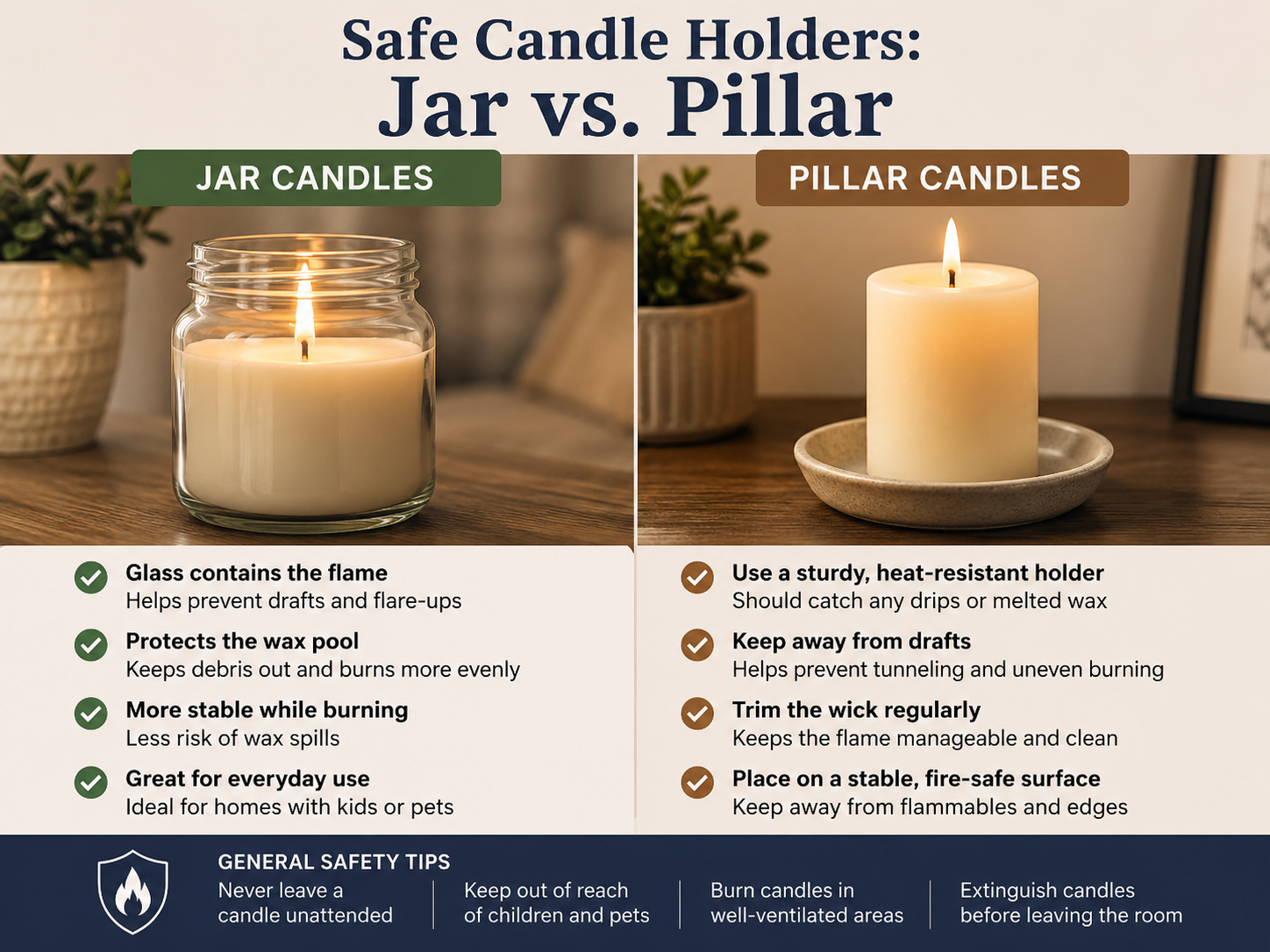
Glass jar candles
Metal or ceramic trays
Lantern-style holders for homes with kids or pets
Avoid lightweight decorative holders that look pretty but wobble easily.
Wick, Wax, and Smoke.
Many candle problems start with the wick. A long wick can create a large flame, black smoke, and uneven burning.
Trim the wick before lighting
Before each use, trim the wick to about 5–6 mm. This helps reduce.
Black smoke
Soot marks
Large flames
Overheating
It also helps the candle burn more evenly.
Don’t burn candles for too long
As a general habit, burn candles for 2–4 hours max at a time. Long burns can overheat the container and create more smoke, especially in small rooms.
Let the candle cool before lighting it again.
Keep the room ventilated
If you are burning candles in a small bedroom, lounge, or apartment room, allow a little airflow.
You can.
Slightly open a window
Avoid burning multiple candles at once
Keep candles away from people with asthma or smoke sensitivity
Avoid burning candles in closed rooms for long periods
Good ventilation keeps the room more comfortable and reduces smoke buildup.
Candle Safety Tips for Homes During Load-Shedding
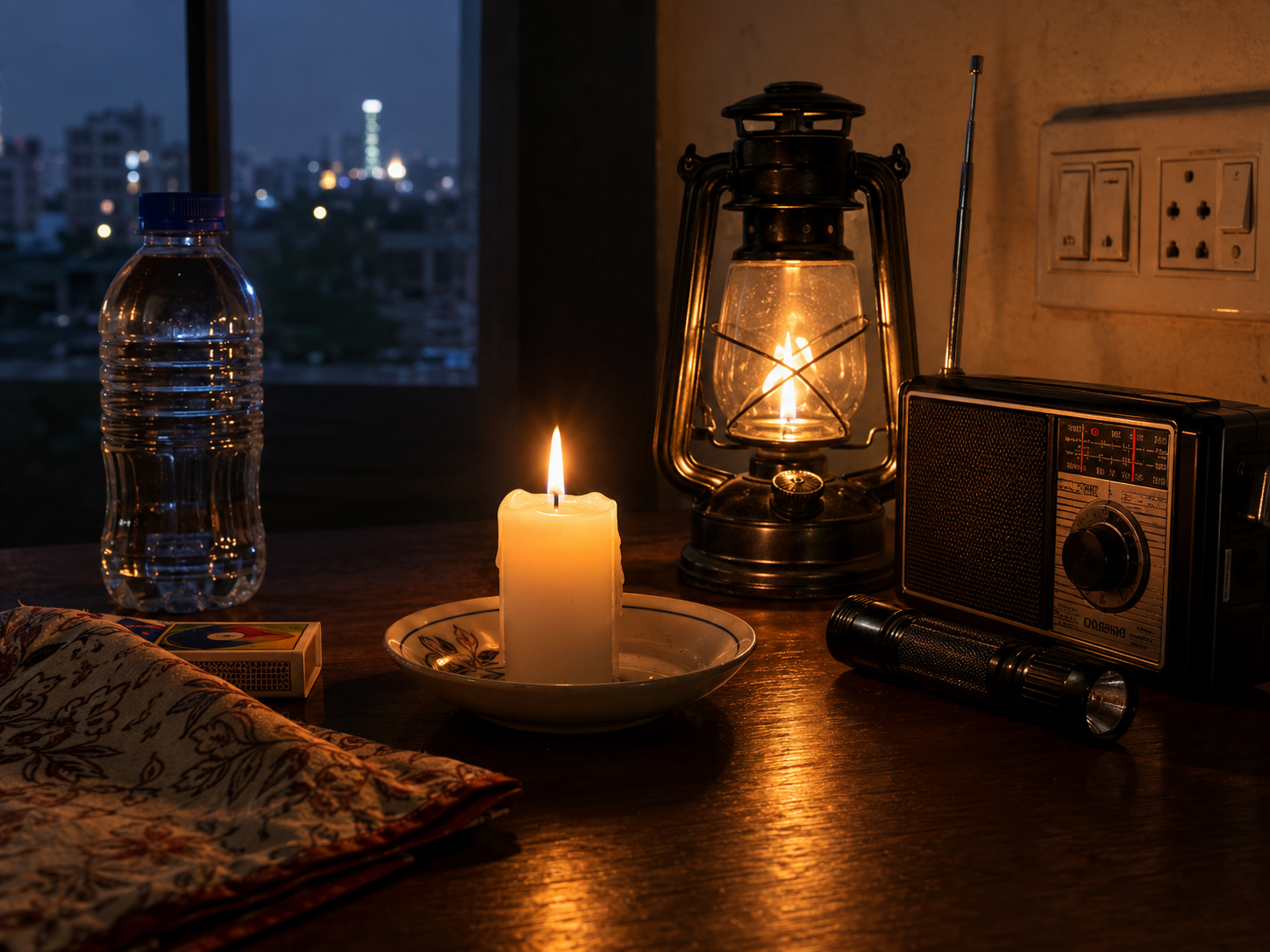
Load-shedding is one of the most common times people light candles in Pakistan. It is also when accidents can happen quickly because candles are placed in a hurry.
Use this simple routine.
Use your phone torch first so you can see clearly.
Place the candle in a holder before lighting it.
Keep it away from curtains, bedding, wires, and chargers.
Don’t place candles near inverter batteries, fuel, or kitchen areas.
Never carry a lit candle from room to room.
Keep water nearby for emergencies.
For emergency-friendly use, many families prefer jar candles because the flame is more contained.
Kid-Safe and Pet-Safe Candle Habits
If you have children, cats, dogs, or birds at home, treat candles like a hot stove. They should never be within easy reach.
Keep candles high and enclosed
Place candles on a stable, higher surface where children and pets cannot touch them. Jar candles and lantern-style holders are better choices because they offer more protection than open pillar candles.
Create a no-candle zone
Pick one safe place for candle use, such as a dining table center or a high console table. Avoid using candles in play areas, bedrooms where kids sleep, or low coffee tables.
Older children should also be taught that candles are not toys and should never be touched, moved, or blown out without an adult.
How to Extinguish Candles Safely
Blowing out a candle may seem normal, but it can splash hot wax, create smoke, or send tiny sparks toward nearby fabric.
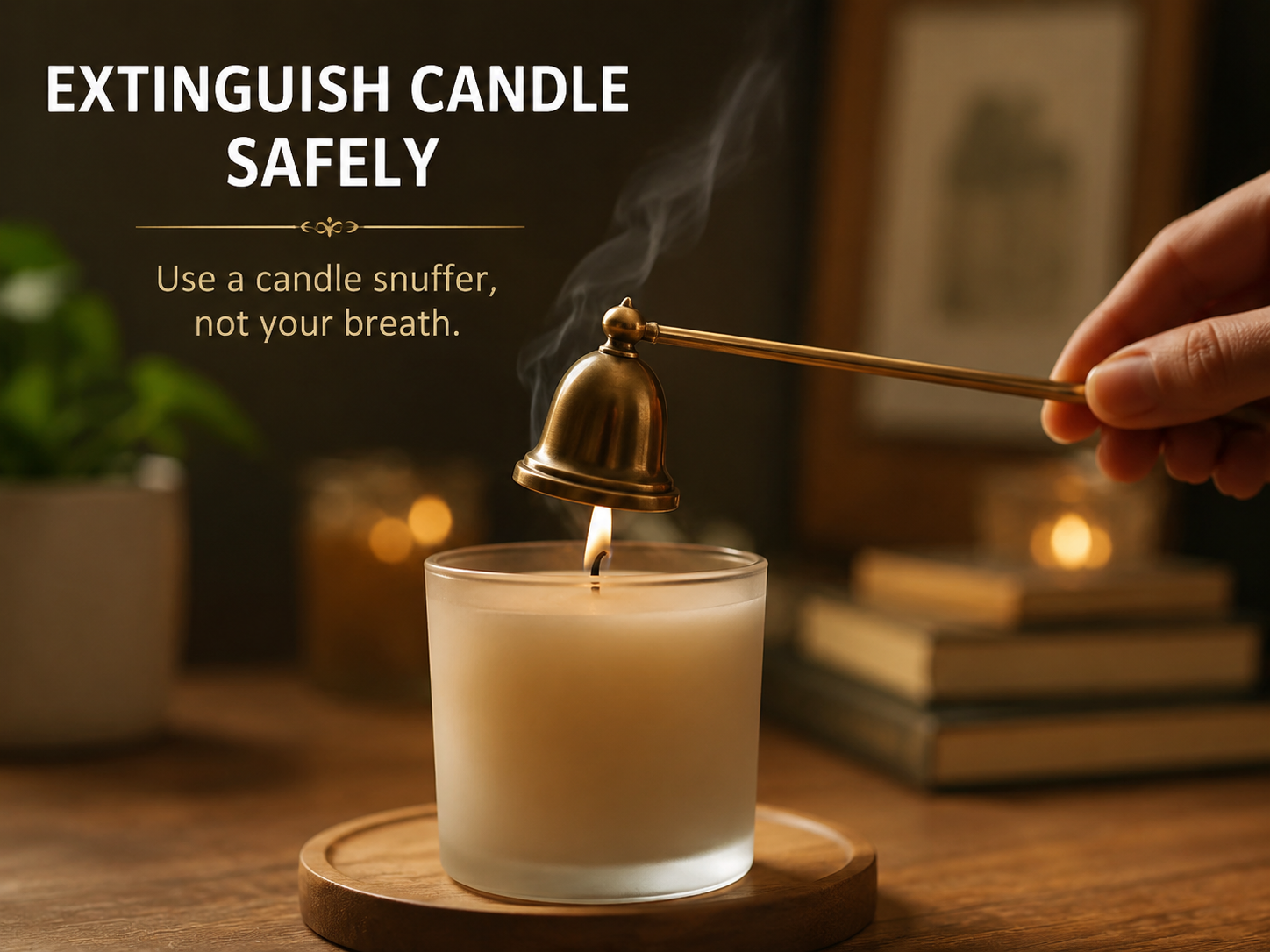
A safer method is to use a candle snuffer. It puts out the flame gently by cutting off oxygen.
You can also dip the wick into melted wax using a proper wick dipper, then straighten it again. Only do this if you know the method safely.
Before leaving the room, always check that.
The flame is fully out
The wick is not glowing
The candle container is cooling
No smoke is building up nearby
Common Candle Mistakes to Avoid
Even careful people make small mistakes with candles. Avoid these habits.
Leaving a candle unattended “just for a minute”
Burning candles close to curtains because it looks nice
Placing candles on TV cabinets near wires or chargers
Burning multiple candles in a closed room
Sleeping with a candle still burning
Letting a candle burn to the very bottom
Using unstable holders on uneven surfaces
Final Thoughts.
Candles can be beautiful, calming, and practical, especially during load-shedding or family gatherings. But the safest homes are the ones where candle safety becomes a habit.
Follow these candle safety tips for homes every time: place candles carefully, use sturdy holders, trim the wick, keep flames away from fans and fabric, and never leave candles unattended.
Ready to make your candle corner safer? Explore our candle holders, jar candles, and accessories for homes in Karachi, Lahore, Islamabad, and across Pakistan. Order with COD, Easy paisa, or Jazz Cash for easy checkout.
FAQs
Q : How long should I burn a candle at home?
A : Burn a candle for 2–4 hours at a time. Longer burns can overheat the container, create more soot, and increase fire risk. Let the candle cool before relighting.
Q : How do I make candles safer during load-shedding?
A : Place the candle in a sturdy holder before lighting it. Keep it away from curtains, fans, wires, and bedding. Never carry a lit candle between rooms.
Q : Are jar candles safer than pillar candles?
A : Jar candles are generally safer because the flame is more contained. Pillar candles can still be used safely, but they need a stable holder and careful placement.
Q : Can candles cause breathing issues indoors?
A : Yes, smoke and soot can irritate sensitive people, especially in closed rooms. Trim the wick, avoid burning too many candles at once, and keep light ventilation in the room.
Q : How can I stop candles from making black smoke?
A : Trim the wick to about 5–6 mm, avoid drafts, and don’t burn the candle for too long. A steady, smaller flame usually produces less smoke.
Q : Is it safe to keep candles in the bedroom?
A : Only if you are awake and the candle is far from bedding, curtains, and clothes. Never sleep with a candle burning.
Q : What is the safest way to put out a candle?
A : Use a candle snuffer. It reduces smoke and avoids hot wax splash. Always make sure the flame is fully out before leaving the room.