
Blogs
Skincare in Pakistan 2026: Acne, Pigmentation
Feb
Pakistan Skincare Routine 2026: Summer, Winter & Smog Survival Guide
Pakistan’s skincare struggle in 2026 isn’t just about “good products” it’s about weather, pollution, and consistency. From Karachi’s humidity to Lahore’s smog and Islamabad’s sharp winter sun, your skin behaves differently city to city and season to season. That’s why skincare in Pakistan 2026 has to be smarter: routines that match heat, UV, dust, dehydration, and breakouts, instead of copying a random global trend off TikTok.
In real life, most of us don’t have time for 12 steps. You need something that fits morning rush, university schedules, office timings, and late-night scrolling ideally with COD and easy payments like Easy paisa/Jazz Cash. The good news: acne and pigmentation usually start improving once you stop attacking your skin with harsh hacks and focus on barrier care + sun protection + targeted treatment.
Think of this as a Pakistan-first playbook that makes skincare in Pakistan 2026 easier to follow whether you’re dealing with fresh pimples, post-acne marks, melasma, or dullness from weather and pollution.
Skincare in Pakistan 2026 works best when it’s weather-based: use a gentle cleanser, lightweight moisturizer, and high-protection sunscreen daily, then add targeted actives like niacinamide (oil + marks) or azelaic acid (pigmentation + acne). In humid cities, prioritize gel textures and pore-friendly formulas; in dry/cold areas, focus on barrier repair with ceramides. Consistency for 8–12 weeks plus daily SPF is the fastest path to fewer breakouts and lighter pigmentation.
Why Acne & Pigmentation Are So Common in Pakistan
Acne and pigmentation usually travel together: you get a breakout, then the mark stays for weeks (or months). In skincare in Pakistan 2026, the biggest triggers tend to be:
High UV exposure (dark spots + melasma flare-ups)
Humidity + sweat (clogged pores, fungal acne like bumps)
Smog and dust (inflammation, dullness, barrier damage)
Harsh “instant glow” hacks (over-exfoliation → more pigmentation)
Skipping sunscreen (the #1 reason marks don’t fade)
Key rule: if you want pigmentation to fade, sunscreen cannot be optional it’s part of treatment, not just “something for beach days.”
Skincare in Pakistan 2026 Morning Routine (Simple + Effective)
This is the “most people can actually do it” routine. Stick with it for at least 8 weeks before judging results.
Cleanser (30–60 seconds)
Oily/acne-prone skin: gentle foaming or gel cleanser
Dry/sensitive skin: creamy, low-foam cleanser
Focus on massaging for 30–60 seconds, not on finding the “strongest” face wash.
Treatment Serum (Choose ONE)
Start with one main problem and one serum. That’s it.
Niacinamide (4–10%) → oil control + post-acne marks
Vitamin C → dullness + uneven tone
Azelaic acid → acne + pigmentation (great for beginners and sensitive skin)
Use your serum after cleansing, before moisturizer. If you feel stinging or see redness that lasts, cut down the frequency.
Moisturizer (Don’t skip!)
Even oily skin in Karachi or Lahore needs moisturizer especially if you’re using actives.
Humid cities: lightweight gel moisturizer that absorbs fast
Dry/cold cities: ceramide-based cream for barrier repair
Sunscreen (Daily, even indoors near windows)
For skincare in Pakistan 2026, sunscreen is your pigmentation insurance. Use the “two finger” amount for face and neck and reapply if you’re outdoors or sitting near windows for long.
Look for.
SPF 50 or close
Broad spectrum (UVA + UVB)
Non-greasy texture that you’ll actually wear
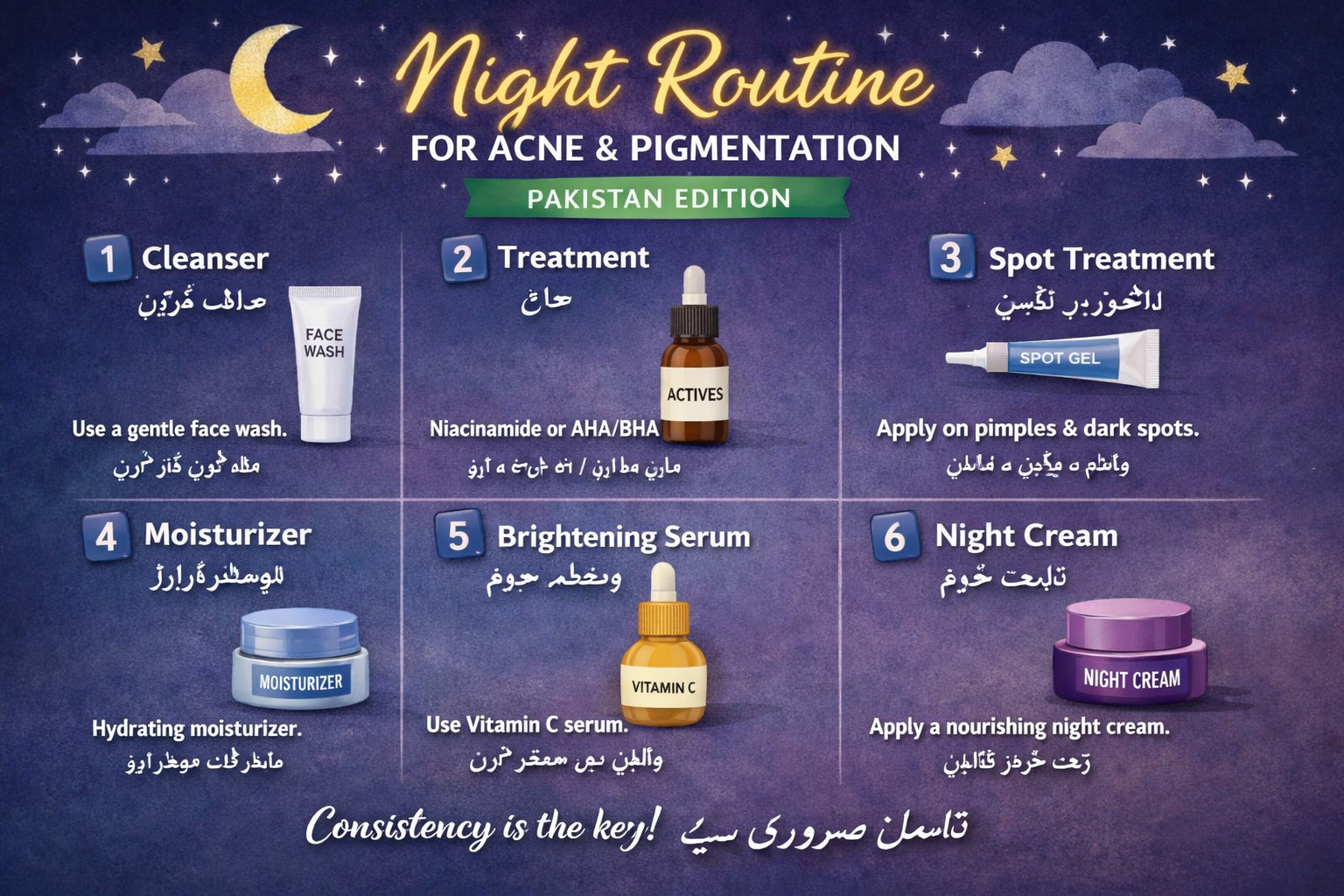
Skincare in Pakistan 2026 Night Routine (Acne + Pigmentation Friendly)
Night is for treatment and recovery. Keep it calm, not aggressive.
Cleanse (Double cleanse if sunscreen/makeup)
If you wear heavy sunscreen or makeup, start with a balm/oil cleanser.
Follow with your regular water-based cleanser.
This helps prevent clogged pores without scrubbing your face raw.
Pick One “Active Night” Plan (Rotate, don’t mix)
Choose a simple rotation instead of layering everything together:
2–3 nights/week: Salicylic acid (BHA) for acne/blackheads
2–3 nights/week: Retinoid (for acne + texture + marks)
Other nights: Barrier repair only (moisturizer, no strong actives)
If you overdo it, your skin becomes irritated and pigmentation gets worse—this is the #1 mistake in skincare in Pakistan 2026.
Moisturize + Spot Care
Finish with moisturizer every night.
For active pimples, use a proper acne spot gel or patch not toothpaste, lemon, or random DIYs that burn your barrier.
Weather-Based Routines by City and Season
Pakistan’s climate isn’t one-size-fits-all, so your routine shouldn’t be either.
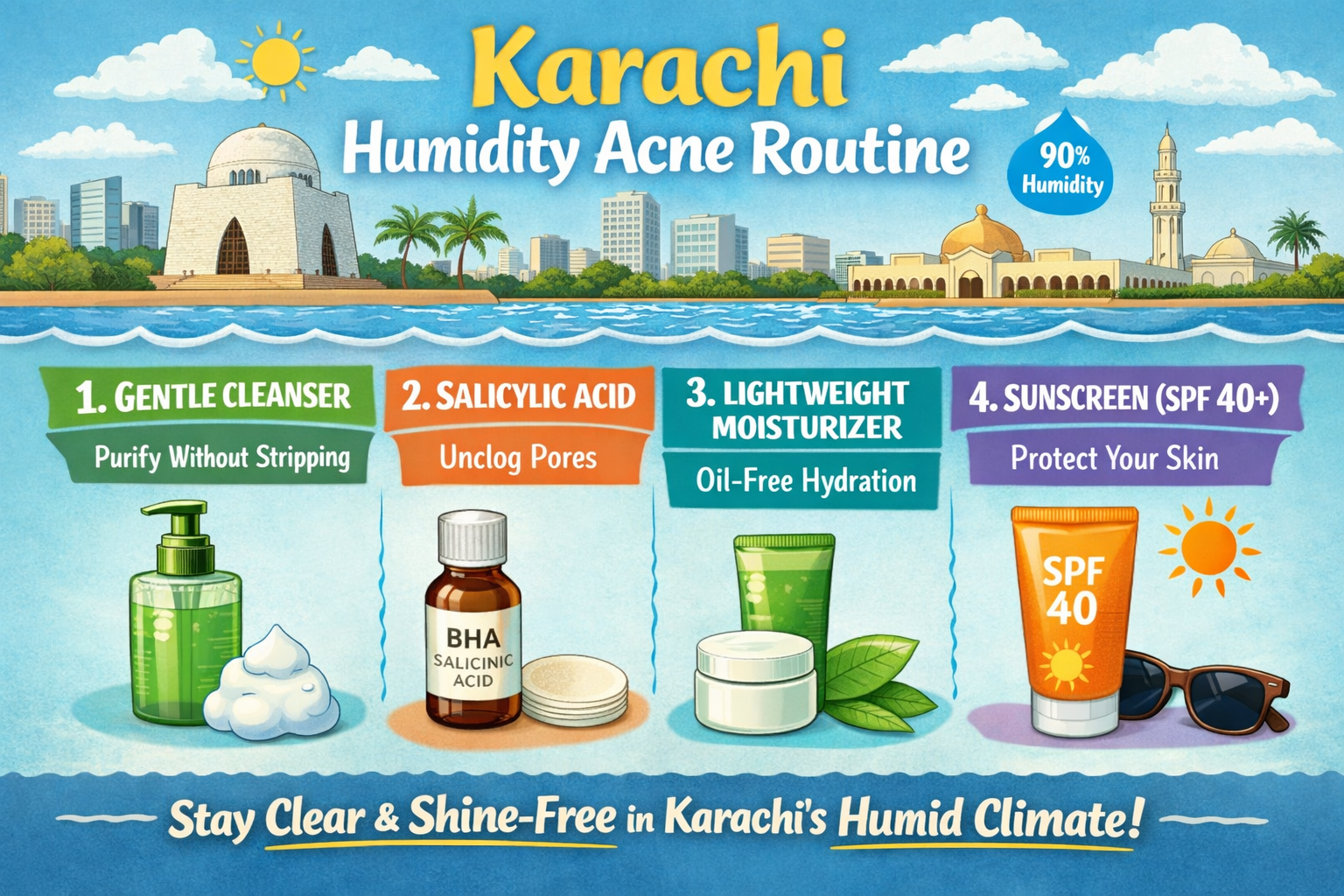
Karachi / Coastal Humidity (Sweat + Clogged Pores)
Goal: control oil, reduce congestion, prevent “humidity bumps”
Use gel cleanser, niacinamide, and a lightweight gel moisturizer
Pick non-comedogenic, sweat-friendly sunscreen
Add BHA 2 nights/week for clogged pores
Example: A Karachi office-goer uses sunscreen daily but still breaks out. The issue is a heavy, buttery moisturizer in sticky weather. Switching to gel textures plus a BHA night or two each week often calms acne within a few weeks. This is exactly why skincare in Pakistan 2026 has to be climate-smart.
Lahore / Smog + Dust (Inflammation + Pigmentation)
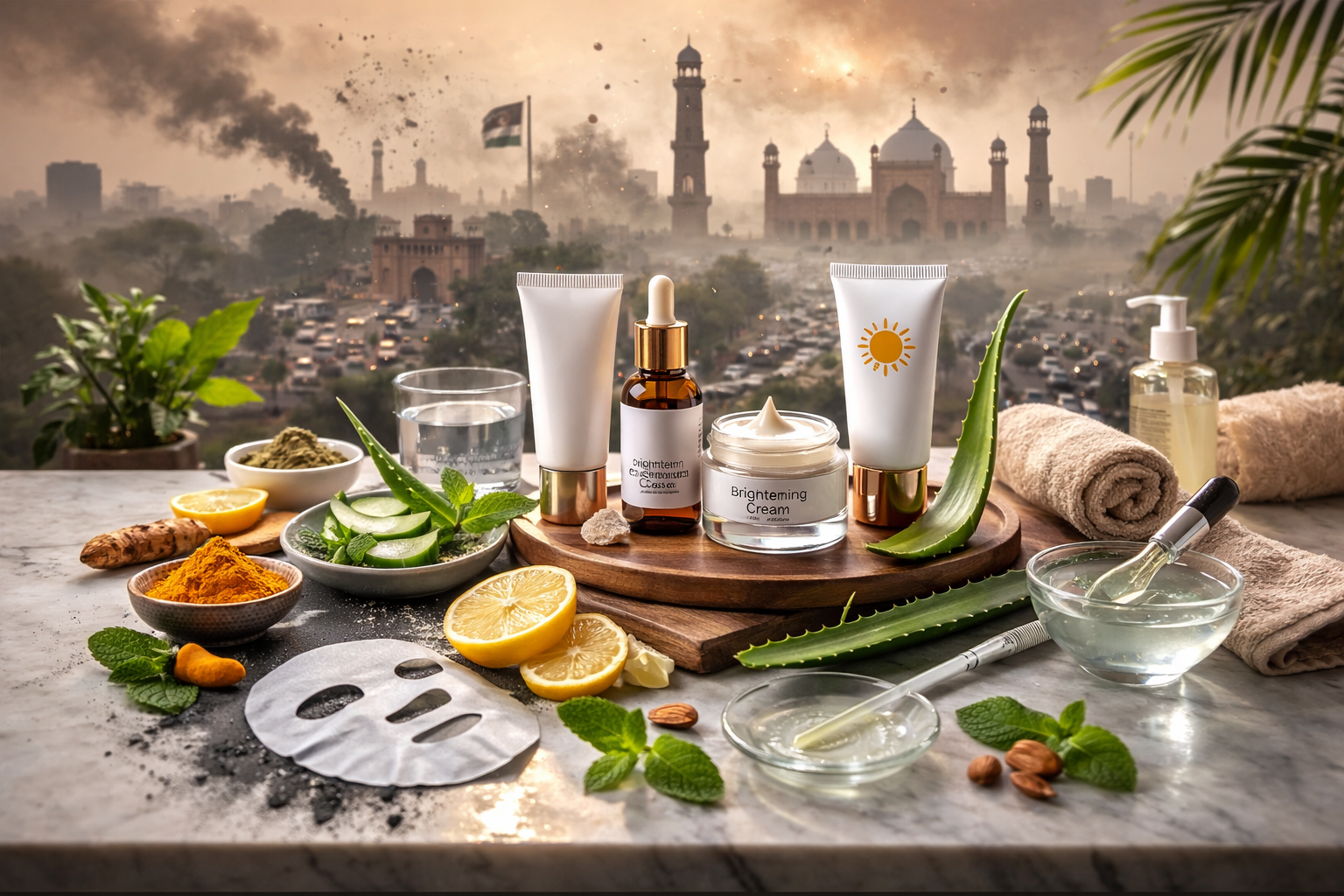
Goal: calm inflammation and protect the barrier
Gentle cleansing (no harsh scrubs, even on “pollution days”)
Add niacinamide or azelaic acid for marks and redness
Sunscreen daily + reapply when outdoors or commuting on bikes/rickshaws
Plan a “recovery night” routine after days with heavy smog: just cleanser + rich moisturizer
On bad air days, think soothe and shield, not scrub and strip.
Islamabad / Higher UV Feel (Sun + Uneven Tone)
Goal: pigmentation prevention and early anti-aging
Vitamin C or azelaic acid in the morning for brightening
High-protection sunscreen daily, even in winter
Retinoid 2–3 nights/week (if tolerated) to help with texture and marks
If you enjoy hikes, outdoor sports, or a lot of driving in Islamabad and nearby hilly areas, consistent SPF makes a huge difference to long-term pigmentation.
Quetta / Dry Cold (Flaky Skin + Barrier Damage)
Goal: hydration + barrier repair
Cream or milk cleanser (avoid stripping gels)
Ceramide-rich moisturizer, possibly layered with a hydrating serum
Avoid daily exfoliation no need in already-dry weather
Use sunscreen even in winter; UV plus dryness is a rough combo
In dry cities, skincare in Pakistan 2026 is less about oil control and more about keeping your barrier strong so actives don’t sting.
Acne vs Pigmentation: What to Treat First?
In skincare in Pakistan 2026, the most realistic strategy is:
Stop new breakouts
Gentle cleanse
Targeted acne active (like BHA or a retinoid)
Protect from sun
SPF every morning
Fade marks over time
Azelaic acid, niacinamide, or retinoid (slow and steady)
If you treat pigmentation but ignore acne, new marks keep forming. If you treat acne but skip SPF, marks don’t fade or they come right back.
Common Mistakes Pakistan Shoppers Should Avoid (2026 Edition)
Buying “instant whitening” products without checking ingredients
Using multiple strong actives in one night (BHA + retinoid + strong vitamin C)
Scrubbing daily because of “pollution”
Skipping moisturizer on oily skin
Treating melasma without strict sunscreen habits
Constantly switching products before giving them 8–12 weeks to work
This is where skincare in Pakistan 2026 stops being about more products and becomes about using the right ones properly.
Concluding Remarks
If you want real results from skincare in Pakistan 2026, build a routine that matches your city’s weather and your skin’s actual needs then stick with it. Acne improves when you reduce clogging and inflammation; pigmentation improves when you pair targeted actives with daily sunscreen and patience. Keep your routine simple: cleanse, treat, moisturize, protect. Rotate actives at night, and give your skin at least 8–12 weeks of consistency before you judge it.
If you’re upgrading your routine this year, choose products that fit your climate and lifestyle light textures for humid cities, barrier-repair creams for dry regions, and sunscreen for everyone from Karachi to Quetta. Shop comfortably with COD and quick checkout options like Easy paisa/Jazz Cash.
FAQs
Q : How long does it take to see results from a routine in Pakistan?
A : Most people see fewer breakouts in 3–6 weeks and visible fading of marks in 8–12 weeks. In Pakistan’s strong sun, sunscreen makes the biggest difference without SPF, pigmentation can return quickly. Keep your routine consistent and avoid switching products every week.
Q : How can I stop acne in humid weather like Karachi?
A : Use a gentle foaming cleanser, a lightweight gel moisturizer, and non-greasy sunscreen. Add salicylic acid (BHA) 2 nights a week for clogged pores. Avoid heavy creams and thick oils in humidity because they can trap sweat and worsen breakouts.
Q : How do I remove pigmentation on face in Pakistan?
A : Start with daily sunscreen, then add azelaic acid or niacinamide. If you tolerate it, a retinoid at night can speed up texture and mark improvement. Pigmentation is stubborn expect gradual progress over 2–3 months with strict sun protection.
Q : Is sunscreen necessary in winter in Pakistan?
A : Yes. UV exposure still affects pigmentation and premature aging, even when it’s cloudy or cool. If you’re prone to melasma or acne marks, winter SPF is crucial. Think of sunscreen as part of treatment, not just “summer protection.”
Q : What’s better for acne marks: niacinamide or vitamin C?
A : Niacinamide is great for oily skin, enlarged pores, and post-acne marks. Vitamin C helps more with dullness and overall brightness. If you’re sensitive or acne-prone, start with niacinamide; later you can add vitamin C if your skin stays stable.
Q : Can I use salicylic acid and retinoid together?
A : Not on the same night for most beginners. Rotate them: salicylic acid 2 nights/week, retinoid 2–3 nights/week, and barrier-repair on other nights. This reduces irritation which is important because irritation can worsen pigmentation.
Q : How should students in Pakistan manage skincare on a budget?
A : Keep it minimal: cleanser, moisturizer, sunscreen. Add only one active (niacinamide or azelaic acid) based on your main problem. Budget routines work when you stay consistent, avoid harsh DIY hacks, and prioritize sunscreen daily.
Q : What causes melasma in Pakistani skin?
A : Melasma is commonly triggered by sun exposure, hormones, genetics, and skin irritation. In Pakistan, UV and heat can worsen it quickly. Strict sunscreen use, gentle skincare, and avoiding harsh scrubs or bleaching products helps reduce flare-ups.
Q : How do I build a weather-based routine in Pakistan 2026?
A : Match texture to climate: gel products in humidity, richer creams in dry cold, and always SPF in high-UV months. Use one targeted serum (niacinamide/azelaic acid/vitamin C) and rotate nighttime actives instead of layering everything together. Consistency for 8–12 weeks brings the best results.