Blogs
Natural and Herbal Skincare Trends in Pakistan: What People Are Buying in 2026
Feb
Natural and Herbal Skincare Trends in Pakistan for Oily, Acne-Prone & Sensitive Skin
Natural and herbal skincare isn’t “just a desi thing” anymore it’s becoming the smartest choice for Pakistani skin and Pakistani weather. From Karachi humidity to Lahore smog days and Islamabad’s dry winters, people want skincare that feels gentle, effective, and trustworthy. That’s exactly why natural and herbal skincare trends in Pakistan are exploding: ingredient transparency, simpler routines, and products made for real-life issues like oiliness, dullness, pigmentation, and barrier damage.
Another big shift is how people buy. Skincare is now a WhatsApp-order + COD lifestyle. Many shoppers still prefer cash on delivery, but more are getting comfortable with Easy paisa and Jazz Cash especially when brands show authenticity through reviews, realistic before/after photos, and clear “what’s inside” labeling.
This guide breaks down the biggest natural and herbal skincare trends in Pakistan, the ingredients everyone is searching for, and how to build a routine that works without overcomplicating your shelf.
Natural and herbal skincare trends in Pakistan in 2026 focus on ingredient transparency, barrier-friendly formulas, and “desi-meets-derma” routines using aloe vera, rose water, neem, turmeric, and multani mitti. Pakistani shoppers lean toward gentle products for acne, pigmentation, and dullness often buying via COD, Easy paisa, or Jazz Cash. The biggest shift is using traditional ingredients in modern formats like cleansers, toners, serums, and masks instead of messy DIY-only routines.
Why Natural and Herbal Skincare Is Winning in Pakistan
The main reason is simple: people want results without burning or peeling their skin. Strong actives can help, but when they’re overused especially in heat and pollution they often cause redness, sensitivity, and barrier damage.
That’s why natural and herbal skincare trends in Pakistan are moving toward:
Softer daily routines (cleanse + hydrate + protect)
Ingredients people recognize (neem, aloe, rose, ubtan blends)
Better formulations (less “kitchen DIY,” more stabilized products)
Value for money (affordable herbal ranges that still feel premium)
A growing interest in herbal skincare in Pakistan that feels closer to “clean beauty” than old-school fairness creams
Real example (Karachi)
A Karachi office-goer with oily skin might ditch harsh scrubs and switch to a neem-based cleanser, lightweight aloe hydration, and weekly multani mitti masking. The result? Shine control without wrecking the skin barrier. That kind of simple, repeatable routine fits perfectly into today’s natural and herbal skincare trends in Pakistan.
“Desi Ingredients, Modern Packaging” (Ubtan 2.0)
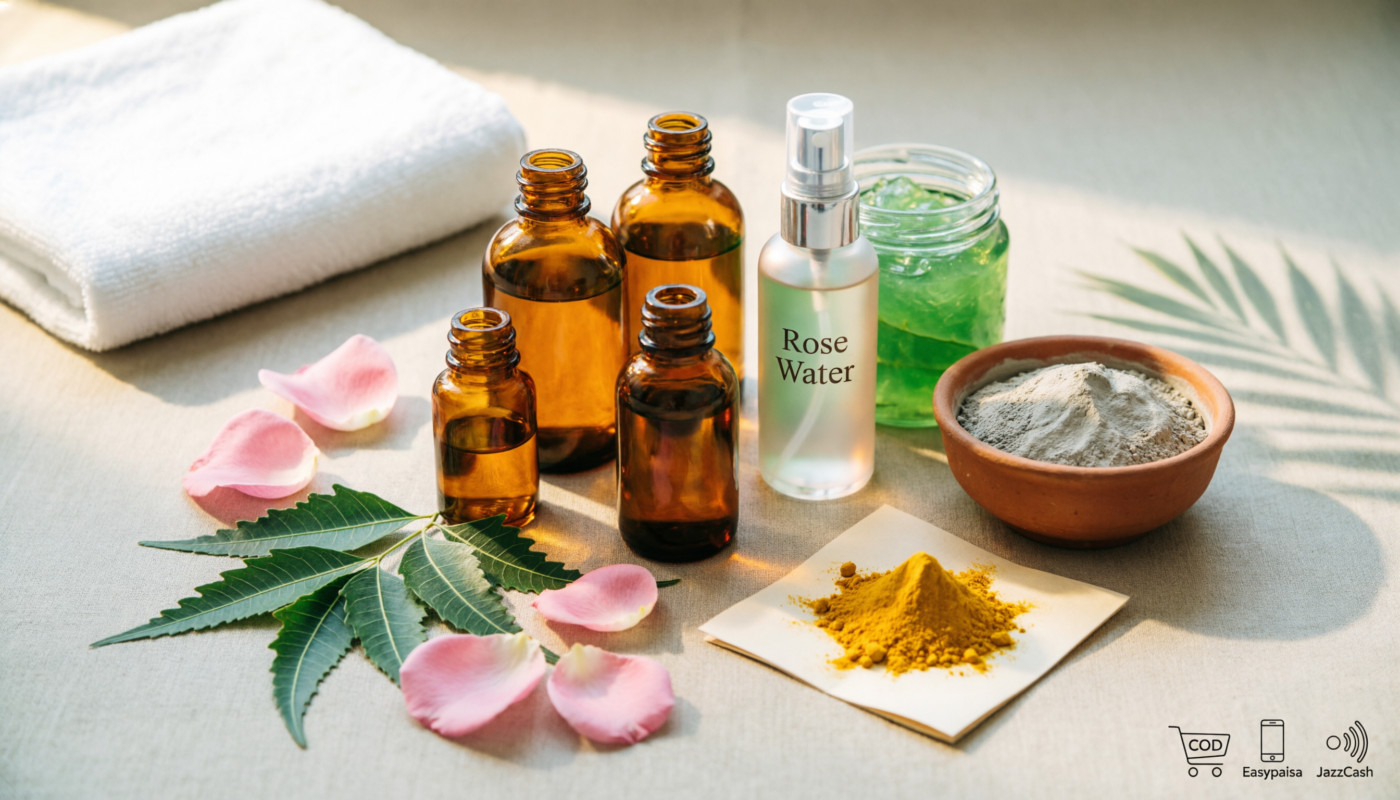
Ubtan, rose water, and multani mitti aren’t new. What’s new is how brands are packaging them: ready-to-use masks, toners, and gentle face washes with clear instructions and consistent quality.
What’s hot right now.
Ubtan-inspired cleansing powders (often less stripping than foaming washes)
Pre-mixed clay masks (no messy bowl mixing or guesswork)
Rose water toners with added humectants (so they actually hydrate, not just “freshen”)
If you’re building a shopping list, this is one of the most visible natural and herbal skincare trends in Pakistan traditional ingredients upgraded into modern skincare.
Barrier-Friendly Herbal Skincare (Less Irritation, More Repair)
A huge shift in natural and herbal skincare trends in Pakistan is “skin barrier first.” More shoppers now understand that constant face washing, lemon DIY hacks, and aggressive scrubs can backfire badly.
Barrier-friendly herbal picks
Aloe vera for soothing and hydration
Centella-like calming botanicals (often labeled as cica or calming blends)
Rose-based hydration to comfort skin in the heat
Oat- or honey-inspired soothing in gentle moisturizers
Anti-Acne Herbal Routines for Oily Skin (Pakistan’s #1 Need)
Oil + sweat + dust = breakouts. Acne is still the number one reason many people start exploring natural skincare in Pakistan, especially teens and young adults.
Trending acne-friendly herbs and naturals:
Neem (oil control + support for acne-prone skin)
Tea tree (use sparingly too much can irritate)
Clay / multani mitti (weekly detox without daily stripping)
Turmeric (for post-acne marks in balanced formulas)
Real example (Lahore)
A Lahore university student dealing with acne marks might use a neem cleanser, aloe-based hydration, and turmeric-based spot support two to three times a week. This reflects how natural and herbal skincare trends in Pakistan are actually used: simple, affordable routines that can be followed around classes, part-time jobs, or hostel life.
Pigmentation & “Glow” Without the Bleaching Mindset
The old “instant white” trend is slowly fading. Instead, a healthier glow mindset is taking over: brightening, evening out tone, and hydrating the skin rather than changing its natural colour.
This glow-focused approach is now central to natural and herbal skincare trends in Pakistan, especially for:
Post-acne marks
Sun spots and sun tan
Dullness from pollution, late nights, and dehydration
Natural glow routine idea (simple)
Gentle cleanse
Hydrating toner or essence-style step
Brightening support (mild botanical blends no harsh bleaching)
Sunscreen (every single morning, even if you stay mostly indoors)
Even if your routine is fully herbal, sun protection is non-negotiable. It protects both your skin and the results of your serums, masks, and ubtan-style products.
Clean Beauty Buying Behavior (COD, Wallet Payments & Reviews)
A trend many skincare blogs skip is buying culture. In Pakistan, trust matters as much as ingredients.
Shoppers increasingly look for:
COD for first-time or higher-ticket orders
Easy paisa/Jazz Cash once they trust the brand and website
Mini sizes / trial kits so they can test before committing
Ingredient lists + usage instructions in simple language
Real customer reviews and before/after photos that don’t feel edited beyond reality
This “trust-first shopping” behaviour is shaping natural and herbal skincare trends in Pakistan just as much as the herbal formulations themselves. For many shoppers, the best “organic skincare Pakistan” has to offer is the one that feels transparent, honest, and easy to return if something doesn’t suit them.
How to Start a Natural & Herbal Routine (Without Wasting Money)
If you’re new to herbal skincare, you don’t need 15 products. Here’s a practical routine that matches natural and herbal skincare trends in Pakistan and works for most skin types with small tweaks.
Morning (AM)
Gentle cleanser
Hydrating toner (rose- or aloe-style)
Lightweight moisturizer (optional if skin is very oily)
Night (PM)
Cleanser
Soothing hydration (aloe or repair-style product)
Spot treatment only where needed (acne marks or active spots)
Weekly (1–2×)
Multani mitti or clay mask (not every day)
Simple Do & Don’t Box
Do
Patch-test new products on a small area first
Introduce only one new product at a time
Give your skin at least 3–5 days to respond before adding something else
Don’t
Layer too many new actives with herbal products at once
Scrub your face aggressively “for glow”
Use multani mitti or drying masks daily in the name of oil control
Concluding Remarks
Natural skincare in Pakistan is no longer just “gharelu totkay.” The new wave is smarter: cleaner ingredient lists, gentler daily routines, and realistic goals around acne control, glow, and barrier repair. Most importantly, natural and herbal skincare trends in Pakistan are becoming more practical modern products inspired by traditional ingredients, built for busy schedules, and bought through channels people already trust (COD, Easy paisa, Jazz Cash).
If you’re shopping right now, start small: one cleanser, one hydrator, and one weekly mask. Build consistency first, then upgrade to more targeted serums or treatments as your skin needs them.
Explore our herbal picks in /cosmetics/ and create a routine that fits your city, your weather, and your budget delivered across Pakistan with flexible payment options.
FAQs
Q : What are the biggest natural and herbal skincare trends in Pakistan right now?
A : The biggest trends include ubtan-inspired products in modern formats, aloe-based soothing hydration, neem for acne control, and multani mitti masks for weekly detox. Pakistani shoppers also prioritize ingredient transparency, mild formulas, and routines that work in hot weather and pollution without irritating the skin.
Q : Is herbal skincare better for oily and acne-prone skin in Pakistan?
A : Often yes if the formula is gentle and balanced. Neem, clay, and light aloe hydration can support oily, acne-prone skin without stripping it. The key is avoiding overuse: daily clay masks or harsh scrubbing can worsen oiliness and breakouts over time.
Q : How can I start a natural skincare routine as a beginner?
A : Start with three basics: a gentle cleanser, a hydrating step (like aloe or a rose-based toner), and a simple moisturizer if needed. Add a multani mitti or clay mask once a week. Keep the routine consistent for 2–3 weeks before adding more products so you can see what’s actually working.
Q : How do I know if a herbal product is authentic or just marketing?
A : Check for a clear ingredient list, usage instructions, batch/expiry info, and realistic claims. Prefer brands that show customer reviews and explain how to use the product safely. Be careful with products promising instant fairness or extremely fast results without proper guidance.
Q : Can I use rose water daily on my face?
A : Yes, many people in Pakistan use rose water daily as a refreshing hydration step, especially in summer. If your skin feels tight afterward, switch to a toner that combines rose with humectants (like glycerin or hyaluronic acid) for better hydration. Always patch-test if you know your skin is sensitive.
Q : How often should I apply multani mitti in Pakistani weather?
A : Most people do best with multani mitti one to two times per week. In peak summer or for very oily skin, twice weekly may help, but daily use can dehydrate the skin and trigger more oil production. Always follow with soothing hydration afterward.
Q : Does turmeric help with pigmentation and acne marks?
A : Turmeric can support brightening and post-acne marks when used in balanced formulas. Pure DIY turmeric pastes can stain and irritate some skin types. A safer approach is turmeric-based products designed for leave-on or short-contact use with clear instructions.
Q : How long does natural and herbal skincare take to show results?
A : Typically you’ll need 3–6 weeks for visible improvement in texture and oil control, and around 6–12 weeks for pigmentation or deeper acne marks. Consistency matters more than constantly switching products. Taking progress photos every 2 weeks in the same lighting can help you track subtle changes.
Q : Is COD still common for skincare orders in Pakistan?
A : Yes COD remains very popular, especially for first-time buyers or new websites. Once trust is built, many customers prefer Easy paisa or Jazz Cash for convenience. Offering multiple payment options and clear return/exchange policies usually improves conversions for herbal skincare in Pakistan.