
Blogs
Hyperpigmentation & Melasma Treatment for Pakistani Skin
Feb
Hyperpigmentation in Pakistan: Causes, Best Ingredients, and Real Results
Pakistan’s sun is no joke especially in cities like Karachi, Lahore, and Multan where heat, humidity, and UV exposure stay intense for months. Add hormonal shifts (pregnancy, PCOS, postpartum), stress, and harsh “instant whitening” creams, and it’s no surprise so many people end up with stubborn brown patches on the cheeks, upper lip, and forehead. That’s melasma one of the most common and frustrating forms of hyperpigmentation.
The good news: melasma treatment for Pakistani skin is absolutely possible. It just needs patience, smart sun protection, and the right actives used consistently. Quick-fix peels, whitening injections, or random “mix creams” usually backfire, causing irritation and even darker marks (post-inflammatory hyperpigmentation).
If you’re dealing with dark patches and want a realistic plan, here’s the short version: protect with SPF 50 every single day (ideally tinted), keep your routine gentle, and layer in proven ingredients like azelaic acid, niacinamide, vitamin C, retinoids, and tranexamic acid. Most people start seeing a difference in 8–16 weeks when they stick to a calm, consistent routine.
Melasma and hyperpigmentation can be treated in Pakistani skin by combining daily broad-spectrum SPF 50 (ideally tinted), gentle cleansing, and targeted ingredients like azelaic acid, niacinamide, vitamin C, retinoids, and tranexamic acid. Results usually take 8–16 weeks with consistent use. Avoid steroid-mixed “fairness” creams and harsh scrubs, and consider dermatologist treatments (chemical peels or lasers) only with expert guidance to prevent rebound pigmentation.
Understanding Hyperpigmentation vs Melasma in Pakistani Skin
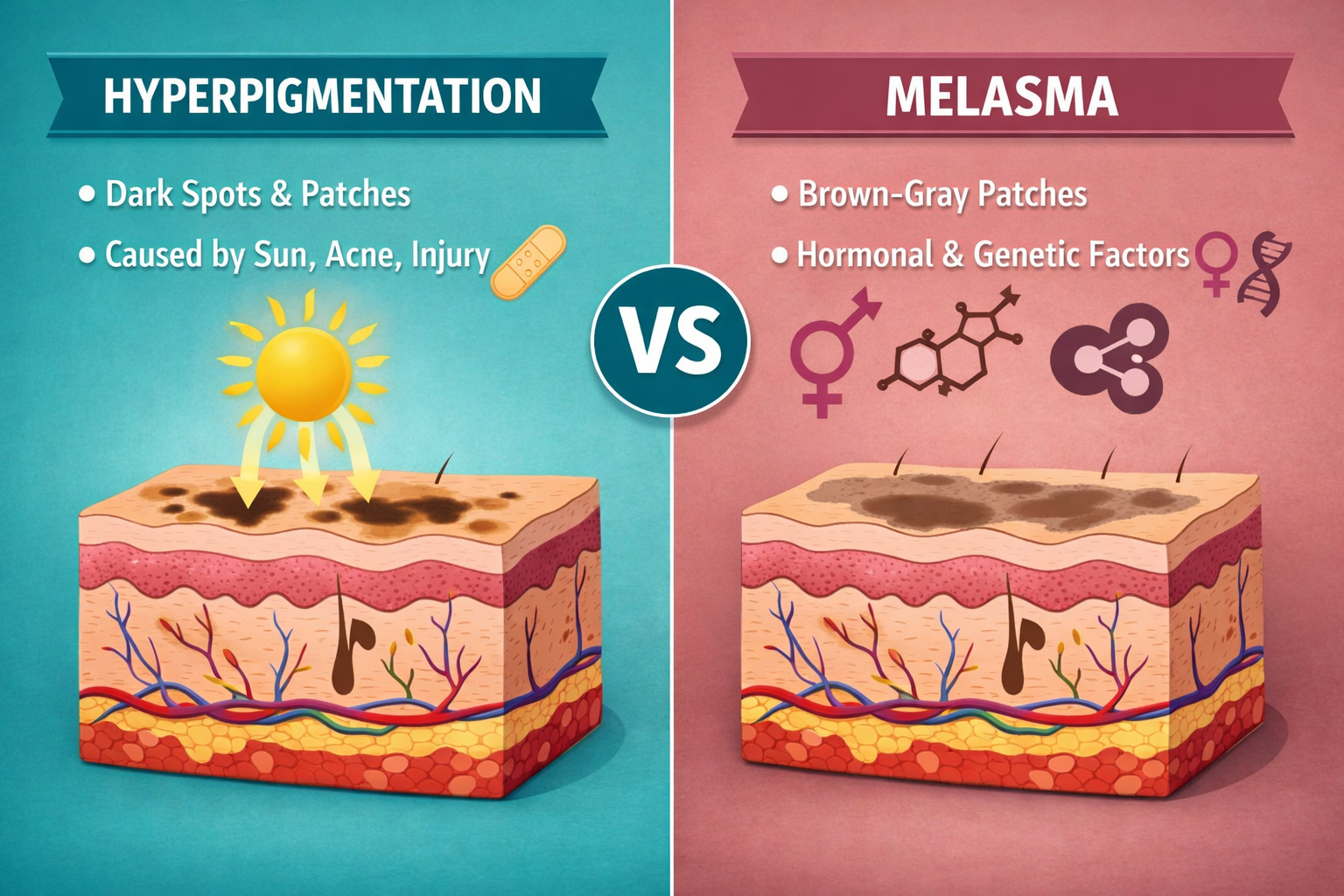
Hyperpigmentation is an umbrella term for dark patches or spots. In Pakistan, the most common types are:
Melasma
Symmetrical brown/grey-brown patches on cheeks, forehead, and upper lip. Often hormonal and sun-triggered, and very common after pregnancy or during PCOS treatment.
PIH (Post-Inflammatory Hyperpigmentation)
Marks left after acne, threading/waxing burns, allergic rashes, or irritation from strong products.
Sunspots/tanning
From chronic sun exposure, rooftop hangouts, cricket practice, and inconsistent sunscreen.
Why it’s trickier for us: Pakistani skin tones (often Fitzpatrick III–V) can pigment faster when inflamed. A “strong” routine isn’t always better calm, well-hydrated skin fades better. That’s why melasma treatment in Pakistan must stay gentle and barrier-friendly.
What Triggers Melasma in Pakistan (Real-Life Reasons)
Common triggers that make melasma treatment for Pakistani skin slower.
Sun + visible light: UVA/UVB and even strong visible light from the sun can worsen melasma.
Heat exposure: Cooking heat, traffic heat, rooftop BBQs, and summer humidity can all flare it.
Hormones: Pregnancy, oral contraceptives, thyroid issues, PCOS, and peri-menopause.
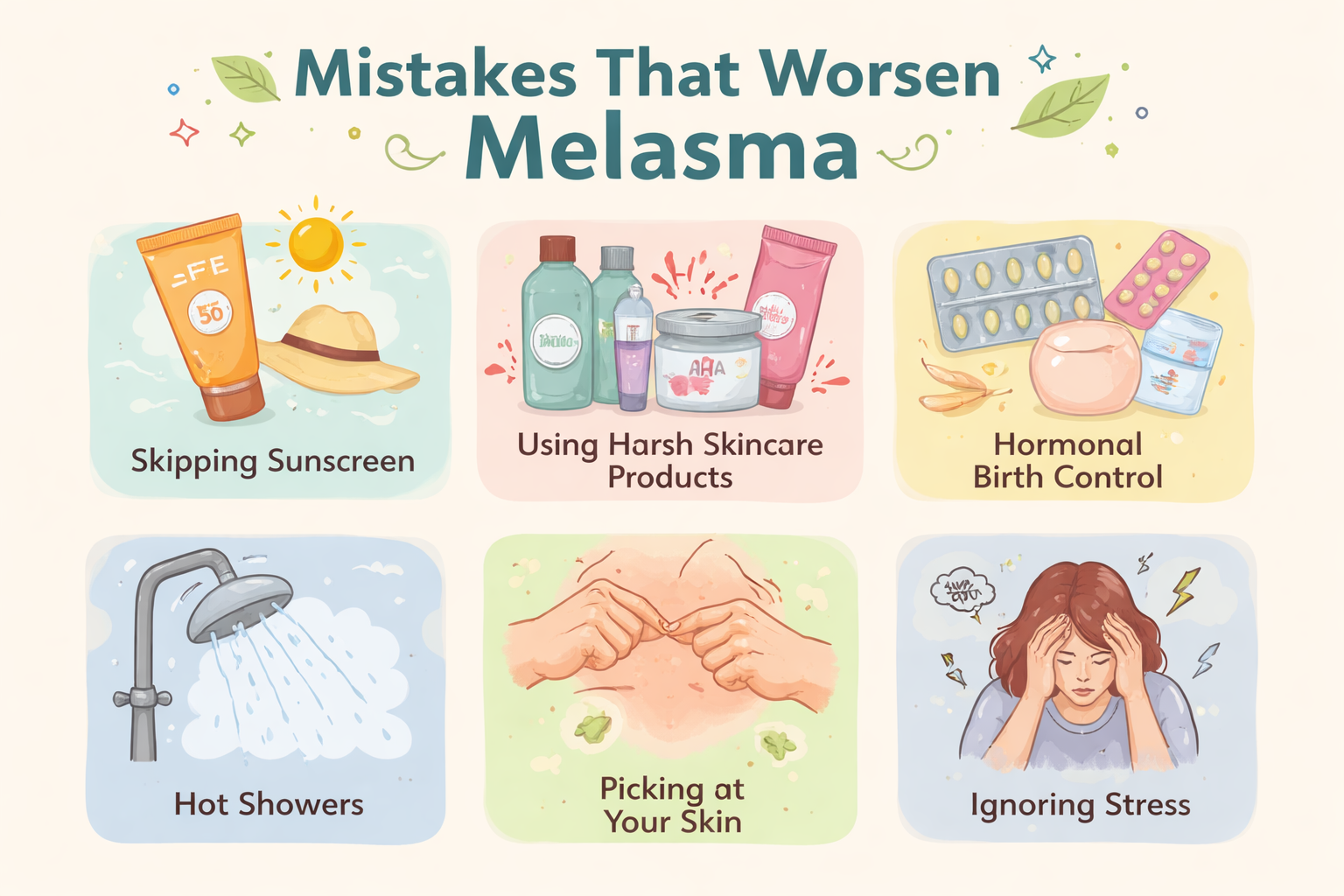
Irritation: Over-exfoliation, harsh scrubs, at-home high-strength peels, lemon masks, and frequent aggressive facials.
Wrong creams
Steroid-mixed “mix creams” and over-the-counter bleaching creams can thin the skin and cause rebound darkening.
Lifestyle patterns
Long commutes in rickshaws or on bikes, wedding-season makeup every weekend, and skipping SPF when covered with hijab/dupatta (melasma can still show on exposed areas like forehead and cheeks).
Karachi example
A working woman commuting daily without sunscreen, then using a strong peeling serum every night, notices her cheeks looking “burnt” and darker within 2 weeks. That’s irritation plus sun and heat working together.
The Golden Rule: Sunscreen Is the Treatment
If you do nothing else, do this.
SPF 50 broad-spectrum, every single day, and reapply.
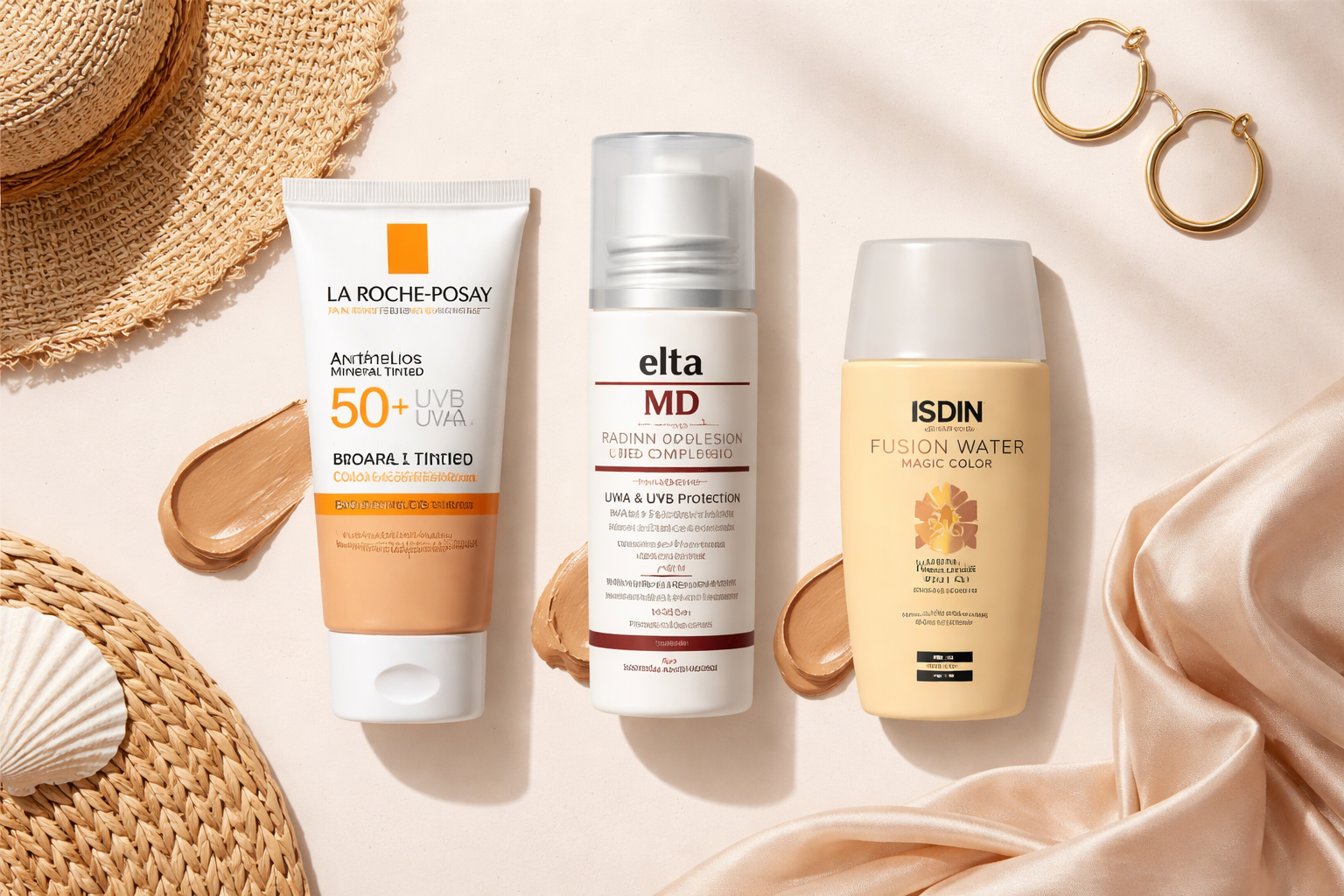
For melasma specifically, tinted sunscreen is often more helpful because the iron oxides can reduce visible-light impact (important for stubborn melasma). This is the core pillar of any melasma treatment for Pakistani skin and the first thing most dermatologists in Pakistan will emphasize.
Pakistan-friendly sunscreen habits
Apply 2 finger lengths for face and neck.
Reapply every 2–3 hours if you’re outdoors, driving, or sitting by a window at work or university.
If you wear makeup, reapply with a sunscreen stick or cushion, or a tinted SPF dabbed gently over base.
For hijab/niqab wearers, focus on all exposed areas forehead, sides of face, and hands.
You can explore your local options via and pick a melasma sunscreen Pakistan budget that you can realistically use daily.
Melasma Treatment for Pakistani Skin: A Simple Routine (8–16 Weeks)
This routine is designed to be effective but gentle, so you don’t trigger more PIH or sensitivity. Think of it as your hyperpigmentation treatment Pakistan starter plan.
Morning (AM)
Gentle cleanser
Use a non-stripping face wash no strong foaming cleansers that leave skin “squeaky”.
Niacinamide (4–5%) OR Vitamin C (10–15%)
Niacinamide helps calm redness, supports the barrier, and reduces pigment transfer.
Vitamin C supports brightness and antioxidant protection, especially with city pollution.
Moisturizer (barrier-friendly)
Look for ceramides, glycerin, and panthenol rather than heavy fragrance.
SPF 50 (tinted if possible)
For oily, humid-city skin (Karachi, Lahore), a gel or fluid texture usually feels better than thick cream.
Try pairing your routine with your skin doesn’t get irritated mid-treatment.
Night (PM)
At night, keep it simple and controlled. For the first 2–3 weeks, pick ONE main active:
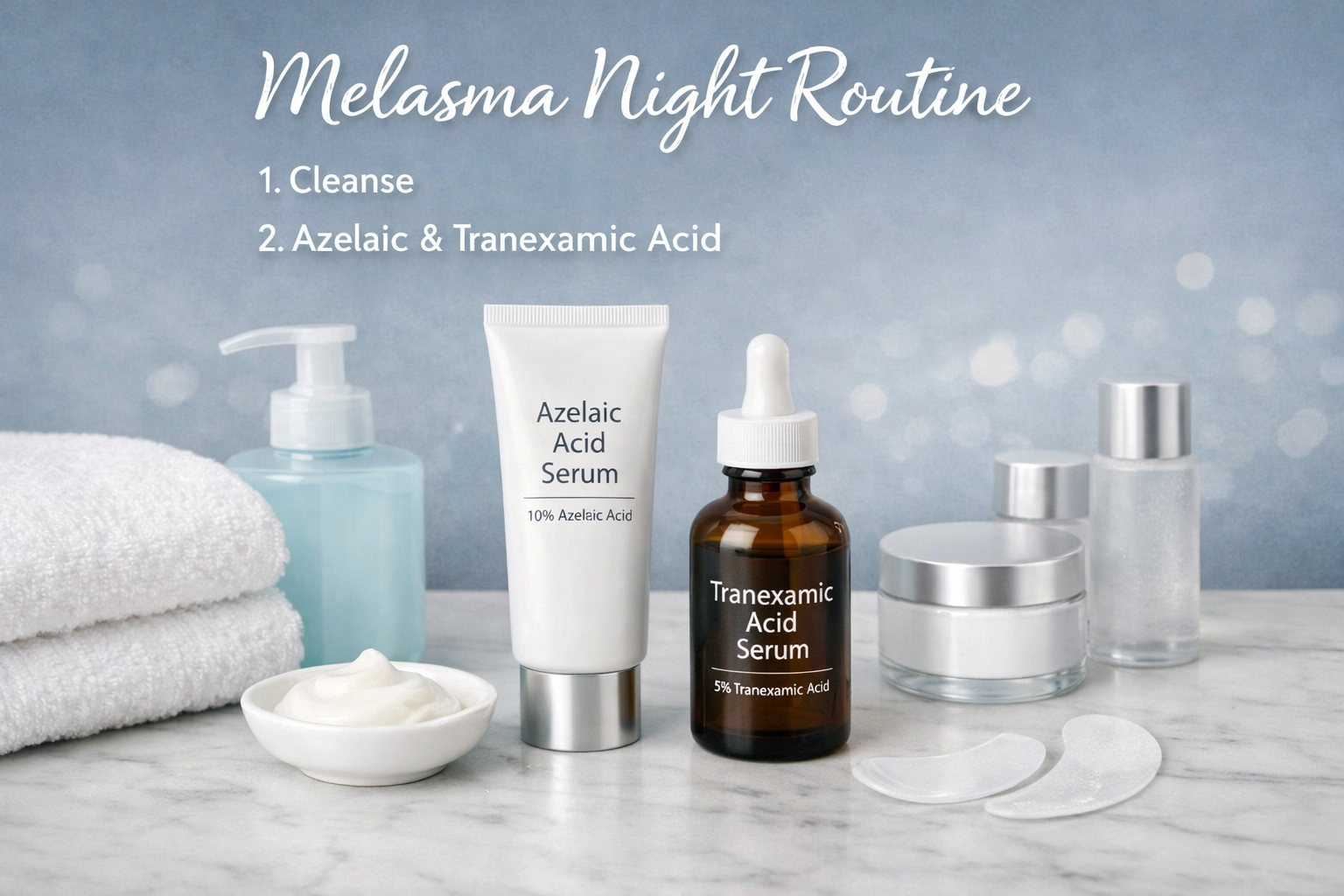
Option A (Beginner + Sensitive): Azelaic Acid 10–20%
Great for acne marks + melasma-prone skin. Azelaic acid for hyperpigmentation is generally well-tolerated and works slowly but steadily.
Option B (Stubborn patches): Tranexamic Acid (topical)
Useful for melasma and uneven tone, especially for people whose pigmentation worsens every summer. Tranexamic acid for melasma needs consistency expect gradual improvement, not overnight change.
Apply your chosen serum on clean, dry skin, then follow with a moisturizer.
After 2–3 weeks, if your skin is calm, you can add:
Retinoid nights (2–3x/week)
Retinoids (like tretinoin or adapalene) speed up cell turnover and can improve melasma and acne.
Introduce slowly: start 1–2 nights a week, then move to 2–3 nights once your skin adjusts.
Avoid layering too many strong actives on the same night. For many people, retinoid nights and tranexamic/azelaic nights work best alternating through the week.
Finish every night with moisturizer to support your skin barrier.
If you want a ready-made path, use a (choose one with niacinamide, tranexamic acid, azelaic acid, or alpha arbutin) and keep the rest of the routine simple.
Ingredient Guide: What Actually Helps (And What to Skip)
Here’s what typically supports melasma treatment for Pakistani skin without being reckless.
Best-supported topical ingredients
Hydroquinone (short-term, dermatologist-guided)
Very effective but not for casual, long-term, unsupervised use.
Azelaic acid
Gentle, pregnancy-friendly (always confirm with your doctor), and pigment-safe for many skin types.
Tranexamic acid
Increasingly popular for melasma; used in serums or sometimes orally under medical supervision.
Niacinamide
Great “support” ingredient for barrier + tone, suitable for most skin types.
Retinoids (tretinoin/adapalene)
Strong and proven, but must be introduced carefully and with good moisturizer and SPF.
Chemical exfoliants (low-dose)
Lactic or mandelic acid can help with texture and tone, but in low strength and low frequency.
Alpha arbutin
Often found in pigmentation cream for face Pakistan ranges; helps with dark spots when used consistently.
Avoid these common Pakistan pitfalls
“Mix creams” with hidden steroids
Lemon, baking soda, toothpaste, or bleach-type hacks
Daily scrubbing / harsh exfoliation gloves
Random high-strength peels at salons before events
“Guaranteed whitening in 7 days” promises
These usually cause short-term brightness and long-term damage.
Dermatologist Treatments in Pakistan: Peels, Lasers, and What to Expect
If a home routine isn’t enough, dermatologists may suggest add-ons:
Chemical peels (like glycolic or lactic)
A controlled way to exfoliate and fade pigment. For South Asian skin tones, strength and frequency must be customized. Ask clearly about chemical peel for pigmentation Pakistan protocols before committing.
Microneedling (sometimes with brightening actives)
Can help with texture and pigment when done by a trained professional with proper aftercare.
Lasers/IPL
Not always first choice for melasma; with the wrong settings, they can worsen pigmentation. Darker skin requires cautious selection and expert handling.
Rule of thumb: if a clinic promises “guaranteed whitening in 7 days,” walk away.
Lahore student example
A university student with acne + dark marks usually does better with azelaic acid, sunscreen, and a gentle routine than repeated aggressive peels that leave her skin red and inflamed every month.
Special Situations: Pregnancy, Breastfeeding, and Sensitive Skin
If you’re pregnant or breastfeeding, melasma treatment for Pakistani skin should stay conservative and doctor-aware:
Focus on sunscreen, niacinamide, azelaic acid, and a gentle moisturizer.
Avoid prescription retinoids and any self-prescribed bleaching agents.
Many women notice melasma after pregnancy in Pakistan that slowly improves with time, SPF, and gentle care even if they can’t use stronger actives immediately.
For very sensitive or rosacea-prone skin, it’s usually safer to:
Keep exfoliation minimal.
Patch-test every new product on a small area for a few nights.
Introduce only one new active at a time.
Always check with your own doctor or dermatologist before starting prescription creams or oral treatments. This guide is educational and not a substitute for personalized medical advice.
Final Words
Melasma and hyperpigmentation don’t fade overnight especially under Pakistan’s intense sun and heat but they do improve when you respect your skin barrier and stick to a plan. The backbone of any melasma treatment for Pakistani skin is daily SPF 50 (preferably tinted), gentle cleansing, a solid moisturizer, and one or two proven actives like azelaic acid, niacinamide, tranexamic acid, or a carefully introduced retinoid.
Think long-term: avoid irritation, avoid steroid-mixed creams, and give your routine at least 8–16 weeks before judging results. Once your skin improves, treat sunscreen and a simple brightening routine as maintenance, so melasma doesn’t bounce back every summer.
If you want a simple shopping path with cash-on-delivery convenience, start with a daily sunscreen plus one dark-spot serum from our store categories. At checkout, you can choose COD or Easy paisa/Jazz Cash (where available) and focus your energy on consistency not constantly changing products.
FAQs
Q : How long does melasma take to fade in Pakistani skin?
A : Most people see improvement in 8–16 weeks if sunscreen is consistent and the routine is gentle. Deeper or long-standing melasma can take longer and may need dermatologist support. Skipping SPF or repeatedly irritating your skin usually delays results.
Q : How can I tell if it’s melasma or acne marks (PIH)?
A : Melasma usually appears as symmetrical patches on the cheeks, forehead, or upper lip and is often linked to sun exposure and hormones. PIH is usually spot-based and follows acne, waxing/threading, burns, or irritation. You can have both at the same time.
Q : How to treat melasma at home safely in Pakistan?
A : Start with SPF 50 daily (and reapply), a gentle cleanser, a barrier-supporting moisturizer, and one active like azelaic acid or tranexamic acid at night. Avoid harsh scrubs, lemon masks, and steroid creams. Consistency matters much more than using many products at once.
Q : Does tinted sunscreen really help melasma?
A : Tinted sunscreen can help because tinted formulas may reduce visible-light impact, which can worsen melasma. If you can’t find a tinted option, use a high-protection, broad-spectrum SPF 50 and reapply regularly, especially outdoors or while driving.
Q : Can vitamin C remove melasma?
A : Vitamin C can brighten and provide antioxidant support, but it usually works best as part of a full plan: sunscreen, barrier care, and targeted pigment actives. It’s helpful for uneven tone, but rarely a solo “erase” solution for melasma.
Q : Is hydroquinone safe for melasma treatment for Pakistani skin?
A : Hydroquinone can be effective, but it’s best used short-term under dermatologist guidance to avoid irritation and rebound pigmentation. It should not be used randomly for months, especially with unknown “mix creams” that may also contain steroids.
Q : How to stop melasma from coming back every summer in Pakistan?
A : Treat prevention like maintenance: daily SPF 50, reapplication every few hours when you’re out, avoiding overheating and irritation, and continuing gentle brighteners like niacinamide or azelaic acid. Summer flare-ups are common when sunscreen is inconsistent or skin keeps getting inflamed.
Q : Can laser make melasma worse?
A : Yes. If settings, device type, or aftercare are wrong, lasers can trigger inflammation and lead to darker patches in South Asian skin. If you’re considering laser or IPL, choose an experienced dermatologist and follow strict photoprotection after treatment.
Q : What’s the best moisturizer type for pigment-prone Pakistani skin?
A : Look for barrier-supporting moisturizers with ceramides, glycerin, and panthenol. A healthy barrier reduces irritation, which reduces extra pigmentation. Rich creams usually suit dry or winter skin, while gel creams work better in humid cities and for oilier skin types.